AskoRepair Miami

Miami-Dade · Broward · Palm Beach

Asko repair in Miami, on machines that were built to outlast the kitchen.

Two questions come before the problem itself on this make. Which generation is standing in the room, because the same digits belong to different tables on different Asko platforms and reading the wrong one buys the wrong part. And how the machine is fitted, because almost everything here is integrated and the getting-in is measurable time.

  • 11 appliance types we cover on this make
  • 51 jobs with a published figure
  • 105 documented codes, across 18 platforms
  • from $95 diagnostic, credited to the repair

Start from the appliance

What we repair

11 machine types, and each card says what the work on that one really is here. Twelve dishwashers, eight washers and twelve dryers are in the current US catalog. The ovens, hobs, hoods and refrigeration are not, and they are in kitchens across South Florida anyway — so those cards say we service them.

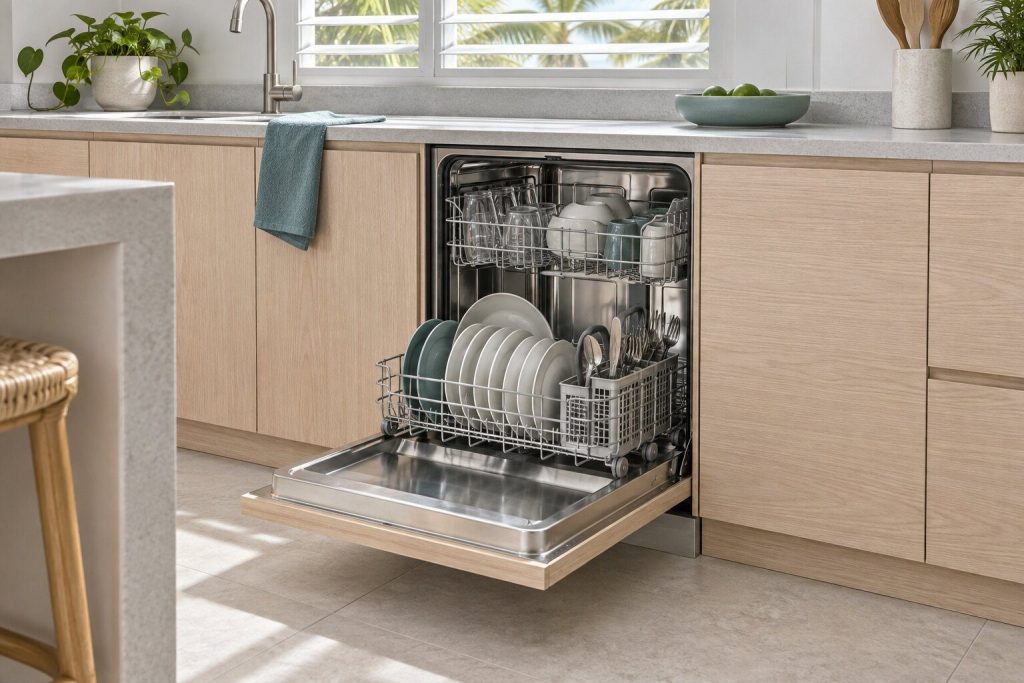
  • A panel-ready dishwasher standing open at the end of a program in a run of pale oak cabinetry, its stainless tub and two loaded baskets showing, the cabinet front matching the doors either side.
    Twelve US models · panel-ready, Touchproof steel and the Outdoor door

    Dishwashers

    The machine that made this badge, and also the one where a number on the display tells you least. Three generations are in South Florida kitchens and each numbers its errors differently: the legacy DW20.1 boards blink their trouble through the program lights and keep the F-label in a service menu nobody opens; the current generation prints F10 upward on a full-text panel; and the Outdoor door, built for a terrace kitchen and therefore common here, uses a third scheme written with a colon that means different things again. All three are twenty-four inches wide and look alike behind a cabinet panel. Which one is in the run decides the reading, the part number and whether the number on the screen reports an error at all.

    • Twelve US models — panel-ready, Touchproof stainless and the DOD Outdoor door
    • Three code schemes, none compatible: blink F1–F9, display F10–F68, Outdoor F:10
    • Steel tub, steel spray arms and a filter that is meant to be lifted out and rinsed
    Dishwasher repair
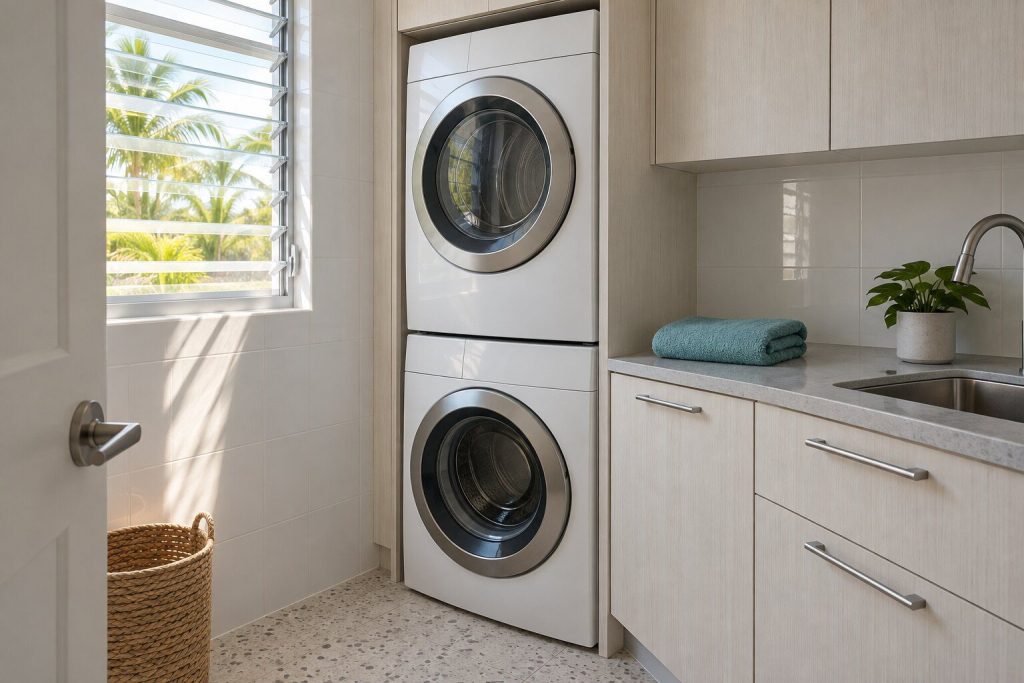
  • A front-load washer and dryer stacked in a narrow tiled utility room, both doors closed, a folded towel on the worktop beside them.
    Eight US models · Classic, Logic and Style, and five different code families

    Washers

    A front loader built around a steel frame rather than a plastic one, sold here as Classic, Logic and Style — the three-, five- and seven-series. What makes it awkward to write about honestly is that five different code families are in circulation across the machines still running in South Florida: the W6 display machines print F10 to F12; the WM75 platform speaks in E-numbers as far as E37; the numbered-LED machines use a short F-set whose meanings do not match the display machines; the analog LED machines signal L1 to L6 and mean different things by model; and the premium panels skip the code entirely and print a sentence. There is no single Asko washer code list, and any page that offers one is guessing.

    • Eight US models across Classic (3), Logic (5) and Style (7) series
    • Five code families: F10–F12, E0–E37, F1/F3/F4/F6, L1–L6, and text-label panels
    • Steel frame and steel drum — the machine outlasts the laundry room it was fitted into
    Washer repair
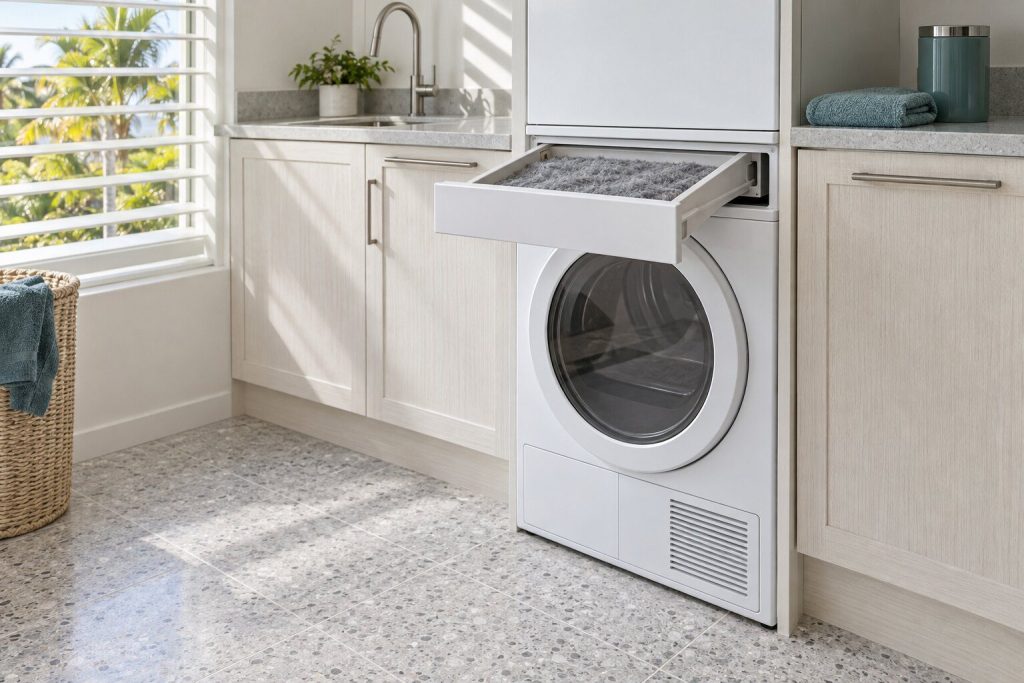
  • A heat-pump dryer standing in a white utility room with its lint drawer pulled out at the top and a gray felt mat of lint lying in it.
    Twelve US models · condenser and heat pump, and codes that change with the board

    Dryers

    Condenser and heat pump machines, which is the right choice for a closet with no external wall and the wrong machine to treat like a vented dryer. No air leaves the room: water is condensed out and kept, so a container left full or a loaded condenser filter halts the cycle every bit as firmly as a crushed duct halts a vented machine. The codes here move with the control board rather than with the model name — one revision signals L2 to L4, a later one prints F10, F29 and F30, a later one again uses S-numbers, and the steam and heat-pump platform spells ERROR_0 through ERROR_5 in full. The simplest analog condenser machines publish no codes at all, and that absence was checked rather than assumed.

    • Twelve US models — condenser and heat pump, no external vent required
    • Codes follow the board: L2–L4, then F10/F29/F30, then S1–S9, then J1 and LCD1–3
    • The T208V family publishes no codes at all — verified absence, not a gap in our research
    Dryer repair
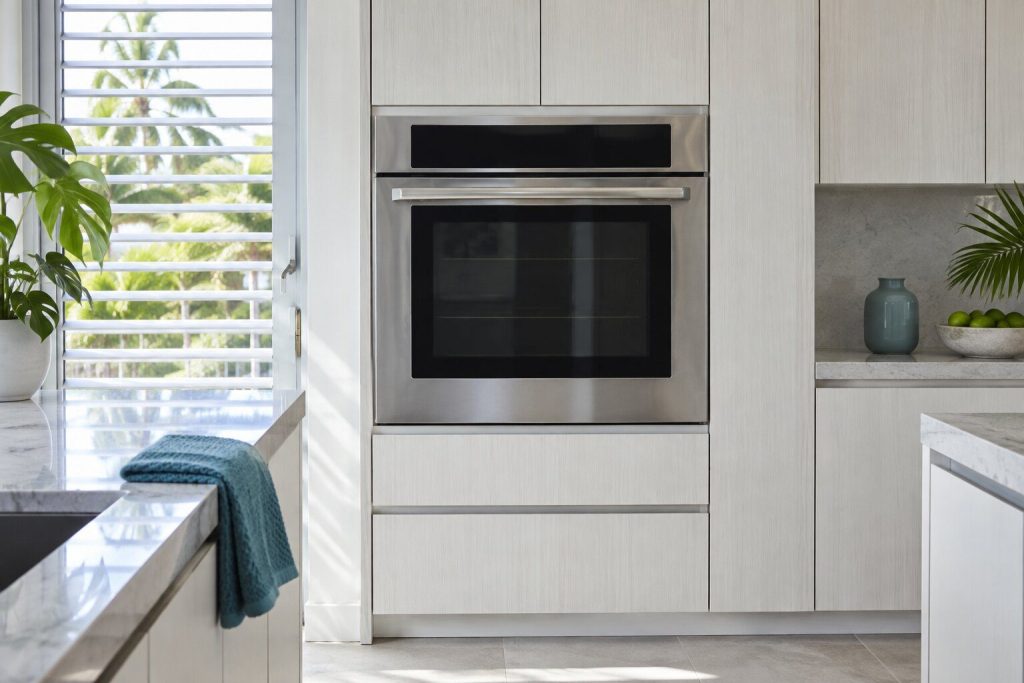
  • A built-in wall oven set into a tall pale cabinet run at chest height with its door closed and its stainless frame flush with the joinery.
    Built-in, combi-steam and combi-microwave · serviced here, no longer sold here

    Wall ovens

    Asko does not currently list a single oven on its US site, and this page is about the ones already fitted. They came in through earlier distribution and through kitchens specified around European appliances, and they are good machines in tall cabinet runs across Miami Beach and Coral Gables — multifunction, combi-steam and combi-microwave, with the jog dial and full-touch panels of the Craft and Elements design lines. The thing worth knowing before you call anybody: when one of these fails it puts ErrXX on the display and stops there. Three separate manuals decode that string the same way, which is to say they do not decode it at all — disconnect, reconnect, and if it comes back call a technician. It is a signal, not a code, and no honest page can turn it into one.

    • No US catalog listing today — every oven we open here arrived by another route
    • ErrXX is displayed and never decoded: three manuals say only to call a technician
    • Combi-steam and combi-microwave cavities need the water circuit checked, not just the element
    Oven repair
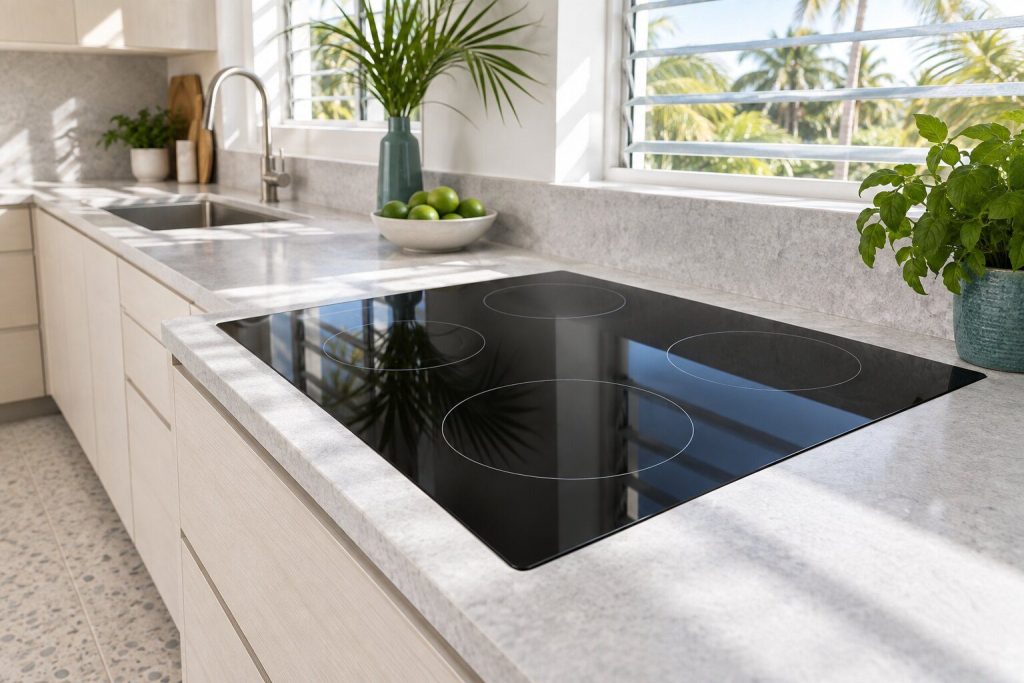
  • A frameless black glass induction cooktop set flush into a light gray stone counter, four zones printed on the surface and nothing standing on it.
    Induction and gas · two code families that do not overlap

    Cooktops

    Asko calls them hobs, which is the first thing to know when you go looking for a manual, and there are none in the current US catalog — the ones here were fitted when there were. Induction is the majority, and the codes split cleanly into two families that share no numbers: the HI1655M generation prints F-codes, F00 and F0 through F9 with FA, FC and F99 among them, and the HI1621G generation prints E and Er strings instead, up to Er47 and U400. The two are not versions of one table, and a meaning taken from the wrong family is a wrong part. Gas hobs on this make publish no codes at all, which makes them the simpler call and not the lesser one.

    • Induction hobs in two code families — F-series and E/Er-series, no overlap
    • Gas hobs publish no codes: diagnosis is by flame, ignition and gas train
    • Glass, trim and the cut in the stone decide the access before any part is named
    Cooktop repair
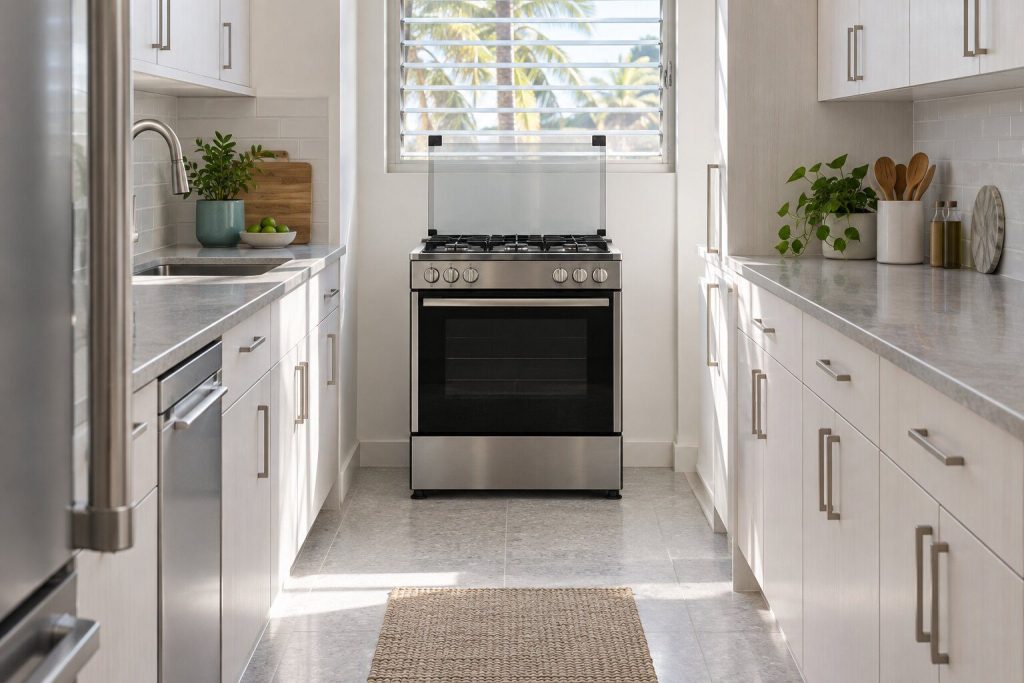
  • A freestanding range in a white galley kitchen with a glass lid folded up behind the cooking surface and the oven door closed.
    Never sold in the US · Scandinavian imports we service here

    Ranges

    Asko has never sold a freestanding range in the United States, and this page exists because we are asked to work on them anyway. The Scandinavian CC-series cookers turn up in South Florida in two ways — brought by somebody who moved, or specified into a kitchen by a designer who knew the line — and once here they need the same servicing as anything else. There is no error table on them at all — the CC96264W manual is organized as symptom, cause and remedy, and carries no codes of any kind. That makes the diagnosis conventional and the parts question the real one, because everything on these comes from Europe.

    • Not a US product — every one we see arrived by import or by relocation
    • No error codes at all: the manuals are symptom, cause and remedy
    • Parts are European-channel, so the wait is part of the answer we give at the diagnostic
    Range repair
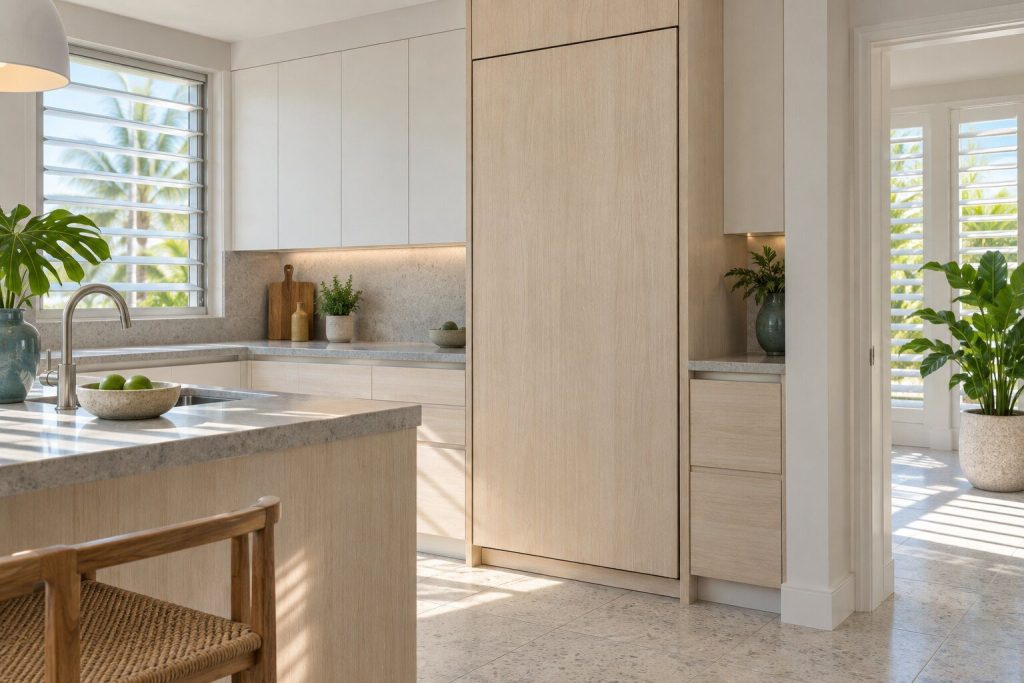
  • A tall integrated refrigerator column faced with a pale oak cabinet panel so it reads as joinery, standing in a fitted run with the door closed, the thin shadow gap the only sign of it.
    One US SKU today · integrated columns and the wine cabinet

    Refrigerators

    The whole US refrigeration catalog for this make is one product — the WCN311942G wine climate cabinet — and that fact is the page. Everything else we open is an integrated cabinet from an earlier catalog, fitted flush behind a panel in a kitchen designed around it, and it will be there long after the badge stopped being sold in this country. None of them publish codes: the RFN-series manuals are symptom, cause and remedy tables and nothing more, which was checked in the manuals rather than assumed from a silent display. So it is diagnosed the way refrigeration always was, and one built-in question comes ahead of the sealed system: whether the cabinet can still breathe inside the joinery that was drawn around it.

    • One current US model: the WCN311942G wine climate cabinet
    • No error codes on any of them — verified in the RFN-series manuals, not inferred
    • Integrated behind a panel: how much air the fitter left around the box is itself part of the diagnosis
    Refrigerator repair
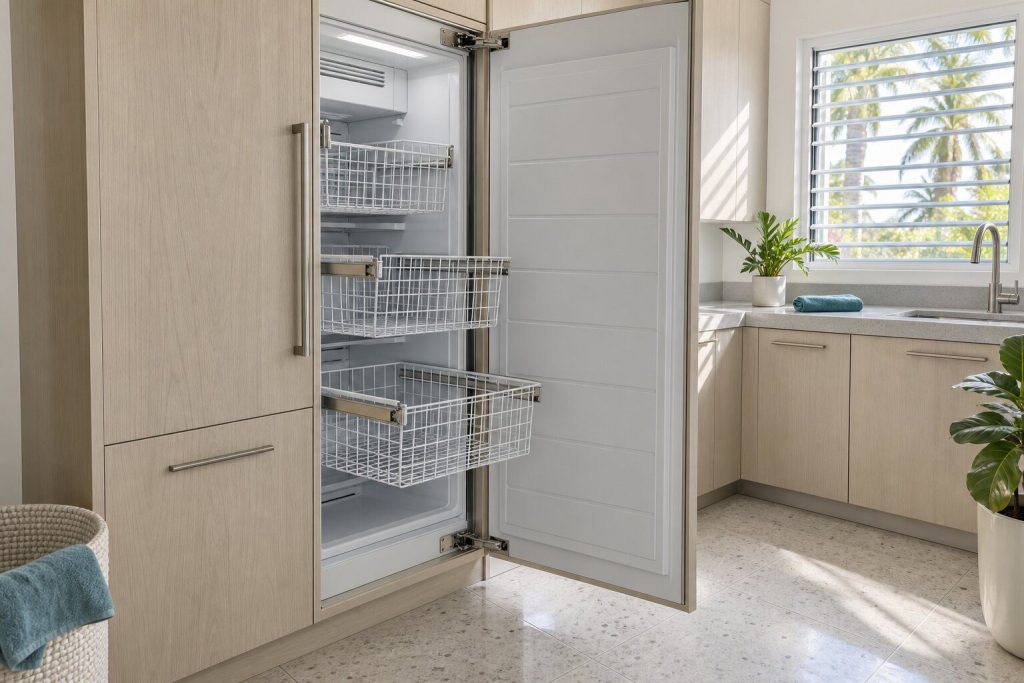
  • An integrated freezer column standing open in a utility run with three wire baskets drawn out on their runners, no frost anywhere on the liner.
    Integrated columns and combined cabinets · no code table anywhere

    Freezers

    Integrated freezer columns and the freezer half of combined cabinets, and like the refrigeration they publish nothing: the FN31842I manual is a problem, cause and solution table with no error numbers in it at all. In this county a freezer fails in a way that is easy to misread, because the room it stands in is doing half the work against it. A garage or an unconditioned utility room in August is a harder environment than the machine was specified for, and a cabinet that is coping in February will start to lose its battle in the summer without anything inside it having broken. Telling those two apart is most of the job, and it is a reading rather than a part.

    • No published codes — checked in the manual, not concluded from a blank display
    • Frost pattern is the diagnosis: where it forms says which of four things it is
    • A garage installation in summer is a different machine from the same one indoors
    Freezer repair

South Florida

This climate reaches these machines through the air they cannot move.

  • A condenser dryer is asked to dry a room as well as a load Nothing is vented outside on these machines: moisture is taken out of the air and collected. In an interior closet that sits near saturation for months, the filters and the condenser load several times faster than the manual's interval assumes, and the first sign is not a failure but a cycle that has quietly grown by an hour.
  • The bottom fold of a door seal collects what the beach sends home Sand and grit settle in the bellows fold between washes and work into the rubber from the inside. It is the part we replace most often on this badge, and it leaks into the cabinet for months before anything reaches a floor — which in a condominium is the expensive half of the problem.
  • The water is harder than the setting the machine arrived with Every one of these dishwashers has a softener, a salt reservoir and a hardness number, and on most machines we open that number is still the factory one. Scale then closes the smallest spray jets first, over about two years, and nothing has broken.
  • Salt takes the hinges long before it takes the electronics On a terrace or a barrier island the outdoor dishwasher, and any hood damper facing the weather, fail at fasteners, pivots and latches. Every one of those is minutes of work while it still moves and a panel once it does not.
  • An induction hob is cooled by the cabinet underneath it The generator draws its air through the joinery below the glass. Where a renovation filled that space with a drawer stack or a fitted oven, zones step back after a few minutes in August and behave perfectly in January — which reads as intermittent electronics and is carpentry.

When the machine does say something

One string, and the platform that gives it meaning

This make numbers its errors per platform and per panel revision rather than per appliance. Seventeen strings on this site mean different things on different machines, and the dishwashers alone carry three schemes that contradict each other. Every page here names its platform before it gives a meaning.

One string, and the two facts that give it meaning

Photograph the display before you reach for the breaker, then find the model code on the door edge. On this make the second is worth more than the first.

Four shapes this make reports in

  • A blink pattern rather than a number, on the legacy DW20.1 dishwashers — F1 to F9, FA and FB live in a service menu and never reach the display.
  • F-numbers on a full-text panel, on the current dishwashers — F10, F11, F12, F40, F41, F45, F52, F54, F56, F67, F68, with wide gaps that no consumer manual fills.
  • E-numbers on the WM75 washer platform — E0 through E37 — and a short F-set, an L-set or a plain English sentence on the four other washer panels.
  • Codes that change form with the dryer control board: L2 to L4, then F10, F29 and F30, then S-numbers, then J1 and LCD strings, then ERROR_0 to ERROR_5 spelled out.

Five we are called about most, and what each is actually saying

F11 A current dishwasher reporting that the water did not get out. The cheap end of that path ends it more often than the expensive end: the filter stack lifted out and rinsed, then the hose, then whatever the kitchen fitter connected at the sink. Two of those four are not the appliance at all.
F40 The inlet valve passing water while the machine has it switched off. Treat it as urgent rather than as a nuisance: this is the one that fills an appliance overnight, and behind a custom panel the water is in the joinery before anybody sees it. Close the service valve under the sink.
F:41 The Outdoor door saying it is open — where F41 on an indoor machine is a heating problem. On a terrace the seal stiffens in the weather and the door sits a millimeter proud of its switch, so push it firmly shut before assuming anything electrical.
E7 A washer on the WM75 platform that cannot drain. The pump filter behind the lower panel is free to check and clears most of these — empty the drum through the small drain hose first, or the cap comes off with several quarts behind it.
ERROR_4 The heat pump dryer, and the only one in its family with an owner-level remedy printed beside it: clean the filters. Take that literally before anybody is called, because a starved machine reports its control rather than its air path.

Each has its own page under the appliance and the platform it belongs to, because the same characters on two machines of the same age are two different repairs. Type what you can see into the index and it will find it — and if more than one row comes back, that is the point rather than a bug.

Photograph the panel first and reset second. A string that clears and stays clear was a condition rather than a failure; one that returns has a part behind it, and repeated resetting only hides how often it is happening.

All 105 conditions

Nothing is listed for the ovens, the microwaves, the hoods, the refrigeration, the freezers or the ranges, because this make publishes no decoded codes for any of them. Six oven manuals print an undecoded string and the same instruction; three hood manuals carry no troubleshooting section at all. Every one of those absences was read on a page of a manual rather than concluded from a blank display, and on those machines the symptom pages carry the diagnosis instead. Sixteen strings that circulate as Asko oven codes are refused here outright, because they match none of the six manuals.

How a visit goes

Measured, priced, then agreed — in that order

  1. 01

    You give us the machine and what it is doing

    The model code from the door edge or the frame sticker, and a photograph of the panel if there is anything on it. On this badge that code does something extra: it names the platform, and the platform decides which of several code tables applies before anything else is discussed.

  2. 02

    The free checks come before the van does

    An induction zone that cuts out after five minutes at high power is usually defending itself against a cabinet packed tight underneath. A dishwasher door that opens itself at the end of a cycle is the drying system. A hood that starts on its own during a hard sear is doing what it was designed to do. None of the three is a repair.

  3. 03

    The figure comes before anything is opened

    Parts, availability and labor, in writing — and on this badge the access quoted as its own line rather than folded into a part. On a legacy machine the availability answer comes first of all, because nobody should pay for a visit that ends in a shrug. Nothing is ordered until you have said yes, and the diagnostic comes off the bill when you do.

  4. 04

    And often it is one visit rather than two

    On the current generation the parts channel is a high-volume one and the ordinary components are stocked rather than ordered. What sets the figure here is the other half — almost everything this make sells has to be brought forward out of the joinery before it can be reached, and putting that joinery back exactly as it was is part of the job.

What it costs

Every figure is a floor, and every floor has a page

51 jobs with a published starting figure and a page behind each saying what moves it. Nothing here is a quote and no final price appears anywhere on this site: the number is measured at your machine and agreed in writing first.

Diagnostic visit

from $95

One visit, one written answer, and the fee comes off the work when you go ahead. On this make it buys two answers rather than one: what has failed, and which generation of the appliance failed it. The second is what stops a correct diagnosis buying the wrong part.

Dishwasher drain and pump repair

from $165

Not a repair at all on most visits. The whole filter stack lifts out by hand, and very often the cause is beyond the appliance — a knockout plug left in the disposer at installation, or a drain hose crushed when the machine was last pushed back. What makes it a repair is water still standing with that path proven clear.

Condenser dryer service

from $145

The cheapest thing that can be done to a dryer here and the one most often skipped. Nothing is vented outside on these machines, so a condenser packed with lint lengthens every cycle and raises the temperature inside the cabinet — and in an interior closet at this humidity it packs within months rather than years.

Washer door seal replacement

from $175

The part we replace most often on this badge. Grit collects in the bottom fold of the bellows and cuts the rubber from the inside, so it leaks into the cabinet for months before anything reaches a floor. In a condominium that delay is the expensive half of the problem.

Induction cooktop repair

from $205

Half of what arrives as a failure is thermal protection or a pan that will not couple, and both are free to rule out. A zone that runs a few minutes and stops is usually shedding heat it cannot lose, and the cause is in the cabinet under the worktop rather than in the appliance.

Platform identification

from $115

The service that exists because this make numbers its errors per platform. Establishing which board is behind the panel, recording it, and leaving you a code table that applies to your machine instead of to the badge in general. Credited in full against a repair booked in the same visit.

Every figure here is a starting point and a researched market band for South Florida, never a quote and never an invoice. The exact cost is confirmed after an on-site diagnostic and agreed in writing before anything is opened.

Every figure and what moves it

Where we work

Miami-Dade, Broward and Palm Beach, end to end

59 cities and neighborhoods, each with a page saying what we actually see there. Tell us where you are when you book — and if it is a building with a service elevator and its own hours, tell us that too.

Coverage is Miami-Dade, Broward and Palm Beach counties — the pages below are the places people search for by name, not the edge of where we drive.

The appliance, the model number, and what the panel shows.

A photograph of the display is ideal, taken before anybody cuts the power — there is no way to ask the machine for a code again. Add roughly when the kitchen was fitted, because on this make the era decides the code table. Where there is nothing on the panel at all, which is the case on five of these ten appliances, tell us what it does and when.

This article is based on:

  • Official manufacturer documentation
  • Internal repair procedures
  • Technician repair history
  • Company quality standards

Before you call

The questions we are asked most

Is it worth repairing, or should I just replace it?

More often than on most makes, and for a specific reason rather than loyalty. These are steel-framed machines built to a twenty-year test, so at ten or twelve years the frame, the drum and the electronics around a worn component are usually still sound. The exception is a drum bearing, which is a day's strip-down — and on that one we give the arithmetic before starting rather than after.

The dryer runs a full cycle and the load is still damp.

On a condenser or heat pump machine that is almost never heat. Nothing is vented outside: moisture is condensed out and collected, so the machine depends on three filters and a condenser staying clear. Empty the container, rinse and dry the door filter, then open the plinth and wash the condenser block until the water runs clear. In this climate those load far faster than the manual assumes.

I have a code but it is not in your archive.

Then one of two things is true. Either it belongs to a machine this make publishes nothing for — the ovens, the microwaves, the hoods, the refrigeration, the freezers and the ranges, where the symptom pages are the honest place to start — or nothing published decodes it. The dishwasher numbers between F13 and F39 are the clearest case: they are in no consumer manual anywhere, and we would rather leave a gap than fill it.

Two websites give me different meanings for the same code.

Both may be right. This make numbers its errors per platform, so F10 is an overfill on a current display dishwasher, a temperature stop on the Outdoor door, an overfill again on a washer and a full condensate tank on one dryer revision. What settles it is the model code from the door edge, which is why we ask for that before the digits.

Does Asko still sell ovens and hobs here?

Not today. Read off the maker's own US catalog there are twelve dishwashers, eight washers, twelve dryers and one wine cabinet — and no ovens, hobs or hoods at all. That equipment is in South Florida kitchens through earlier distribution and through kitchens specified around European appliances, and we service it. The difference shows up as a parts lead time, stated at the diagnostic rather than after.

Are you connected to Asko?

No. We are an independent repair company working in Miami, not affiliated with, authorized by or endorsed by any manufacturer, and we warrant our own workmanship rather than anybody else's. What we do have is 105 documented conditions read off manufacturer manuals across eighteen platforms, 24 symptom pages for the machines that publish nothing, and 51 jobs with a published starting figure.

Call (305) 363-1406