Safety & Risks
An Imported Asko Cooker and the Supply It Was Built For
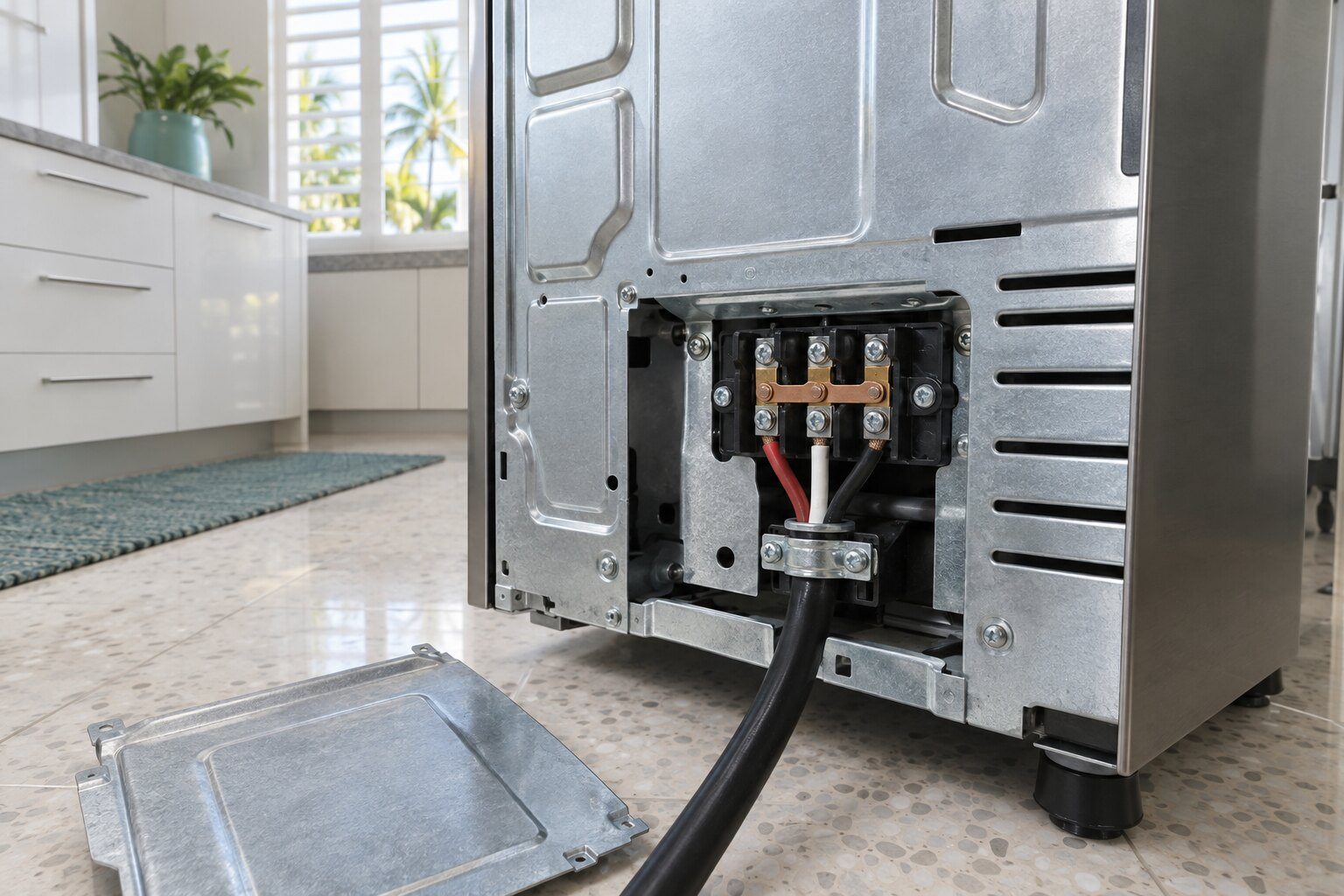
Asko has never sold a freestanding cooker in the United States, so every one we are called to arrived by import or with somebody who moved. That changes the order of work: before anything inside the appliance is measured, we establish what supply it is actually running on. A machine built for a European supply and fed here through a transformer, a rewired plug or an improvised connection behaves in ways that read as appliance problems — slow heating, a grill that never reaches temperature, a control board that resets mid-program. Fitting a part onto a wiring problem does not hold and nobody gains from it. The second question follows immediately: these cookers publish no error codes at all, their manuals are symptom, cause and remedy, and their parts come through a European channel, so the timing is part of the answer rather than a footnote.
The full guide
Every Asko cooker in South Florida came from somewhere else. That single fact reorders the whole visit.
Not a US product, at all
There is no Asko cooking range in the United States catalog and there never has been.
Asko is a component brand in the American market: separate built-in ovens and hobs, no freestanding cooker line, and none has ever been listed here. The Scandinavian CC-series machines turn up in two ways — brought by somebody who relocated, or specified into a kitchen by a designer who knew the line.
Once installed they need servicing like anything else. What differs is what has to be established first.
Supply before appliance
A cooker built for a European supply and run here is being fed by something: a transformer, a rewired plug, a dedicated circuit somebody put in, or an arrangement nobody has looked at since the machine arrived.
When that supply is marginal, the machine reports it as its own failure:
- Slow heating that looks like a tired element.
- A grill that never reaches temperature, which looks like a thermostat.
- A board that resets mid-program, which looks like electronics.
All three are supply symptoms before they are appliance ones, and all three are frequently repaired as appliance problems by somebody who did not check. The measurement is voltage under load at the appliance, not at the wall socket — the difference between those two readings explains a surprising share of these complaints.
There is no code to read
The CC-series manuals are organized as symptom, cause and remedy and carry no error numbers anywhere. That is not a missing feature and not a broken display; it is how the machine was documented.
So the diagnosis is done the way it was before codes existed: what fails, when, whether it is one function or all of them, and what the readings are at the component. It takes the time that implies, and it is honest work.
The parts question, answered before you commit
Everything on these comes from Europe. Elements, thermostats, switches, seals and hinges are conventional components on an unusual route, and the honest variable is the wait rather than the difficulty.
We identify the part against the exact model, state its route and its lead time, and leave the decision with you. Where a major board has no supply route at all, we say that rather than starting.
What this coast takes first anyway
Not the electrics. Salt reaches trim, fasteners, hinges and handles on an imported cooker years before it reaches a heating element, and those are cheap and replaceable. On a machine worth keeping, that is the maintenance that keeps it worth keeping.
If it turns out to be a repair
What this leads to, and what it costs
Every job on this site is priced the same way: an on-site diagnostic first, the figure agreed in writing before anybody starts.
-
from $215 Imported range service
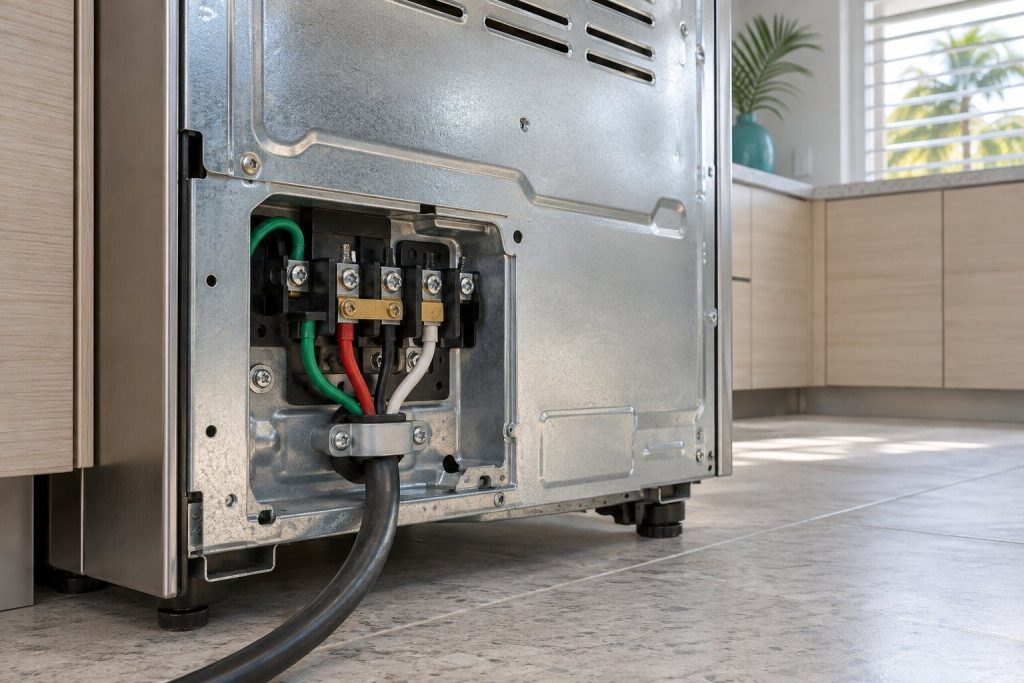
The Scandinavian cookers that were never sold here, brought over by somebody who moved or specified by a designer who knew the line. Servicing them is ordinary work with two unusual questions attached, and both are settled before anything else: what supply the machine is actually running on, and whether the parts it needs have a route. A repair fitted onto a wiring problem does not hold, and a diagnosis that ends in an unobtainable part helps nobody if it arrives after the invoice.
- Supply checked first — a transformer or a rewired plug fakes many errors
- Parts route and lead time established before the work is agreed
- No code tables exist for these: the manuals are symptom, cause and remedy
-
from $175 Range element and thermostat repair
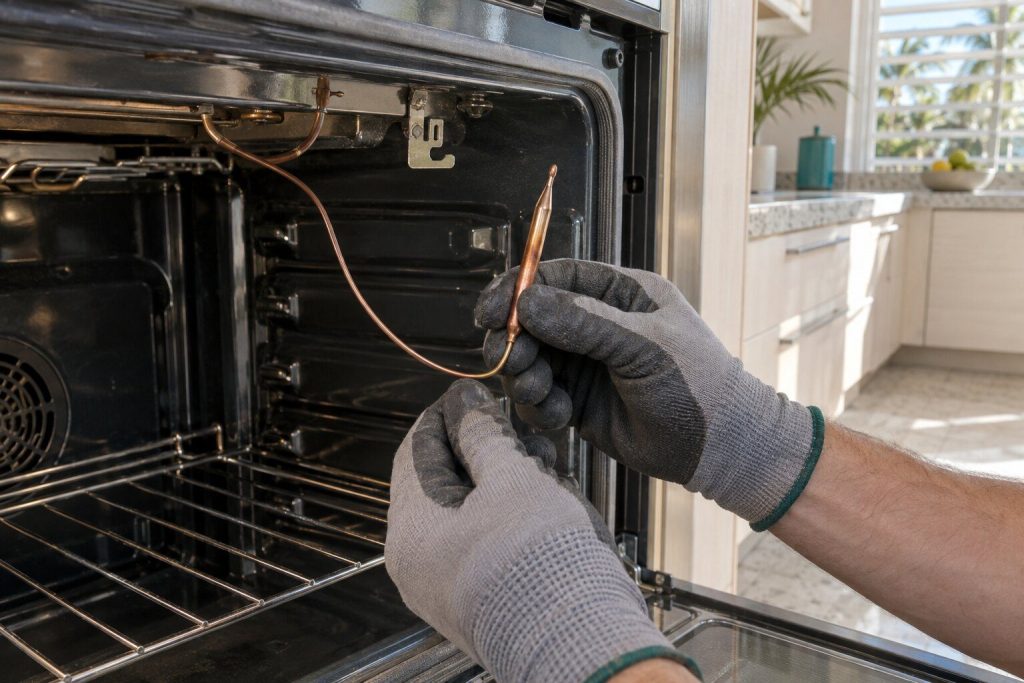
Ovens and hotplates on the imported cookers, where the mechanics are familiar and the supply is not. Elements, thermostats and switches on these are conventional parts that do conventional things; what differs is that they come from Europe and that a machine wired for a European supply may be running them outside their design. We measure the supply before we condemn a component, because a thermostat that looks lazy on a low voltage is a thermostat somebody paid for twice.
- Supply measured before any component is condemned
- Elements, thermostats and switches are ordinary parts on an unusual route
- Salt reaches trim and fasteners here long before it reaches an element
-
The door shuts, the program is chosen, and nothing happens Dishwasher will not start
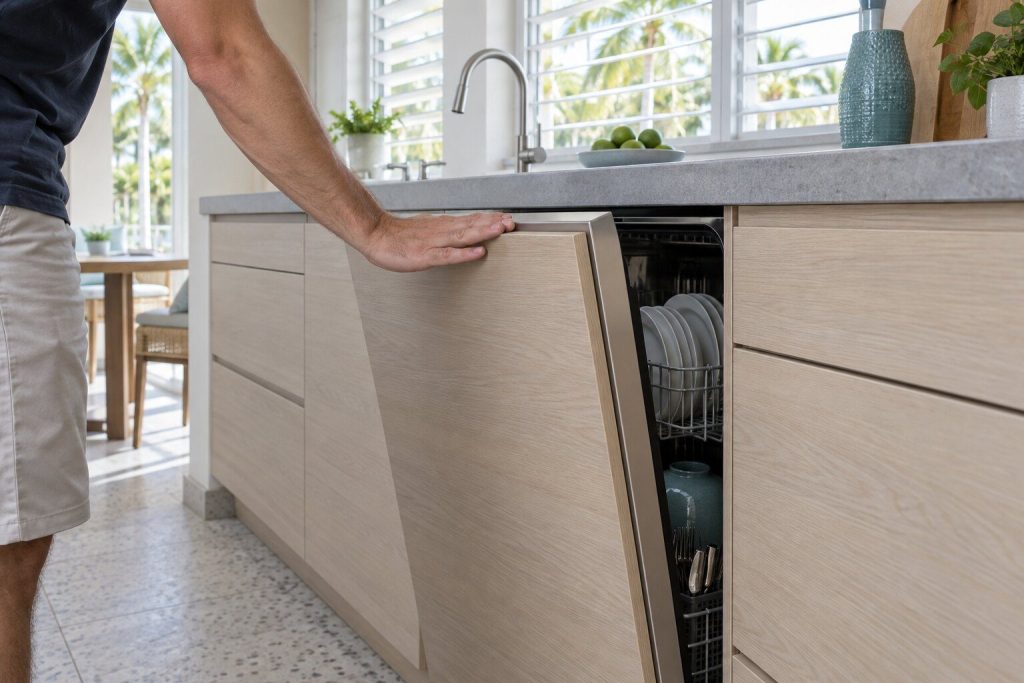
Dead silence, and on an integrated machine the prime suspect is mechanical rather than electrical: is the door. A custom panel adds weight the hinge springs were set for on installation day, joinery settles over the years, and a door that looks perfectly shut can be sitting a millimeter proud of the switch that proves it. On the Outdoor machines there is even a message for it in as many words. After the door there is the supply, and then a control that is genuinely not responding — in that order, because that is the order of cost.
- Push the door firmly and try again — on an integrated machine this is the usual answer
- A delay start nobody cleared behaves precisely like a dead machine
- Check the socket behind the cabinet, which nobody can see

Questions people ask about this
It has worked for years. Why check the supply now?
Because a marginal supply and a marginal component look identical, and years of working is not evidence that the connection is right — it is evidence that the machine tolerated it. Measuring takes minutes and it prevents the most expensive mistake available here, which is a board fitted onto a wiring problem.
Is a transformer safe?
A correctly specified one, professionally installed, is a legitimate solution and plenty of these machines run on one. An undersized one is not: it sags under load, which is exactly when the oven is drawing most, and the appliance sees a supply that comes and goes. Rating and installation are what separate the two.
Will you work on it at all?
Yes. The mechanics are ordinary — elements, thermostats, ignition, seals, hinges. What we will not do is take on a job whose parts have no route, and we say which case yours is at the diagnostic rather than after.
Safety & Risks
More guides like this one
-
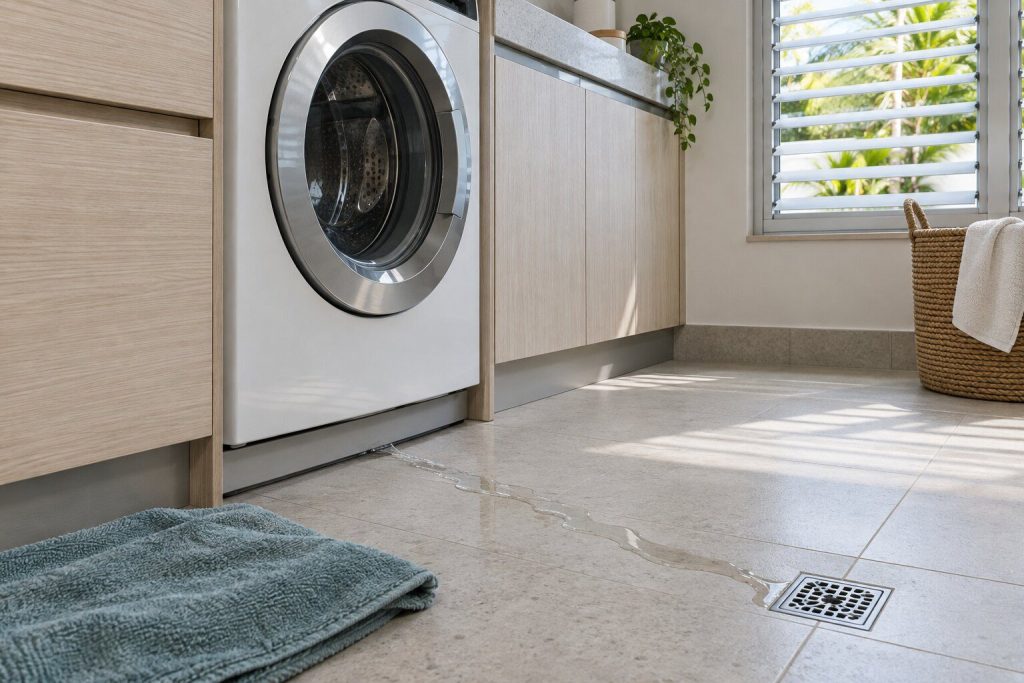
A Small Leak Under an Asko Washer Is Not a Small Problem in a Condominium
A washing machine moves several gallons per program. A leak that puts a cup on the tile during a wash puts considerably more into the structure over a week of ordinary use.
Read more -
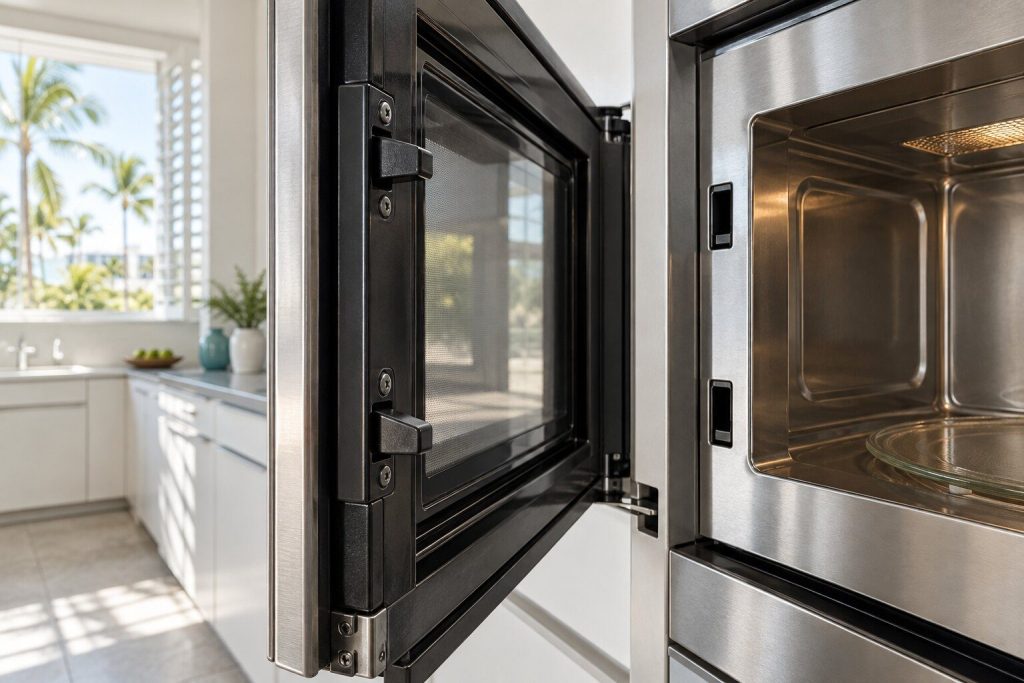
An Asko Microwave Door That Needs a Push: Stop Using It
A microwave door is a shielding component, not a lid. Three interlock switches in series prove to the machine that it is safe to run, and a door that has dropped stops satisfying them.
Read more -
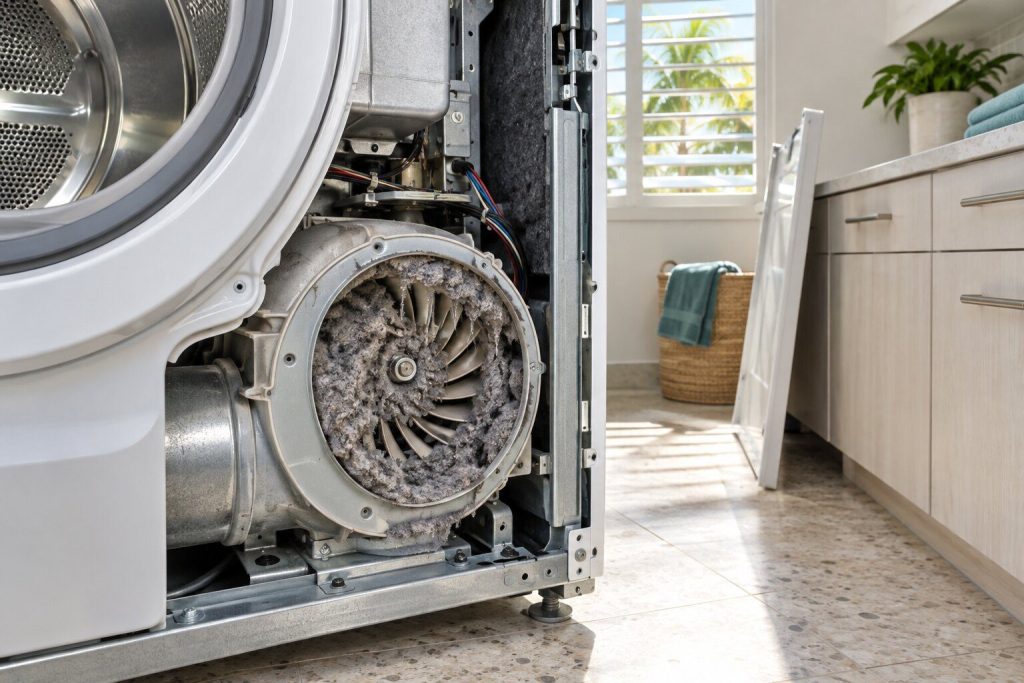
The Lint You Cannot See in an Asko Dryer
The door filter catches the big lint. What gets past it collects inside the cabinet, around the fan and against the heat exchanger — where no owner check reaches and no code exists.
Read more
Tell us the model number and what it is doing.
This article is based on:
- Official manufacturer documentation
- Internal repair procedures
- Technician repair history
- Company quality standards