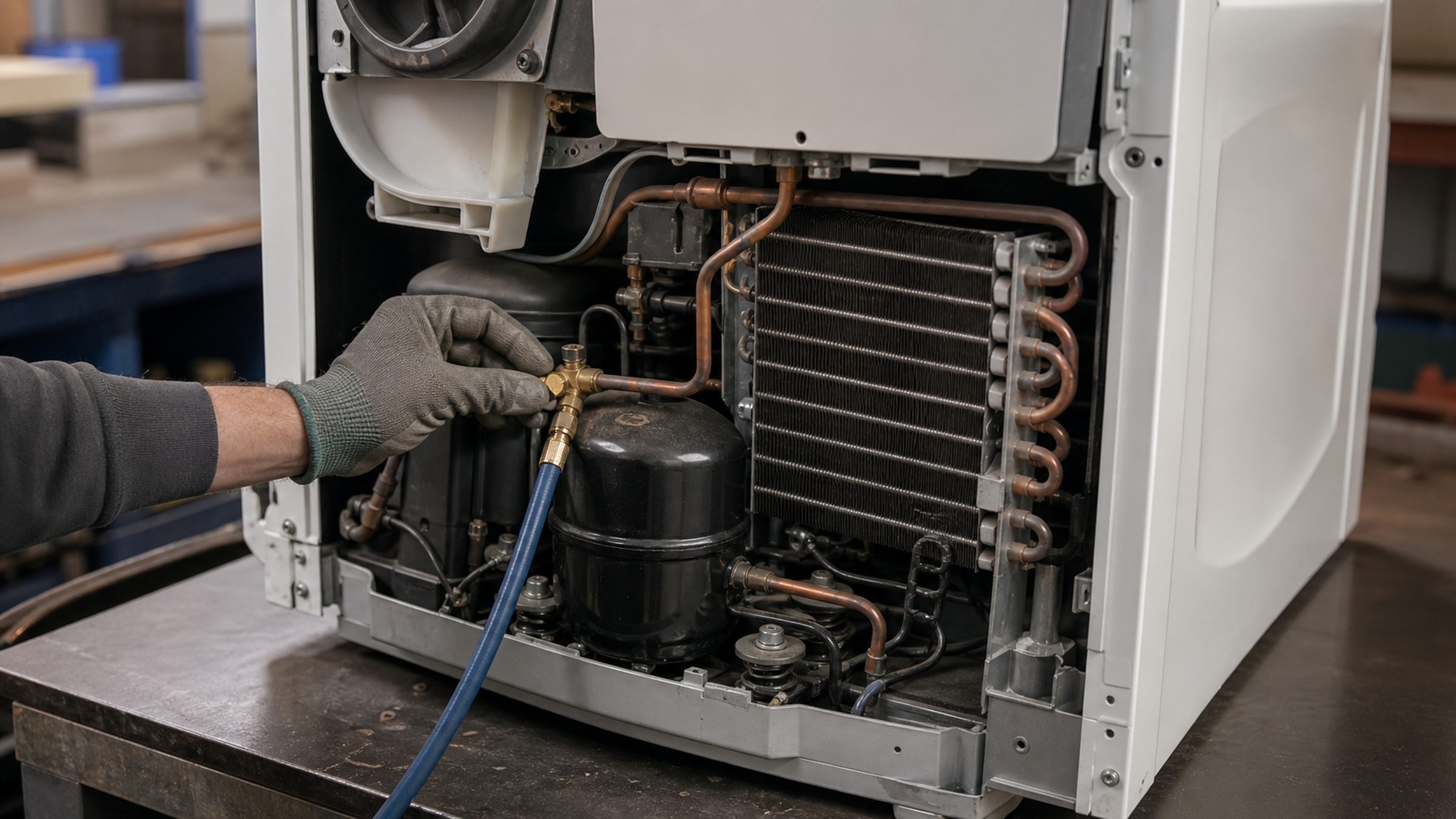
Service
Asko condenser dryer service
The maintenance visit these machines need on a schedule and rarely get. A condenser dryer works by pulling moisture out of air and giving the heat back, and it is being asked to do that in a closet that may sit at eighty per cent humidity for half the year. Nothing about that is a failure — it is a shorter interval. The machines that reach fifteen years here are the ones where somebody cleared the condenser twice a year instead of waiting for a cycle that never ended.
- From $95 diagnostic, credited to the repair
- 59 cities and neighborhoods covered
- OEM parts available on order
- In writing the price, before anything is opened
Before you read on
What this job costs and how it is agreed
A starting figure, not a quote. What moves it is the model, how the unit is built in and which part it needs — settled after the on-site diagnostic.
Starts at
from $145
After a diagnostic from $95, which comes off the bill when you go ahead.
or call (305) 363-1406
Diagnostic
From $95, credited to the repair
The price
In writing, before anything is opened
Warranty
On the labor we performed
On the visit
How this visit actually goes
The same order every time, so nothing is opened and nothing is charged before you have seen the figure and said yes.
-
01
Strip and wash the condenser
Block removed and flushed until the water runs clear, housing cleaned, and the seals checked before it goes back. Tapping it out over a bin is not this.
-
02
Clean everything the air passes
Lint filters, the fan and its housing, and the ducting inside the machine. Lint that gets past a filter collects where nobody sees it.
-
03
Log the cycle time
A standard load timed and written down. Drift in that number is the earliest warning these machines give, and it only means something if somebody recorded it last time.
Applies to
The Asko units we carry this work out on
-
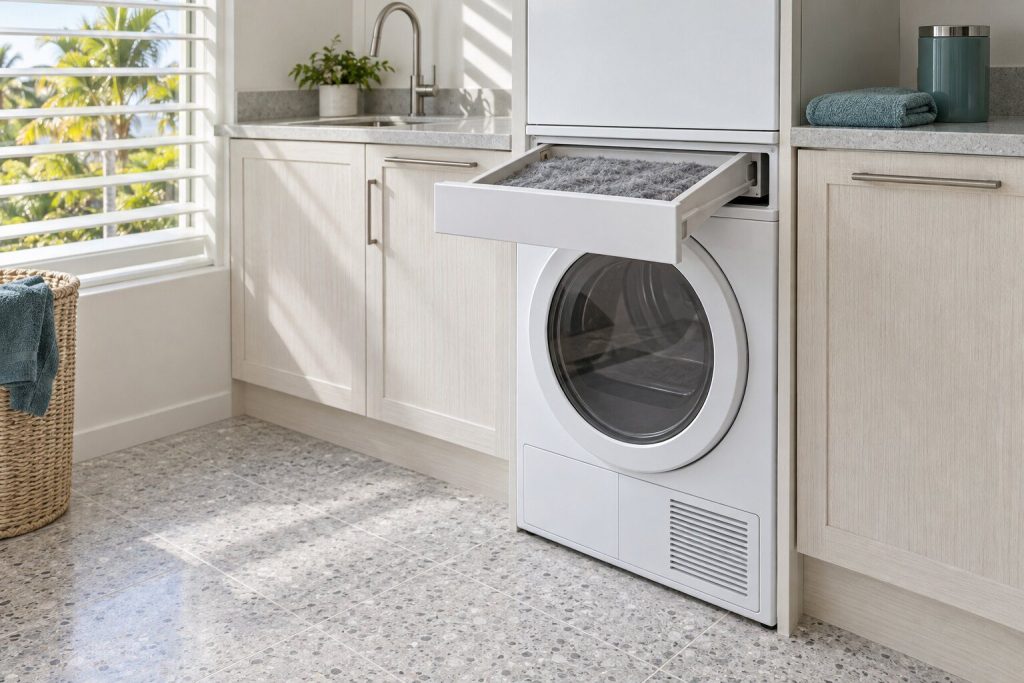
Twelve US models · condenser and heat pump, and codes that change with the board Asko dryer repair in Miami
Condenser and heat pump machines, which is the right choice for a closet with no external wall and the wrong machine to treat like a vented dryer. No air leaves the room: water is condensed out and kept, so a container left full or a loaded condenser filter halts the cycle every bit as firmly as a crushed duct halts a vented machine. The codes here move with the control board rather than with the model name — one revision signals L2 to L4, a later one prints F10, F29 and F30, a later one again uses S-numbers, and the steam and heat-pump platform spells ERROR_0 through ERROR_5 in full. The simplest analog condenser machines publish no codes at all, and that absence was checked rather than assumed.
- Twelve US models — condenser and heat pump, no external vent required
- Codes follow the board: L2–L4, then F10/F29/F30, then S1–S9, then J1 and LCD1–3
- The T208V family publishes no codes at all — verified absence, not a gap in our research
In more detail
About Asko condenser dryer service
A schedule, and a shorter one than the manual assumes
The service interval printed in the manual was written for a temperate laundry room. An interior closet here sits at high humidity for months, the machine moves more moisture on every load, and the filters load in proportion. The visit washes the condenser block until the water runs clear, clears the lint that has got past the filters into the fan housing and the ducting, cleans the sensor bars, and records a timed standard load — because cycle length is the earliest warning these machines give and it only means something if somebody wrote the previous figure down.
This article is based on:
- Official manufacturer documentation
- Internal repair procedures
- Technician repair history
- Company quality standards
Before you book
Questions about Asko condenser dryer service
My dryer cleans its condenser automatically.
Several of the 5-series and 7-series do, and it genuinely extends the interval. It does not remove the need: the automatic cycle flushes, and what it flushes still has to go somewhere.
How often, realistically?
Twice a year in a household here. On a machine doing building duty it is closer to every six weeks, because those run a household year of cycles in that time.
Where we do it
Across Miami-Dade, Broward, and Palm Beach
Same terms everywhere we go: an on-site diagnostic first, the price agreed in writing, and the exact figure confirmed once we have seen the unit.
Neighborhoods people ask for by name