Appliance
Asko cooktops
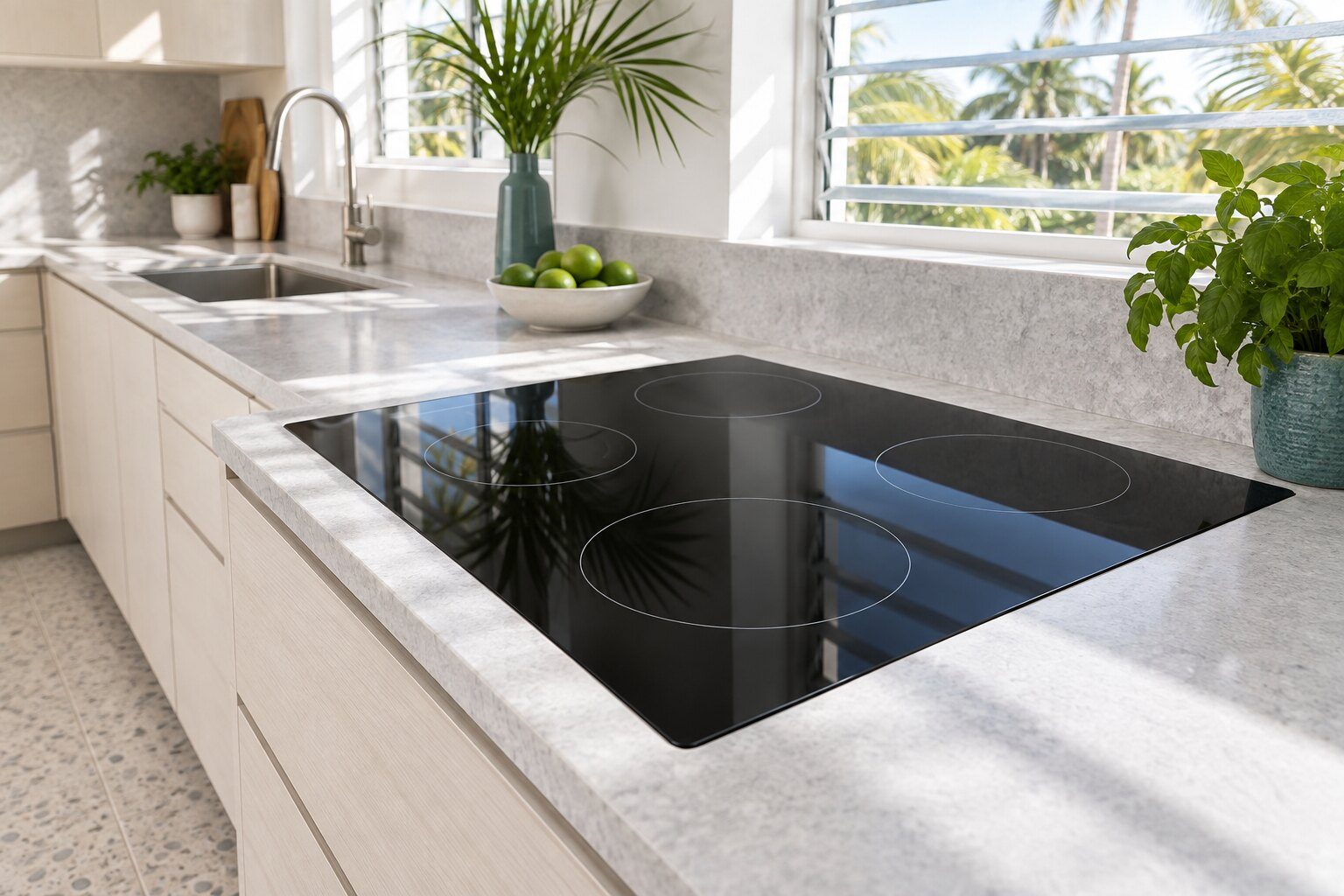
Asko calls them hobs, which is the first thing to know when you go looking for a manual, and there are none in the current US catalog — the ones here were fitted when there were. Induction is the majority, and the codes split cleanly into two families that share no numbers: the HI1655M generation prints F-codes, F00 and F0 through F9 with FA, FC and F99 among them, and the HI1621G generation prints E and Er strings instead, up to Er47 and U400. The two are not versions of one table, and a meaning taken from the wrong family is a wrong part. Gas hobs on this make publish no codes at all, which makes them the simpler call and not the lesser one.
- 1 symptoms we are called out to
- From $95 diagnostic, credited to the repair
- 59 cities and neighborhoods covered
- OEM parts available on order
The short version
What this equipment is, for a repair
Configurations
Induction and gas · two code families that do not overlap
Access
Planned before the visit, not discovered on arrival
Parts
OEM, available on order
Diagnostic
From $95, credited to the repair
What goes wrong with it
Symptoms we are called out to on Asko cooktops
Each one covers the likely causes in the order they are worth checking, and what to do in five minutes before booking anything.
-
Three zones work and the fourth does nothing One induction zone dead
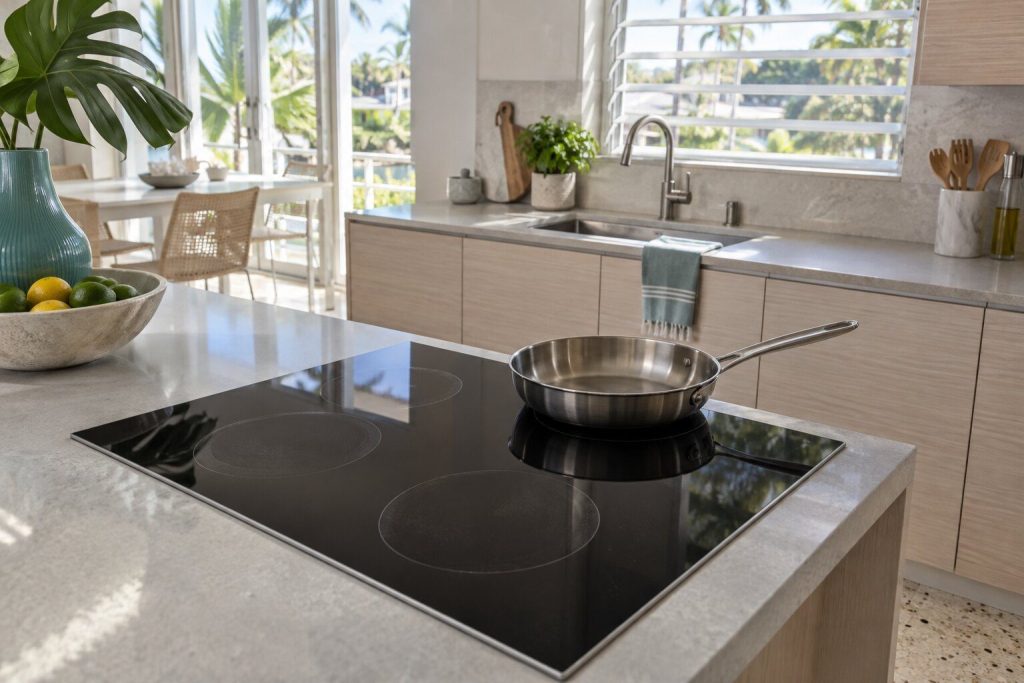
A single dead zone on an induction hob is better news than it sounds: the problem is usually local to that zone's coil or to its section of the generator board, which leaves the supply and the main control out of it. Two things produce an identical symptom for nothing and both are checked first — a pan without a ferromagnetic base, settled by a magnet in two seconds, and a lock or child-safety state that looks exactly like a failure from the front.
- A magnet on the pan base settles the commonest cause in two seconds
- Lock and child-safety states look identical to a dead zone
- Two adjacent zones failing together means a board section, not a coil
What we do on it
Repairs we carry out on Asko cooktops
Starting figures for this equipment in South Florida. The exact cost is confirmed after an on-site diagnostic — and this is not the whole list of what can go wrong, so call if your problem is not here.
-
from $95 Diagnostic visit
Establishing what is actually wrong with the machine, ahead of naming or costing a part. Here one thing has to be settled before the complaint can even be read: which generation is standing in the kitchen. Digits on this badge belong to whichever board prints them, so a dishwasher, washer or dryer measured against the wrong table produces a confident answer and an incorrect part. You keep the charge against the repair when the work goes ahead; where our view is that spending money on this machine makes no sense, that view is what you have paid for and the amount stays the same.
- Generation before symptom — it settles which table the digits belong to
- The number is written down before the work, and it comes off the repair
- Where mending makes no sense we say it, instead of finding a part to sell
-
from $115 Platform identification
The job this make needs and no other make on our list does. Three dishwasher generations, five washer code families, dryer schemes that change with the control board and two induction families that share no numbers — and from the front of the kitchen they are indistinguishable. This is the visit that settles which machine is actually in the run, records it, and gives you a code table that applies to your appliance instead of to the badge in general. For anyone who intends to keep the machine another decade it is the cheapest useful thing we sell.
- Which generation, which board, which code table — established and written down
- Turns every future number on the display into something readable
- Credited in full against a repair if it is booked in the same visit
-
from $155 Appliance maintenance
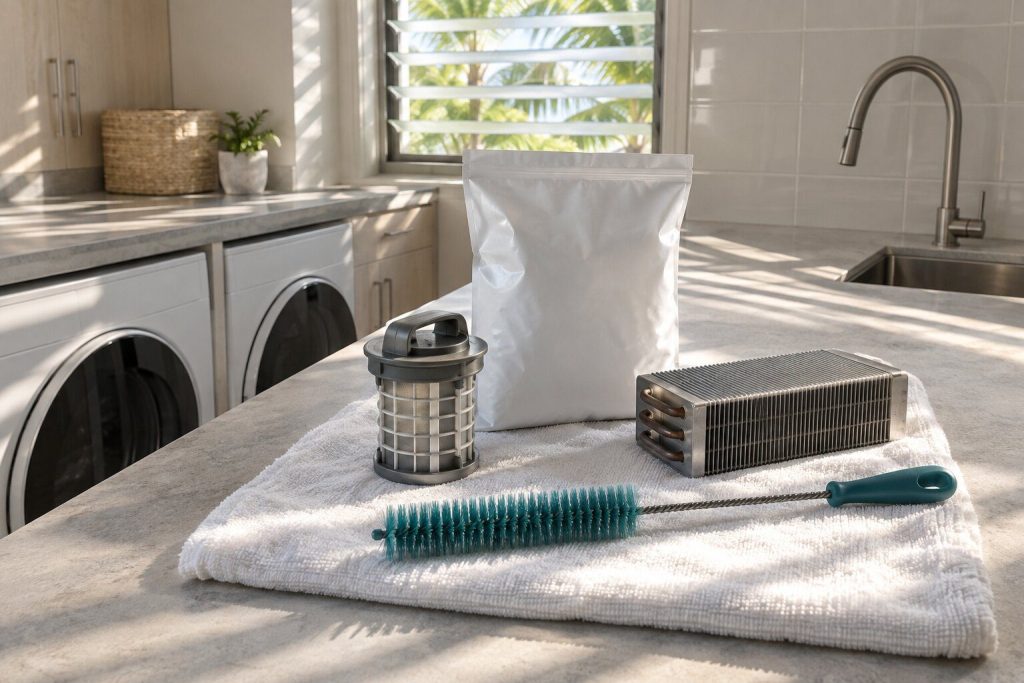
A planned visit rather than a rescue, and on this make it pays for itself faster than on most. These are machines built to run for twenty years, which means the things that end them early are almost all maintenance items — a condenser filter packed solid in a laundry closet at eighty per cent humidity, a dishwasher filter stack nobody knew lifted out, a door seal cutting itself on grit. Every one of those is minutes of work and none of them announce themselves before they cost a part.
- Filters, seals, drains and airflow — the four that end machines early here
- One visit covers every Asko appliance in the property, not one machine
- Written record of what was found, so the next visit is not a fresh start
-
from $185 Appliance installation
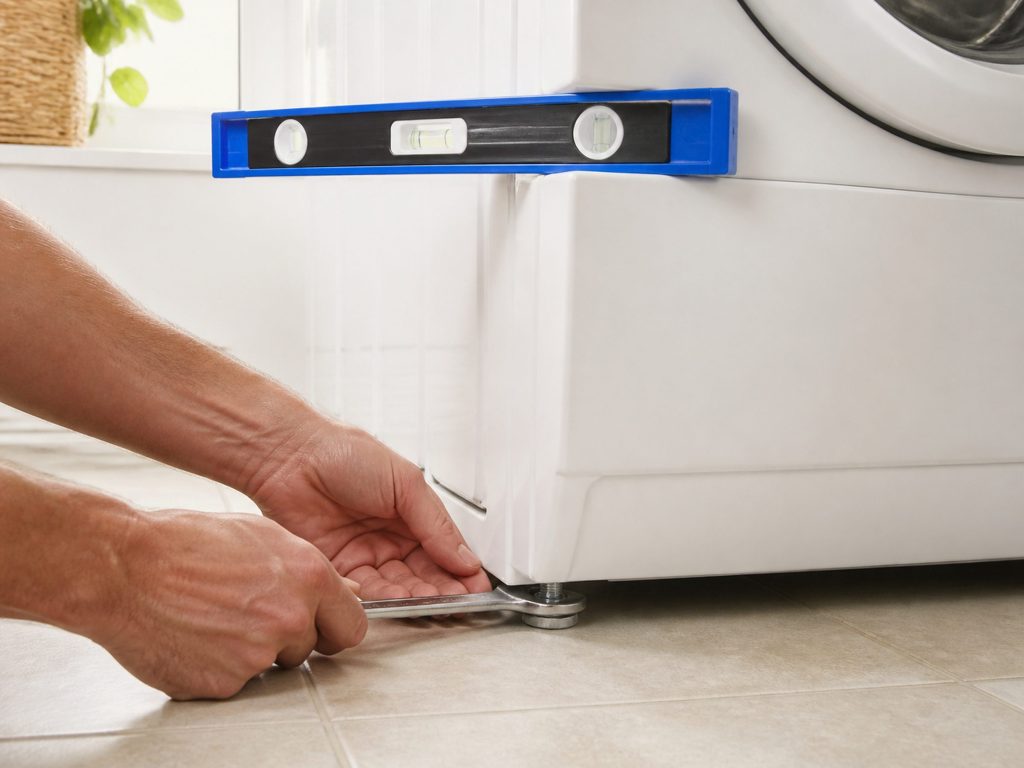
Fitting a machine into a space that was drawn for another one, which in this county is most installations. On integrated equipment the appliance is the easy half: the panel, the scribe, the toe kick, the services behind and the air the machine needs to breathe are the work. We measure the opening before anything is ordered, because an integrated cabinet that does not fit is not a delivery problem, it is a joinery problem, and it is far cheaper to find out on a Tuesday with a tape measure.
- The opening measured before anything is ordered, not after it arrives
- Panel, scribe and toe kick treated as part of the job, not as somebody else's
- Air path checked and recorded — a boxed-in machine fails whatever is fitted
-
from $285 Control board repair
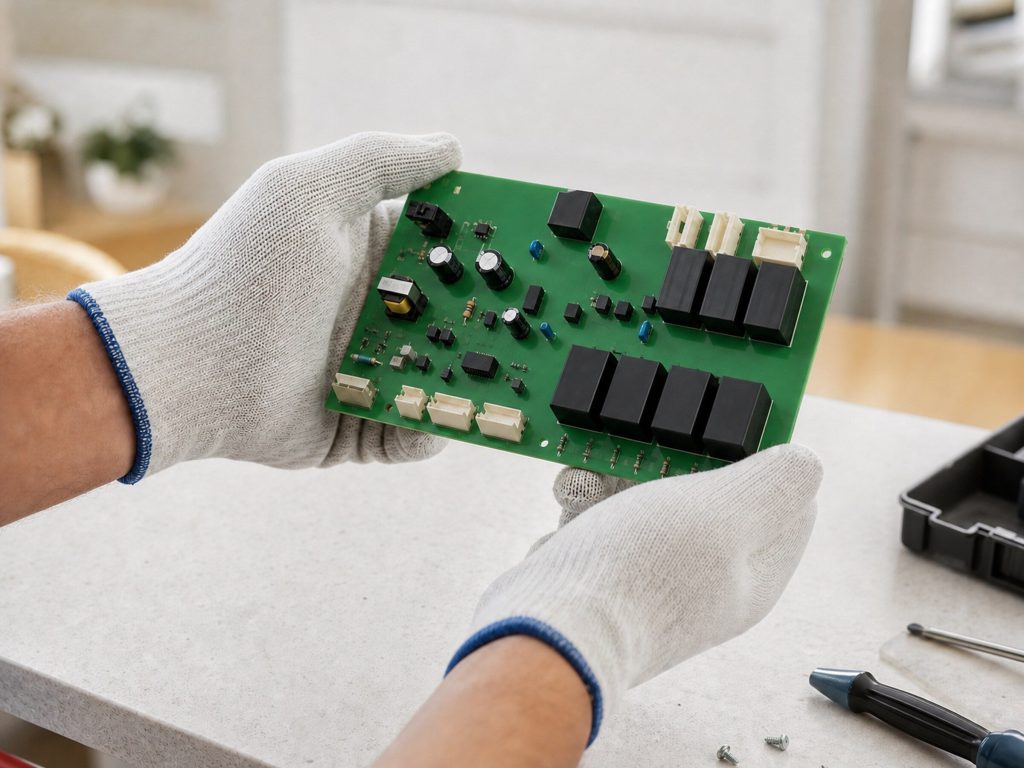
The repair where being honest about the supply chain matters more than being quick. Boards on this make come through a European channel, and on a machine that is no longer in the US catalog that is a real wait rather than a phrase. So the order here is fixed: prove the board is the problem, price the part with its lead time attached, and only then decide. A board fitted to cure a supply problem or a water-ingress problem will fail the same way in a season, and we would rather find the water.
- Proven, not assumed — the board is the last suspect, never the first
- Lead time is quoted with the price, because on this make it is part of the answer
- Water ingress and supply errors found first, or the new board follows the old one
-
from $205 Induction cooktop repair
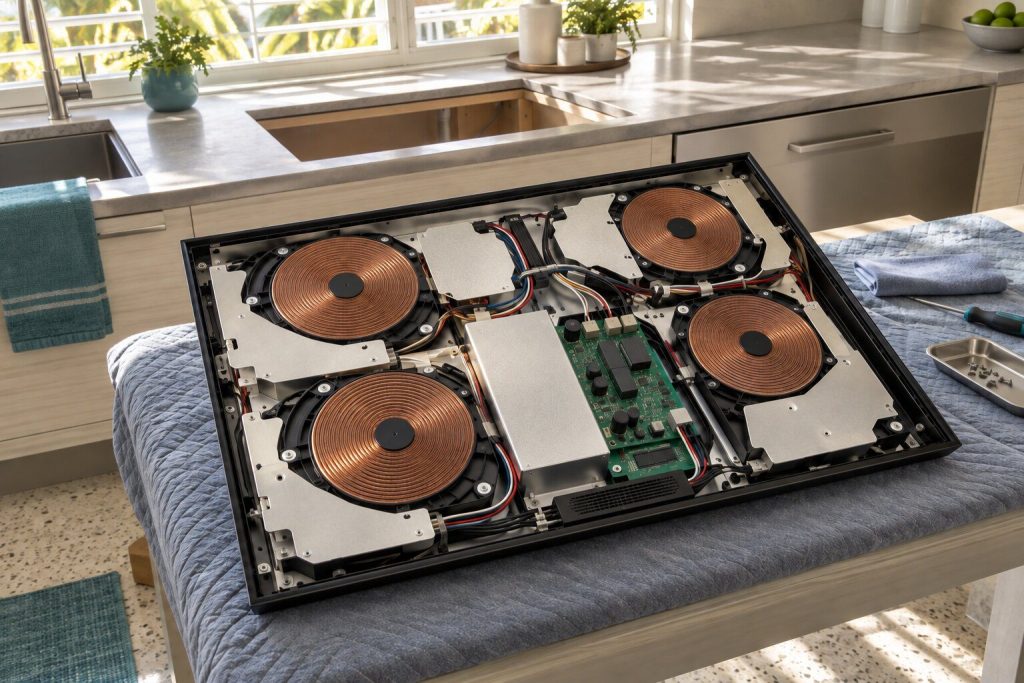
The majority of what this make put into kitchens here, and the codes divide into two families that share no numbers at all: one generation prints F-strings, the other prints E and Er strings, and reading one against the other's table is how the wrong board gets ordered. Two free checks come before any of that, because they account for a good share of these calls: whether the pan is actually induction-capable, and whether the hob has been left in a lock or child-safety state that looks identical to a failure.
- Two code families, no shared numbers — the model settles which table applies
- Pan and lock state checked first, because both mimic a dead hob exactly
- Overheating from a blocked air path under the counter, which is common here
-
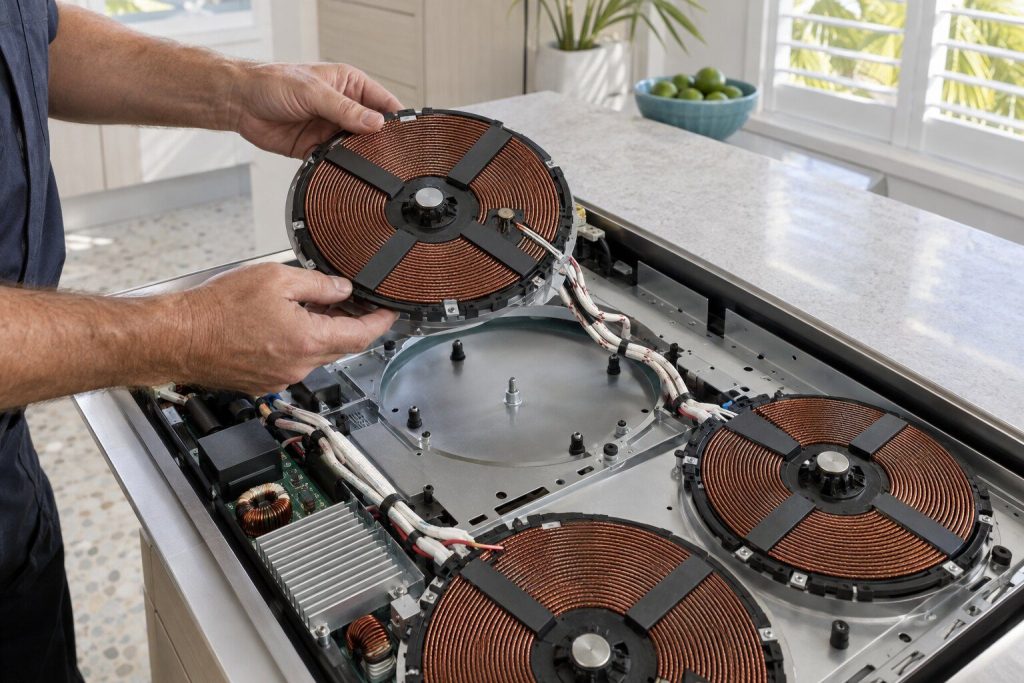
from $189 Induction zone and coil repair
One zone dead while the others work, which on induction is better news than it sounds: the problem is usually local to that zone's coil or to its section of the board, and the supply and the main control are out of it. What we check before opening anything is the pair of things that produce an identical symptom for nothing — the pan, and a bridged or linked zone setting that has moved a zone's power somewhere else without anybody meaning to.
- One dead zone implicates its own coil, not the hob's supply
- Bridge and link settings can move power silently and look like a failure
- Glass lifted only after the electrical reading says it has to be
-
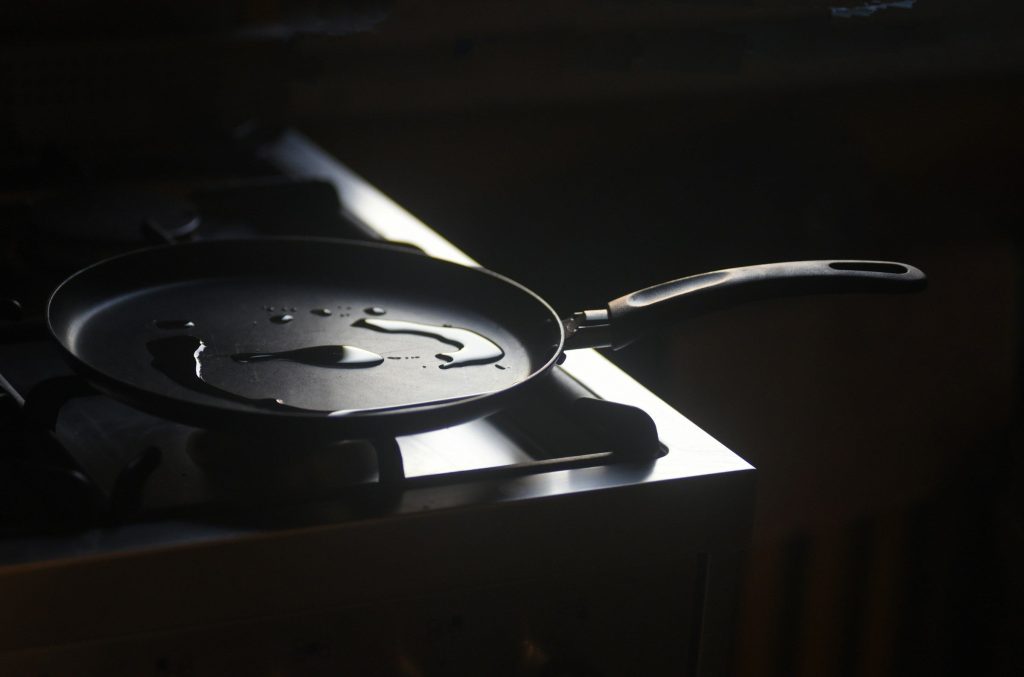
from $275 Cooktop glass replacement
A cracked or shattered induction top, which is not a cosmetic repair and should not be treated as one. A crack lets moisture down onto the coils and the board beneath, and the failure that follows is electrical. The right first action is to stop using it and isolate it at the breaker. Whether it is worth replacing depends on the model and on what has already got through, and on a hob no longer in the US catalog it depends on the glass still being available — which we check before quoting.
- Stop using it and isolate at the breaker — this is not cosmetic
- Availability checked before a figure is quoted, not after it is accepted
- What the crack has already let through decides whether glass alone is enough
-
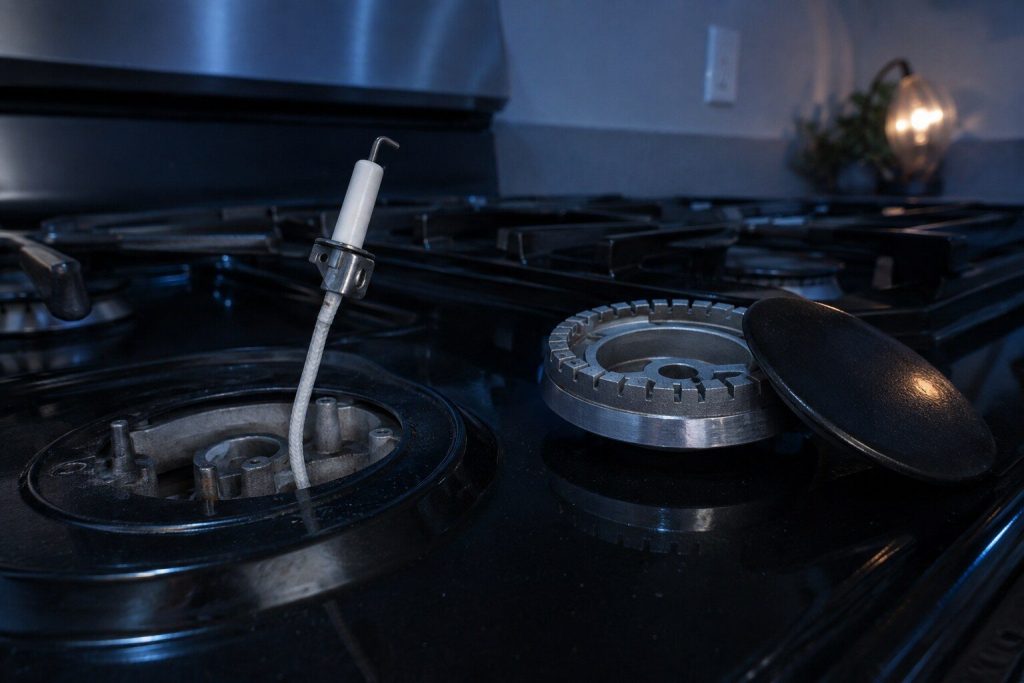
from $155 Gas hob burner and igniter repair
The simpler call on this make and not the lesser one: gas hobs here publish no codes at all, so the diagnosis is flame, spark and gas train, done by observation and measurement. A burner that clicks and will not light, one that lights and drops out, and one that burns yellow are three different problems, and which it is can usually be told before we arrive. Anything involving gas is left safe rather than merely working, and we say plainly when something is outside our trade.
- No codes on gas here — flame, spark and gas train, measured
- Clicking, dropping out and burning yellow are three separate problems
- Left safe rather than merely working, and we say when it is not our trade
In more detail
About Asko cooktops
Called hobs, and none in the US catalog
The maker calls them hobs, which is the first obstacle when looking for a manual, and there are none listed for sale here — the ones in South Florida kitchens were fitted when there were. Induction is the majority, with gas alongside it.
Two families that share no numbers
One generator generation prints F-strings, the other prints E and Er strings, and they do not overlap. A meaning taken from the wrong family buys the wrong board. Gas hobs publish no codes at all, which makes them the simpler call rather than the lesser one — flame, spark and gas train, measured.
This article is based on:
- Official manufacturer documentation
- Internal repair procedures
- Technician repair history
- Company quality standards
Before you book
Questions about Asko cooktops
Three zones work and the fourth does nothing.
On induction that usually counts as good news, because one dead zone implicates its own coil or its own section of board and leaves the supply and the main board out of it. Two things to check first, and both are free — that the pan is actually induction-capable, since a magnet on the base settles it, and that the zone is not in a lock or a child-safety state, which looks identical to a failure. If it is neither, the part is usually local to the zone.
What does Er03 mean?
That string places the hob in the E-series family, which narrows the model list immediately — the F-series machines never print it. Within that family the Er and E numbers are documented per model rather than across the range, so we ask for the model code off the underside sticker or the paperwork before saying anything specific. Reading an E-code against an F-series table is how the wrong board gets ordered on this make.
It clicks and turns itself off after a minute.
On an induction hob that pattern is usually heat rather than electronics: the cooling fan under the glass has an air path, that path runs through the cabinet below, and in a tight island with a drawer stack behind it the hob overheats and protects itself. It shows as an intermittent failure that gets worse in the afternoon, which is exactly what a Miami kitchen does to it. Fixing the airflow clears it more often than a part does.
The glass has a crack. Is it still safe?
No — stop using it and isolate it at the breaker. A crack in induction glass lets moisture down onto the coils and the board beneath, and the failure that follows is electrical rather than cosmetic. The glass is a replaceable part on these, and whether it is worth replacing depends on the model and on what the crack has already let through, which is a look rather than a phone call.
Where we do it
Across Miami-Dade, Broward, and Palm Beach
Same terms everywhere we go: an on-site diagnostic first, the price agreed in writing, and the exact figure confirmed once we have seen the unit.
Neighborhoods people ask for by name