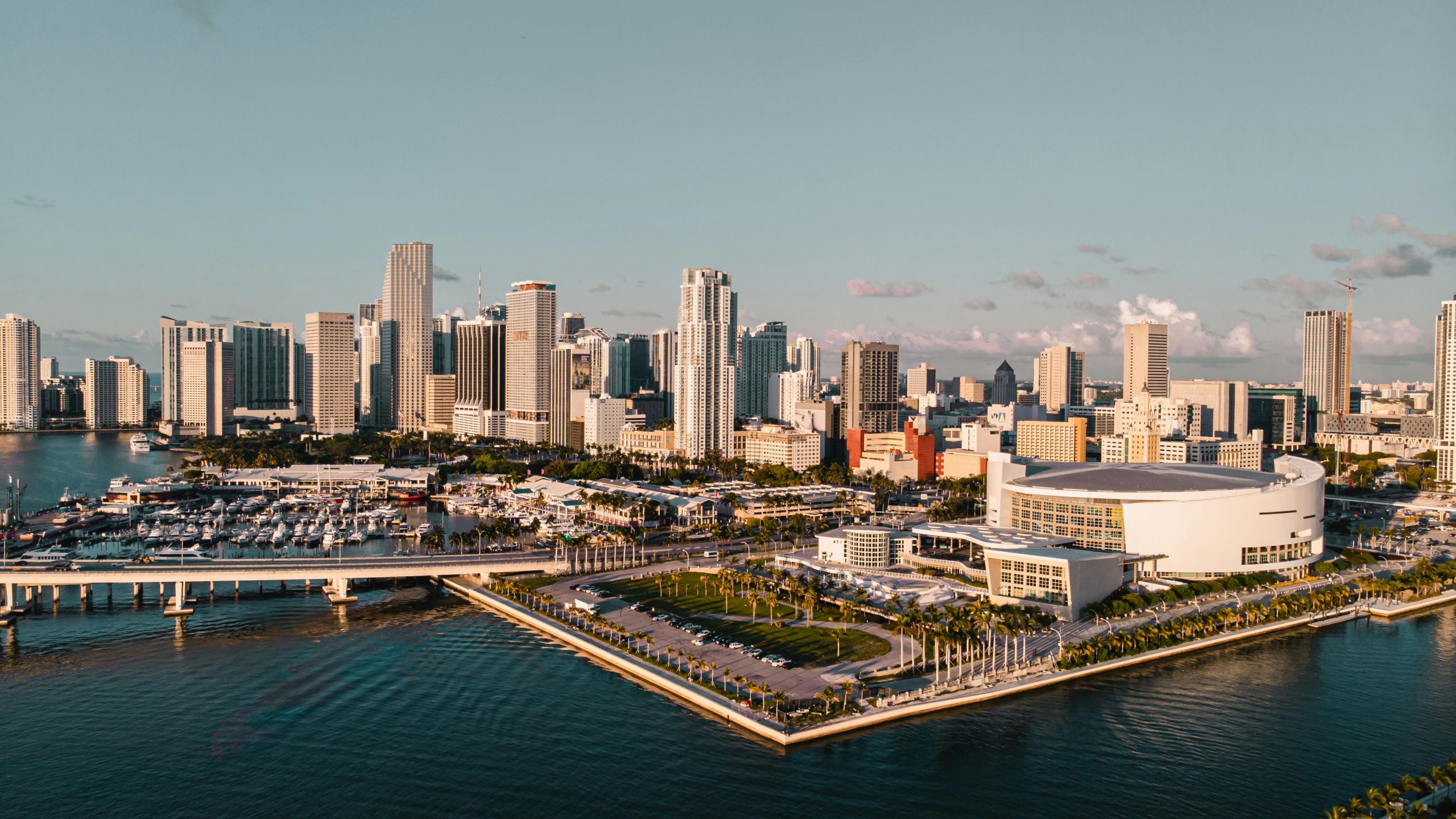
Miami-Dade · South Florida
Asko repair in Miami
Everything from a 1950s house in the north to a new tower downtown, which is why we ask for the model and the building before quoting a range rather than after.
We cover Miami and the rest of Miami-Dade: an on-site diagnostic first, the price agreed in writing before anything is opened, and the exact figure confirmed once we have seen the unit.
By unit
What we repair in Miami, by Asko unit
Start with whichever matches yours. How an appliance is installed shapes the visit as much as the repair does, which is why we ask about it when you book.
-
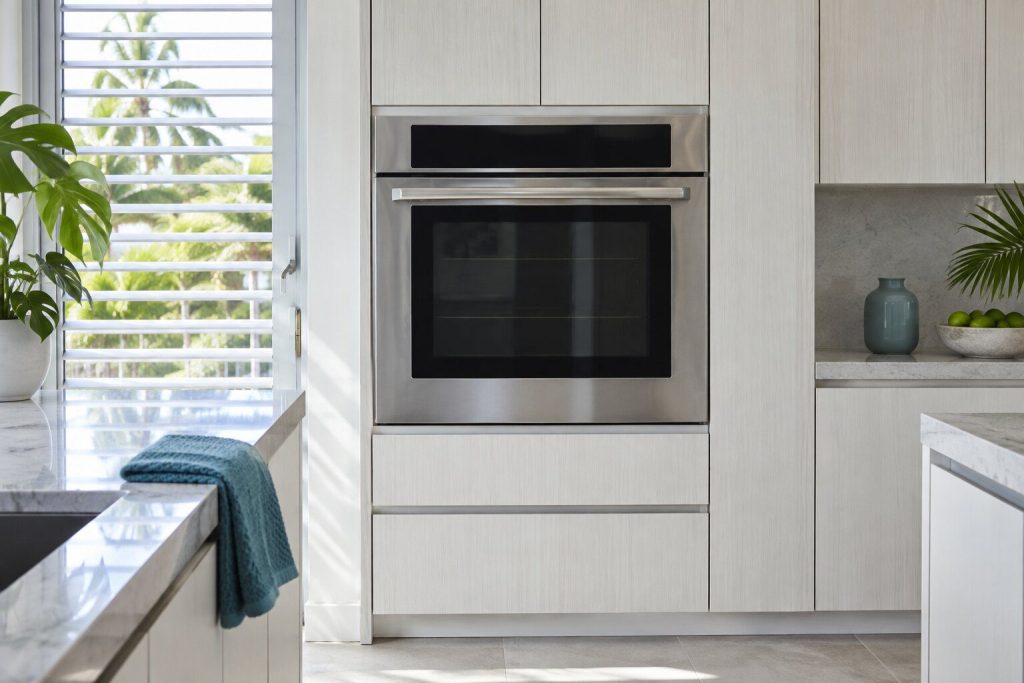
Built-in, combi-steam and combi-microwave · serviced here, no longer sold here Asko oven repair in Miami
Asko does not currently list a single oven on its US site, and this page is about the ones already fitted. They came in through earlier distribution and through kitchens specified around European appliances, and they are good machines in tall cabinet runs across Miami Beach and Coral Gables — multifunction, combi-steam and combi-microwave, with the jog dial and full-touch panels of the Craft and Elements design lines. The thing worth knowing before you call anybody: when one of these fails it puts ErrXX on the display and stops there. Three separate manuals decode that string the same way, which is to say they do not decode it at all — disconnect, reconnect, and if it comes back call a technician. It is a signal, not a code, and no honest page can turn it into one.
- No US catalog listing today — every oven we open here arrived by another route
- ErrXX is displayed and never decoded: three manuals say only to call a technician
- Combi-steam and combi-microwave cavities need the water circuit checked, not just the element
-
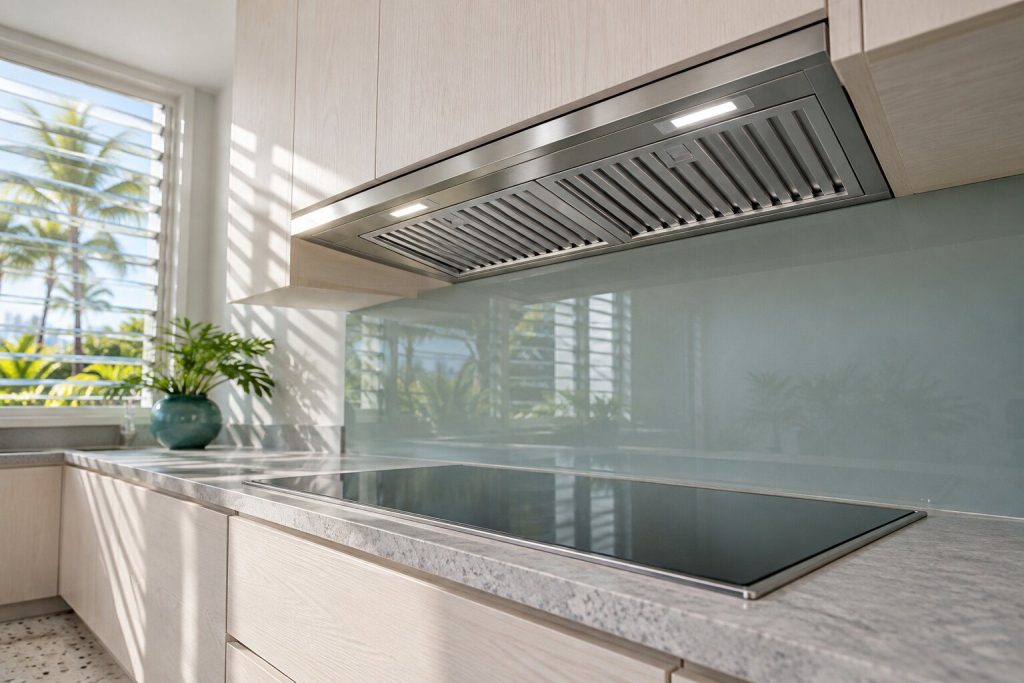
Concealed liners · manuals with no troubleshooting section at all Asko range hood repair in Miami
Concealed liners for the most part, built to disappear into the cabinet above the hob so that only a strip of steel and a slide-out shows. They are the quietest page on this site to write because there is genuinely little to report: the CG1, CO4927S and CBB901SB manuals have no troubleshooting section whatsoever — not a thin one, not a symptom table, none. So everything here comes from what actually fails, which on a hood is four things: the motor, the switch or touch strip, the lamps, and the duct run somebody else installed. In this climate the fifth is the damper, which sticks with salt and stops the hood extracting long before anybody notices it has.
- No troubleshooting section exists in the manuals — three checked, all silent
- Four things fail: motor, switch, lamps and the duct somebody else installed
- Salt-stuck backdraft dampers are the local trouble nobody looks for
-
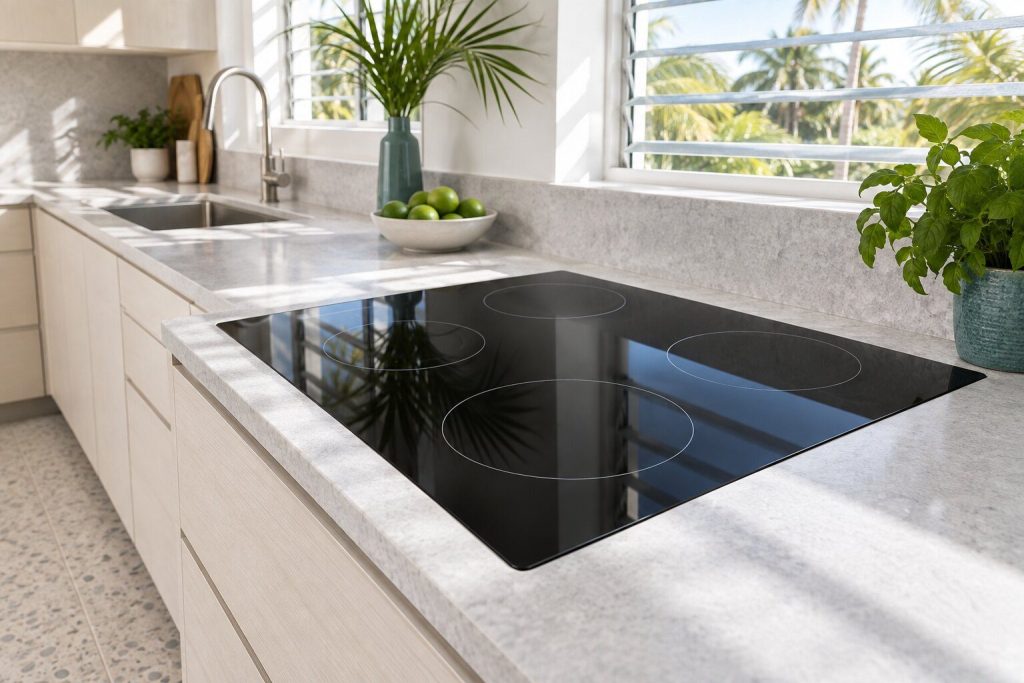
Induction and gas · two code families that do not overlap Asko cooktop repair in Miami
Asko calls them hobs, which is the first thing to know when you go looking for a manual, and there are none in the current US catalog — the ones here were fitted when there were. Induction is the majority, and the codes split cleanly into two families that share no numbers: the HI1655M generation prints F-codes, F00 and F0 through F9 with FA, FC and F99 among them, and the HI1621G generation prints E and Er strings instead, up to Er47 and U400. The two are not versions of one table, and a meaning taken from the wrong family is a wrong part. Gas hobs on this make publish no codes at all, which makes them the simpler call and not the lesser one.
- Induction hobs in two code families — F-series and E/Er-series, no overlap
- Gas hobs publish no codes: diagnosis is by flame, ignition and gas train
- Glass, trim and the cut in the stone decide the access before any part is named
-
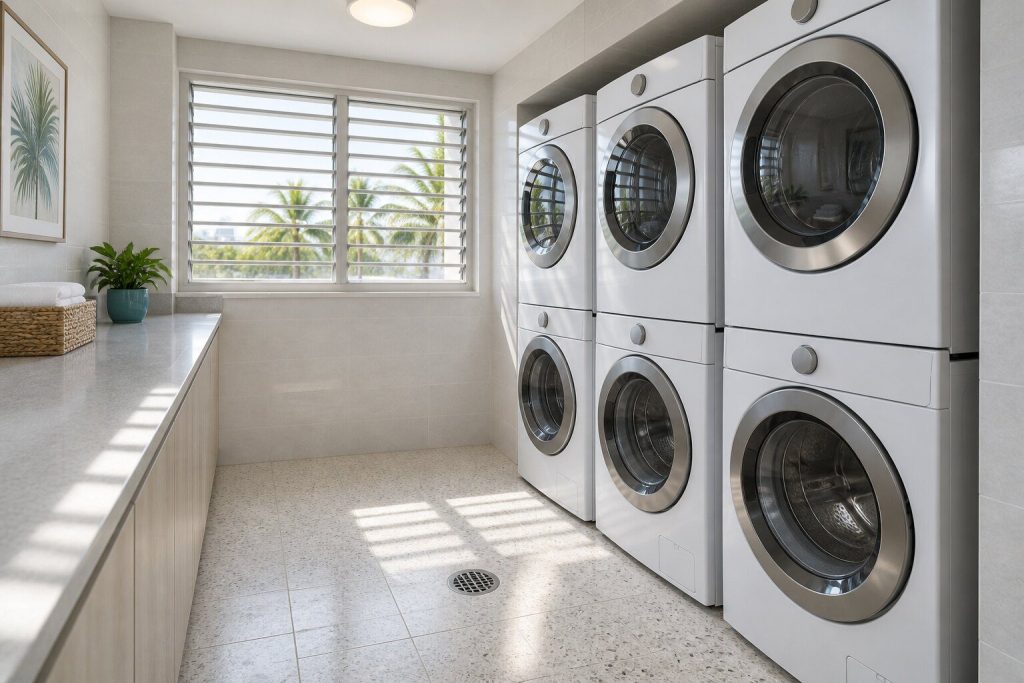
Domestic machines under building duty · the honest version of a commercial page Asko commercial installation repair in Miami
This is not a commercial catalog page, because there is no US commercial catalog on this badge to write one from. It is about a real situation instead: domestic Asko laundry doing commercial-scale work. A stacked pair in a condominium amenity room, a boutique hotel's housekeeping closet, a salon washing towels twice a day — machines specified for a household and asked to run twenty cycles a week. They tolerate it better than most, which is exactly why they end up doing it, and the failure pattern that follows is its own thing: wear parts arrive years early and everything else arrives on schedule. A maintenance interval that suits a family is the wrong interval for a building, and getting that number right is most of what we do here.
- Domestic machines in building duty — said plainly, because there is no US pro line
- Wear parts arrive early: seals, bearings, pumps, hoses and shock absorbers
- The right service interval is set by cycles per week, not by the calendar
-
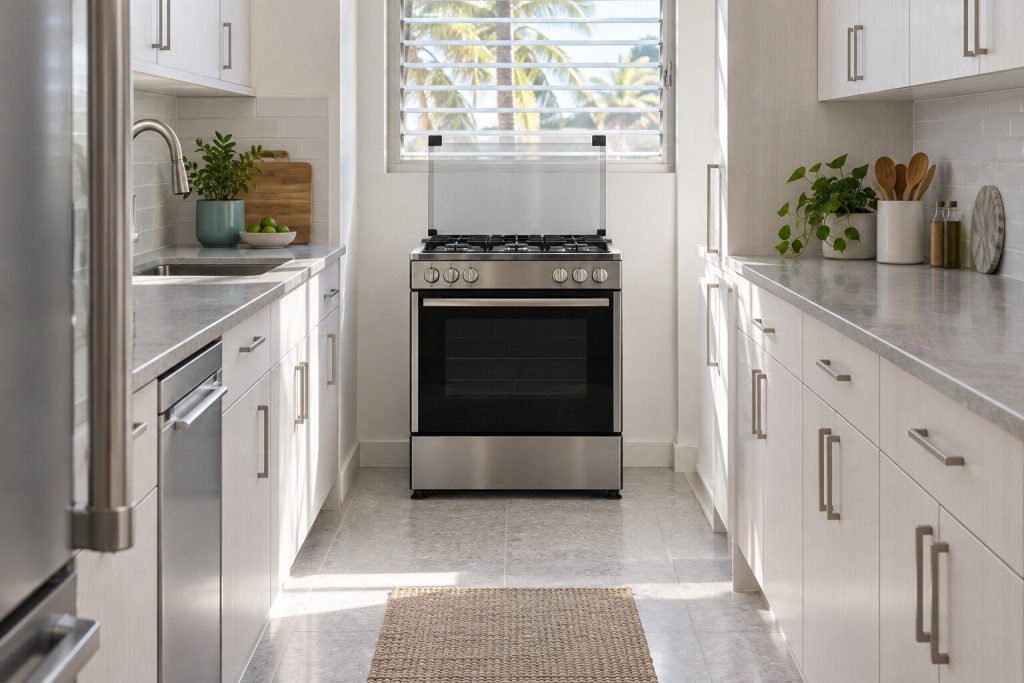
Never sold in the US · Scandinavian imports we service here Asko range repair in Miami
Asko has never sold a freestanding range in the United States, and this page exists because we are asked to work on them anyway. The Scandinavian CC-series cookers turn up in South Florida in two ways — brought by somebody who moved, or specified into a kitchen by a designer who knew the line — and once here they need the same servicing as anything else. There is no error table on them at all — the CC96264W manual is organized as symptom, cause and remedy, and carries no codes of any kind. That makes the diagnosis conventional and the parts question the real one, because everything on these comes from Europe.
- Not a US product — every one we see arrived by import or by relocation
- No error codes at all: the manuals are symptom, cause and remedy
- Parts are European-channel, so the wait is part of the answer we give at the diagnostic
-
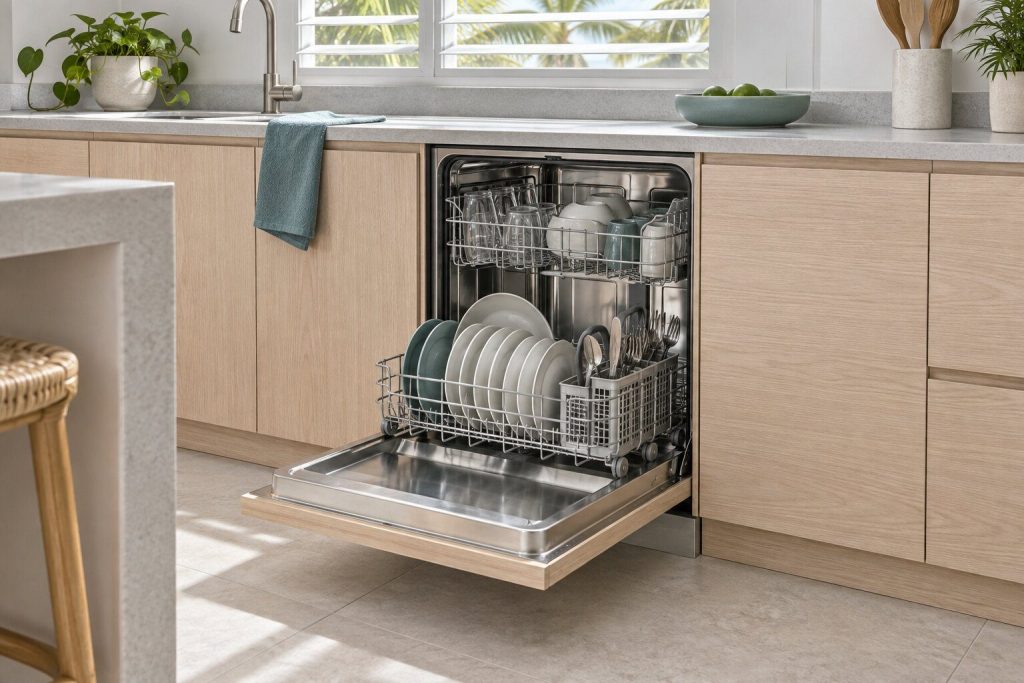
Twelve US models · panel-ready, Touchproof steel and the Outdoor door Asko dishwasher repair in Miami
The machine that made this badge, and also the one where a number on the display tells you least. Three generations are in South Florida kitchens and each numbers its errors differently: the legacy DW20.1 boards blink their trouble through the program lights and keep the F-label in a service menu nobody opens; the current generation prints F10 upward on a full-text panel; and the Outdoor door, built for a terrace kitchen and therefore common here, uses a third scheme written with a colon that means different things again. All three are twenty-four inches wide and look alike behind a cabinet panel. Which one is in the run decides the reading, the part number and whether the number on the screen reports an error at all.
- Twelve US models — panel-ready, Touchproof stainless and the DOD Outdoor door
- Three code schemes, none compatible: blink F1–F9, display F10–F68, Outdoor F:10
- Steel tub, steel spray arms and a filter that is meant to be lifted out and rinsed
By job
The repairs we are called out for in Miami
Starting figures for this equipment in South Florida. What moves them is the model, the access and the part — the exact cost is confirmed after the on-site diagnostic.
-
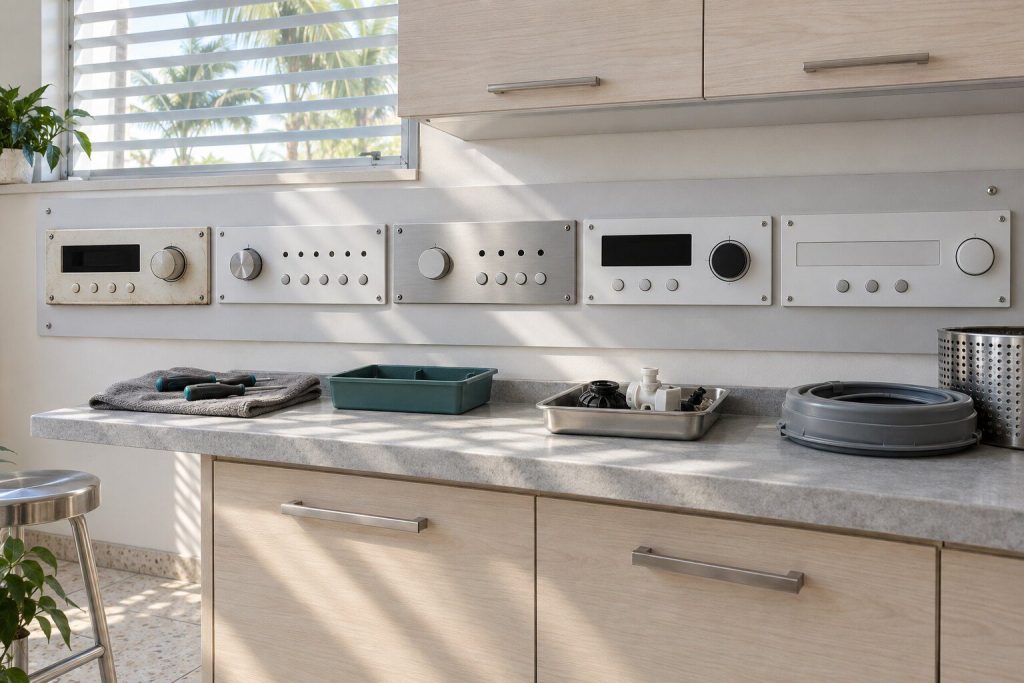
from $115 Platform identification
The job this make needs and no other make on our list does. Three dishwasher generations, five washer code families, dryer schemes that change with the control board and two induction families that share no numbers — and from the front of the kitchen they are indistinguishable. This is the visit that settles which machine is actually in the run, records it, and gives you a code table that applies to your appliance instead of to the badge in general. For anyone who intends to keep the machine another decade it is the cheapest useful thing we sell.
- Which generation, which board, which code table — established and written down
- Turns every future number on the display into something readable
- Credited in full against a repair if it is booked in the same visit
-
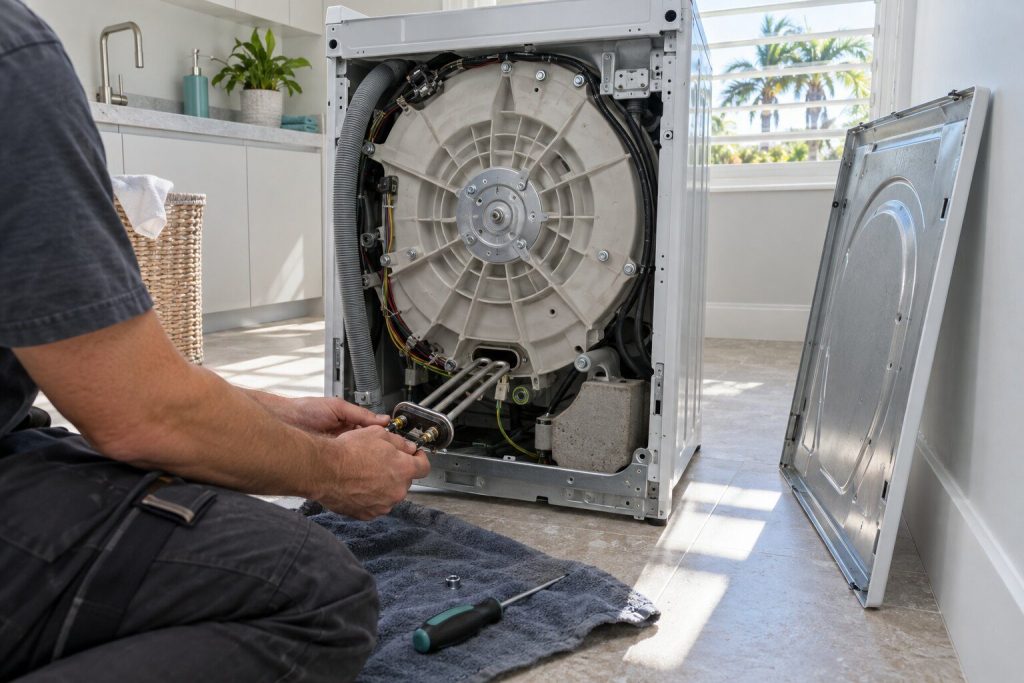
from $159 Washer heater and thermostat repair
Cold washes on a program that should be hot, or cycles that run far past their stated time. The machine will not move on until the water reaches temperature, so a heating problem shows up as a clock problem first and people rarely connect the two. On the display generations this arrives with a code; on the analog machines it arrives as a wash that took four hours. The element itself is a straightforward part — the thermistor in front of it is the one that fools people.
- A cycle that never ends is usually a heating problem, not a timer problem
- Thermistor before element: a wrong reading makes a good element look dead
- Scale on this water shortens element life, and we say so at the visit
-
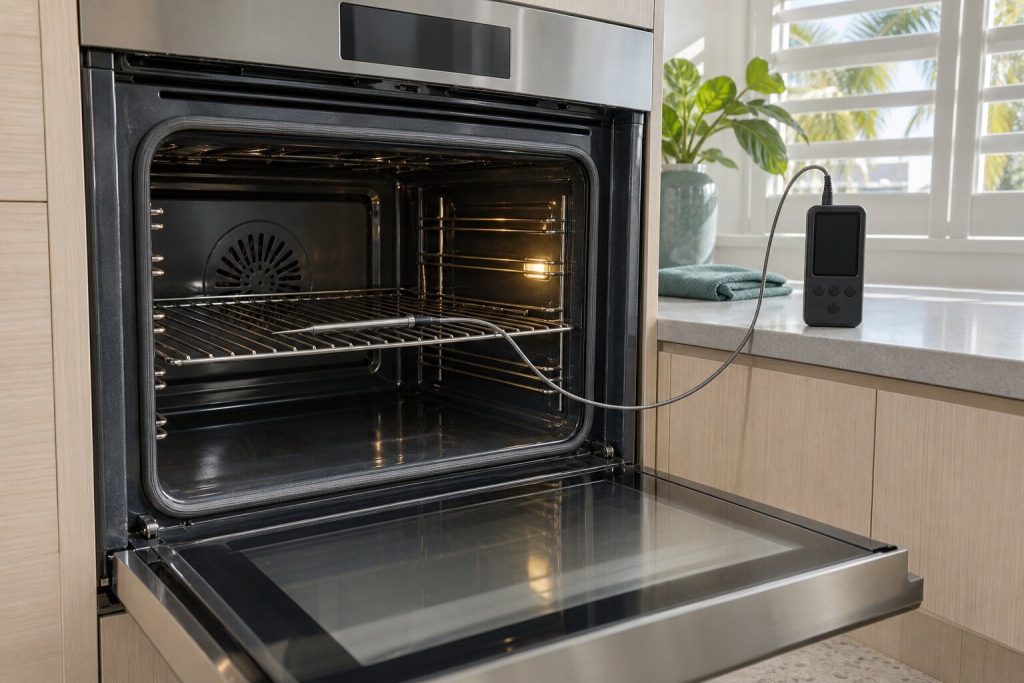
from $149 Oven temperature calibration
Everything works and nothing is right — cakes pale, roasts overdone, a machine that has drifted rather than broken. On a European oven fitted into an American kitchen this comes up more than it should, and it splits into two quite different things: an oven whose sensor now reads a few degrees out, and an oven perfectly accurate at its own sensor while being wildly uneven inside. The second is airflow or a door seal, and no amount of calibration fixes it.
- Accuracy and evenness are different problems with different repairs
- Measured with an independent probe at several points, not at one
- A door seal that has set is the commonest cause of uneven, not the sensor
-
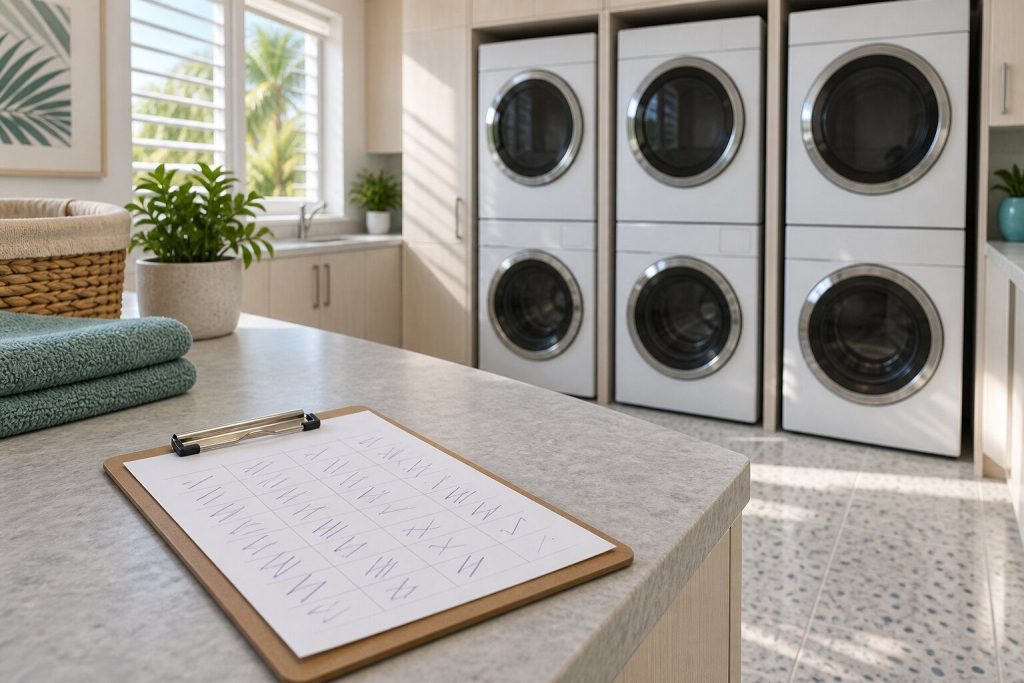
from $195 Building laundry maintenance plan
Planned work for amenity rooms and housekeeping closets, priced as planned work rather than as a series of emergencies. The argument for it is one number: a household pair runs perhaps five cycles a week, and an amenity room in a fifty-unit building can run that in a day — so it reaches a year of domestic wear in about six weeks. The consequence of missing that is not an inconvenience. A door seal that has been cutting for a month puts water into a slab, and in a condominium that becomes several units' problem.
- The interval is set by cycles per week, not by the calendar
- A cutting door seal in a condominium ends as somebody else's ceiling
- Spares held on site turn a two-visit repair into one
-
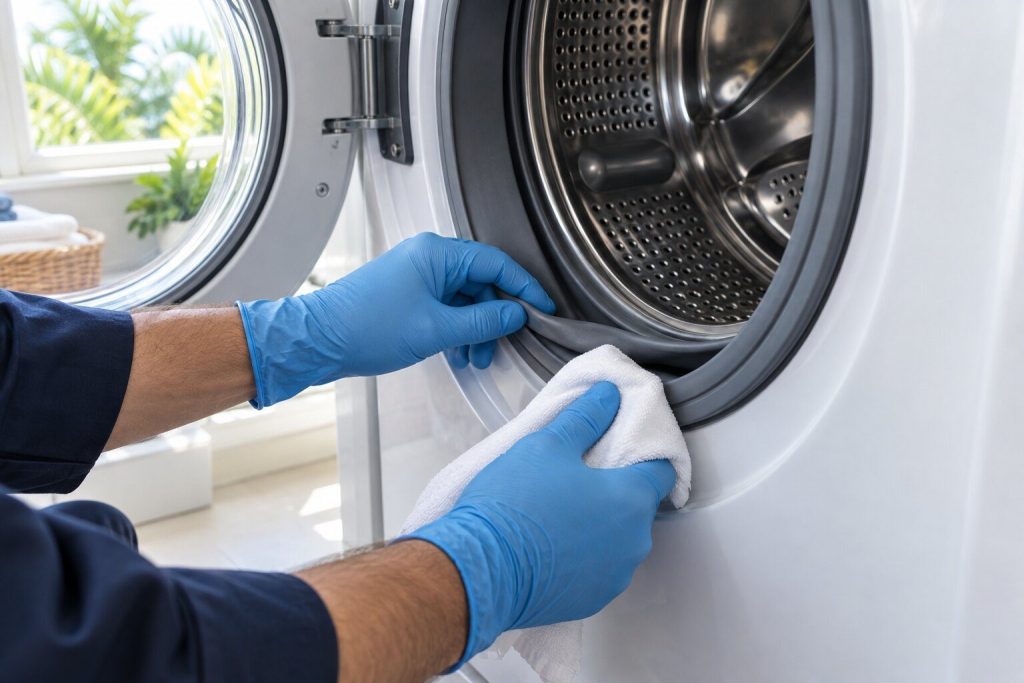
from $175 Washer door seal replacement
The single most common part we replace on this make, and the one where waiting costs the most. Grit collects in the bottom fold of the bellows, works into the rubber and cuts it from the inside, so the seal is usually failing for months before water reaches the floor. In a condominium that matters more than the part does: water from a laundry closet reaches the slab and then somebody else's ceiling, and a seal is a fraction of what that costs to put right.
- Grit in the bottom fold is the cause — the seal is the symptom
- Caught early it is a part; caught late it is a floor slab and a neighbor
- Clamp and drain path renewed with it, or the new seal goes the same way
-
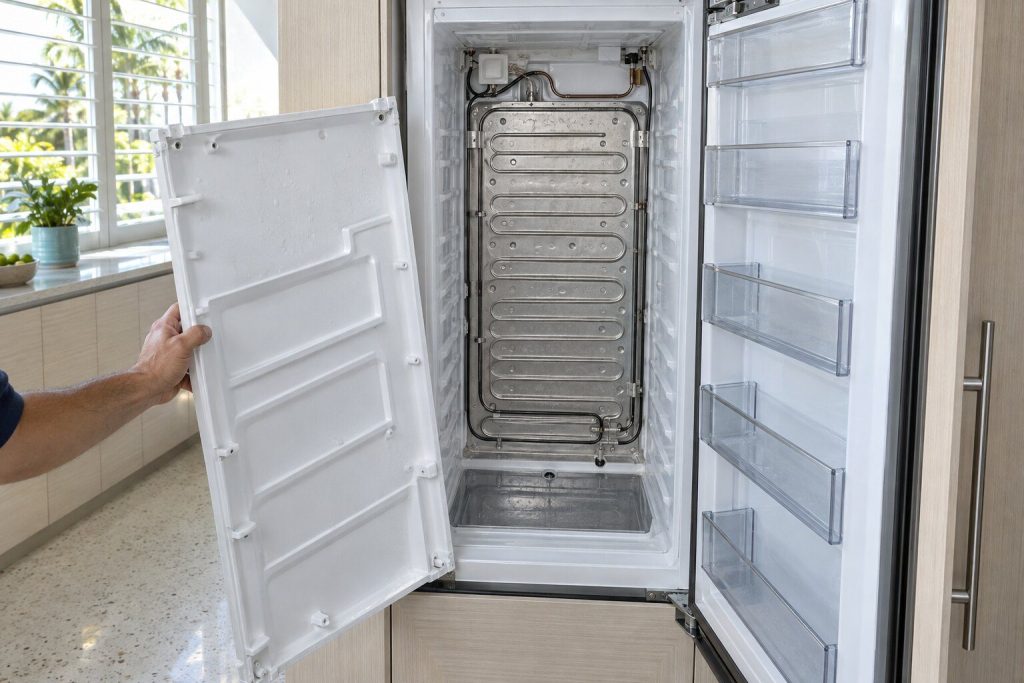
from $185 Freezer not freezing repair
A cabinet running constantly and still soft inside, and in this county that has to be separated from a cabinet losing an argument with the room around it. A freezer in an unconditioned garage or utility room in August is being asked to work far outside what it was specified for; it may be perfectly healthy and simply losing. Telling that apart from a real failure is most of this visit, and there is no code on this make to help — the manuals carry problem, cause and solution rows and nothing else.
- Start with the room — an unconditioned space in August changes the machine
- Frost pattern is the reading — where it forms says which of four things it is
- No published codes on this make, so behavior is the whole diagnosis
Nearby
Where else we work near Miami
Every place below has its own page, with what the equipment and the access are like there.
Neighborhoods in Miami
Elsewhere in Miami-Dade
In more detail
Asko repair in Miami, in more detail
What Asko equipment is like in Miami
Everything from a 1950s house in the north to a new tower downtown, which is why we ask for the model and the building before quoting a range rather than after.
Miami sits in Miami-Dade County, and the equipment here follows the housing: older kitchens with appliances fitted into openings that were cut for something else, and newer ones where they were specified with the cabinetry. Both are Asko work — commercial installations, cooktops, dishwashers — and both are diagnosed on site before anything is priced.
Heat, dust and power cuts — what they do to a kitchen full of appliances
Inland the enemy is heat, dust and grease rather than salt. Condensers run hard for more months of the year here than almost anywhere else in the country, and grease that condenses in a hood liner instead of leaving through it comes back as a fan that labors. In Miami the appliances we are called out to are usually working exactly as designed — in conditions nobody designed them for.
What that means for the appliances in Miami
- Range hoods — Almost nothing in a tower vents outside, so the hood recirculates and lives entirely on a charcoal filter — a consumable most owners have never been told about, and the reason a healthy-sounding hood can move nothing at all.
- Washers — Laundry retrofitted into an older house is often on a circuit and a drain that were added later, and a machine misbehaving on both is telling you about the house rather than about itself.
- Refrigerators — A refrigerator in a tower has less air around it and a warmer cabinet behind it than the same unit in a house, so the condenser matters more here and the cleaning interval is shorter than the manual assumes.
- Dishes come out dirty
- Dishwasher leaking
- Dishes come out wet
- Dishwasher will not start
- Washer not draining
How a visit in Miami is arranged
We ask for the model number from the plate inside the door and a line about what the appliance is doing. That decides which parts ride in the van, and it is the difference between one appointment and two.
- How the appliance is built in, and whether it has ever been pulled out before
- Whether there is a second one — a bar, a pantry, a garage or an outdoor kitchen
- Whether the doors are paneled to match the cabinetry, which changes how they come off and go back
- The diagnosis first, then the scope and the price in writing, and your approval before anything is opened
What it costs, and what moves the figure
Prices in Miami are the same as everywhere else we cover: a diagnostic from $95 that is credited toward the repair, and starting figures per job rather than one number for "a repair". What moves it is the model, how the appliance is built into the cabinetry, which part it needs and how quickly that part can be sourced — none of which can be judged over the phone. The repairs we carry out lists what each job involves and the figure it starts at, and the unit pages covers what tends to go wrong on each type.
The exact cost is confirmed after the on-site diagnostic and agreed with you before any work begins. We are an independent repair company — not affiliated with, authorized by, or endorsed by any manufacturer — and our warranty covers the labor we performed.
Before you book
Questions about a visit in Miami
Do you cover Miami?
Yes. Miami is in Miami-Dade County and inside the area we work every week. Give us the address when you book, and say how the Asko is installed — what has to come apart to reach it matters as much as where it is.
How soon can you get to Miami?
We will tell you the earliest slot we can genuinely keep rather than the earliest one that sounds good. Tell us the model number and what the unit is doing when you book: whether we can finish the same day depends on the part far more than on the drive.
Does it cost more because the job is in Miami?
No. The diagnostic and the work are priced the same across Miami-Dade, Broward and Palm Beach. What moves the figure is the model, how the unit is built in and which part it needs — never the address. Where access takes longer, we say so before anything is agreed rather than after.
My building has rules about service calls. What do you need?
The building name when you book, and anything it requires — a service elevator window, a loading bay slot, approved hours or a certificate of insurance. We arrange those in advance; found out on the day, they cost the appointment.
Booking a visit in Miami
Tell us the model number and what the unit is doing. We will bring the parts that problem usually needs, and you will have a firm price before we start.
This article is based on:
- Official manufacturer documentation
- Internal repair procedures
- Technician repair history
- Company quality standards