Troubleshooting
An Asko Dryer That Will Not Dry: Three Filters, In Order
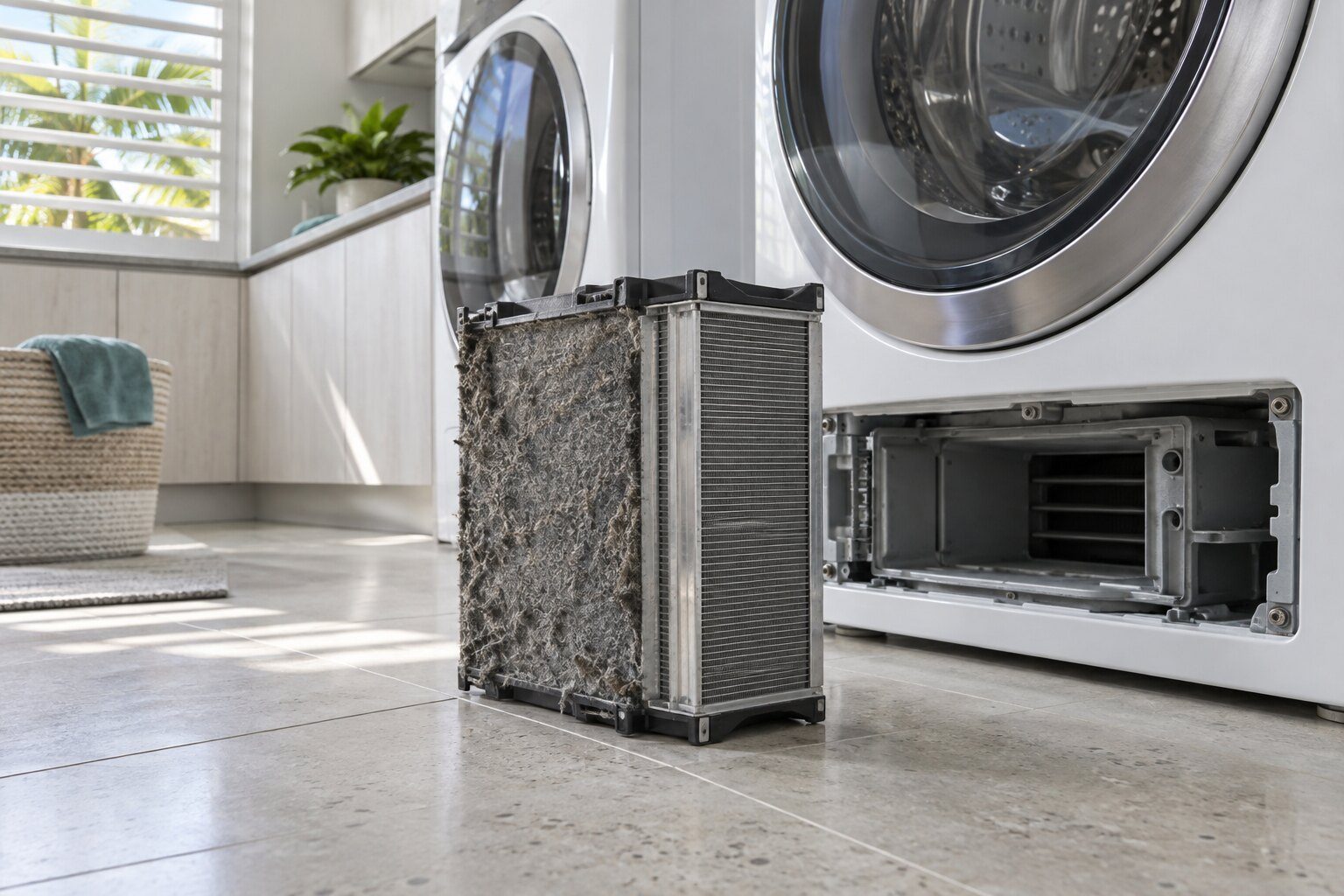
An Asko dryer that will not dry is almost never short of heat. These are condenser and heat pump machines: nothing is blown outside, moisture is condensed out of the air and collected, so the machine depends entirely on three filters and a condenser staying clear. Empty the water container and seat it properly. Rinse the lint filter in the door opening and dry it before refitting, because a wet filter blocks air as effectively as a dirty one. Then open the plinth at the bottom front and wash the condenser filter or block until the water runs clear — that is the one most owners never knew existed, and in this climate it packs solid within months rather than years. If all three are clean and the load still comes out damp, the moisture sensor bars or the heating circuit are next.
The full guide
A program that runs its full length and leaves the washing damp. On a vented dryer that would be heat or a crushed duct. On these machines it is almost always the air path, and three of the checks cost nothing.
Why nothing leaves the room
A condenser dryer takes damp air from the drum, cools it until the moisture drops out, warms it again and sends it back round. A heat pump machine does the same thing more efficiently. Either way no air leaves the building, which is why these live happily in a closet with no external wall — and why every filter matters more than it would on a vented machine. There is no duct carrying problems away.
The three filters, in order
The water container. Empty it and push it fully home. A container left half-seated reads as full, and a machine that believes it has nowhere to put the water stops before it starts.
The door lint filter. Pull it, rinse it under a tap, and dry it before it goes back. A wet filter blocks airflow as effectively as a clogged one, and people routinely refit them dripping.
The condenser filter. Open the plinth at the bottom front of the machine. Behind it is a filter or a block that pulls out. Wash it until the water runs clear — not tapped out over a bin. On a machine that has never had this done, doing it once is often the entire repair.
Then the sensor bars
Inside the drum are two metal strips that measure how wet the laundry is by conductivity. Fabric softener leaves a film on them that is invisible and quite enough to make the machine read a wet load as dry and end the cycle early. Clean them back to bare metal with a little vinegar on a cloth.
Then, and only then, heat
If the air path is genuinely clear and the sensors are clean and the load is still damp, the heating side is the answer. What that means depends on the machine: on a condenser model it is a heater and its thermostats, which are ordinary parts; on a heat pump model there is no element at all, and the sealed refrigeration circuit is a different order of cost. The model number decides which conversation you are having.
What this climate does to the interval
The service intervals in the manual assume a temperate laundry room. An interior closet here sits at high humidity for months, and the filters load in proportion to how much moisture the machine is moving. Twice a year on the condenser is realistic locally. The machines that reach fifteen years are the ones where somebody did that instead of waiting for a cycle that never ended.
If it turns out to be a repair
What this leads to, and what it costs
Every job on this site is priced the same way: an on-site diagnostic first, the figure agreed in writing before anybody starts.
-
from $145 Condenser dryer service
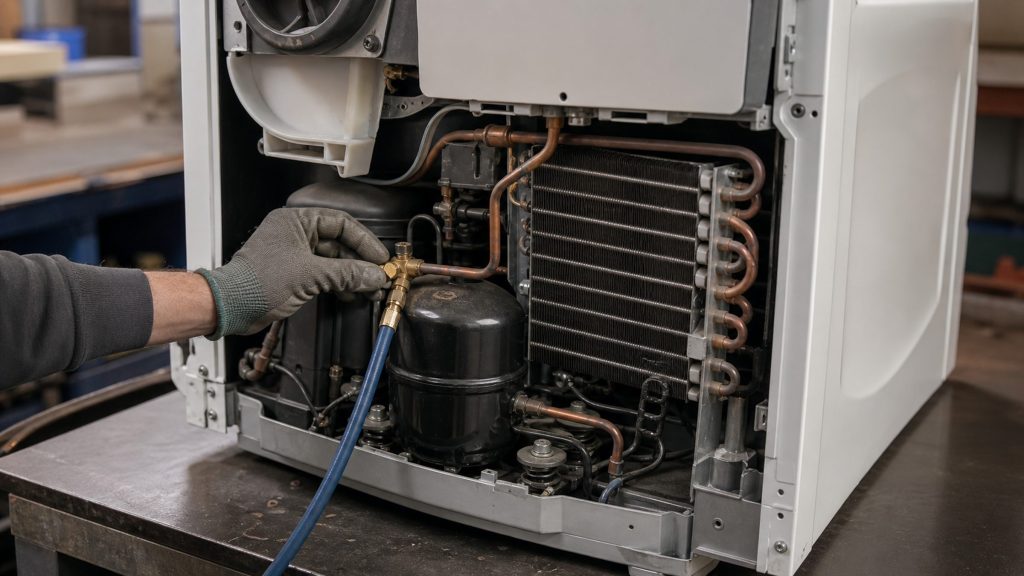
The maintenance visit these machines need on a schedule and rarely get. A condenser dryer works by pulling moisture out of air and giving the heat back, and it is being asked to do that in a closet that may sit at eighty per cent humidity for half the year. Nothing about that is a failure — it is a shorter interval. The machines that reach fifteen years here are the ones where somebody cleared the condenser twice a year instead of waiting for a cycle that never ended.
- A schedule, not a rescue — and the interval here is shorter than the manual's
- Condenser block washed out properly rather than tapped clear
- Cycle times recorded, so the next visit can see whether it is drifting
-
from $215 Heat pump dryer repair
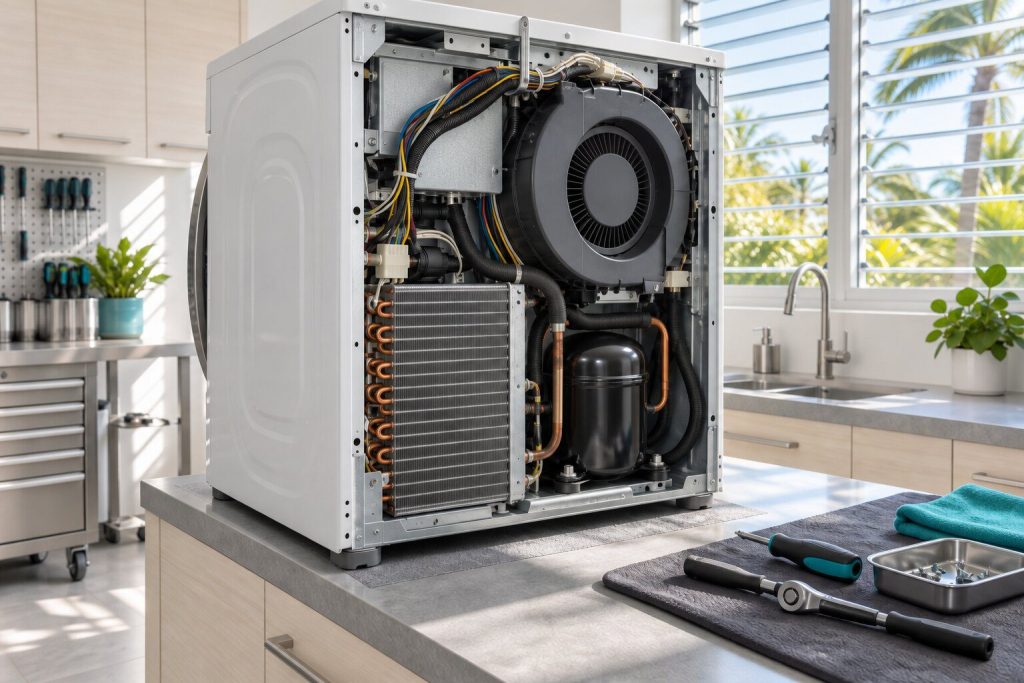
The newest platform here and the one with its own economics. A heat pump dryer is a sealed refrigeration circuit as well as a dryer, which makes it cheaper to run and more expensive to be wrong about: a compressor is not a heating element. So the order of work is strict — everything ordinary is eliminated first, and only then does the sealed side become the answer. These machines report in their own scheme, spelling out ERROR and a digit rather than using the older short codes.
- Sealed circuit last, always — the ordinary causes look identical from outside
- Its own code scheme: ERROR_0 to ERROR_5, not the older L or F numbers
- The evaporator behind the plinth needs clearing, and almost nobody knows it is there
-

The program finishes and the load is still damp Dryer not drying
A cycle that runs its full length and leaves the washing wet. On a condenser or heat pump machine — which is what this badge sells — this is almost never about heat, and that is the thing worth understanding before anybody is called. Nothing is being blown outside: moisture is condensed out of the air and collected, so the machine depends on three separate filters and a condenser staying clear. In a South Florida laundry closet those load far faster than any manual assumes, and clearing them ends this complaint more often than any part.
- Three filters, not one — door lint, condenser, and the water container
- The condenser filter is behind the plinth and most owners never knew it existed
- Sensor bars filmed with softener tell the machine a wet load is dry
Questions people ask about this
The load comes out hot but wet.
Then the machine is heating and the problem is condensing — the condenser or the airflow through it. That is a much better answer than a cold, wet load, which points at heat and costs more to put right.
How do I know if it is a heat pump machine?
The model sticker inside the door frame. On this badge the heat pump models carry an H in the code — T7HXLW, T5HXLW, T411HS — while the V models are vented. It matters, because a heat pump machine has no heating element at all.
Does the closet door matter?
Genuinely, yes, and it is a fair test. Run a load with the closet door open and compare. If drying improves noticeably, the room is starving the machine and ventilation is the fix rather than a part.
Troubleshooting
More guides like this one
-
Asko Washer Error Codes: Five Families, and How to Tell Which Is Yours
F10, E7, L3, F3 and a machine that prints whole sentences — five separate code families run across Asko washers, and two models of the same generation give the same L-number opposite meanings.
Read more -
An Asko Oven Showing Err and Two Digits: What the Manuals Actually Say
Six Asko oven manuals across several generations print an undecoded ErrXX and the same instruction: disconnect, reconnect, call a technician. There is no published table, and the decoded lists online do not come from Asko.
Read more -
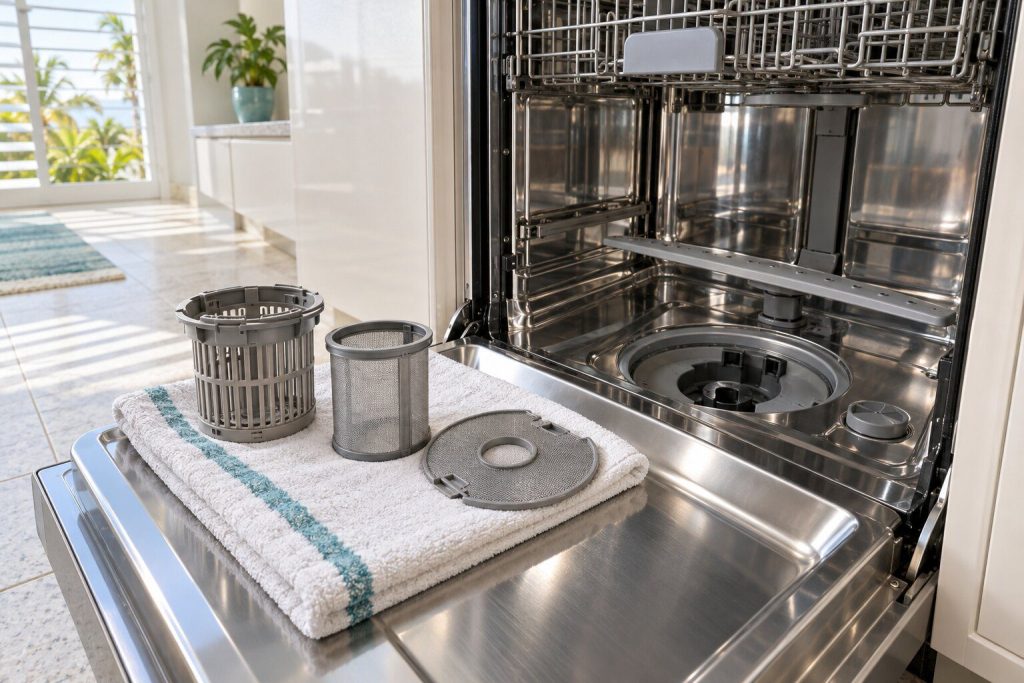
An Asko Dishwasher That Will Not Drain: Ten Minutes Before You Call
Lift the filter stack out — the whole stack, not just the top filter — rinse it, seat it properly and run a rinse program. That ends this complaint more often than any part, on all three generations.
Read more
Tell us the model number and what it is doing.
This article is based on:
- Official manufacturer documentation
- Internal repair procedures
- Technician repair history
- Company quality standards