Safety & Risks
An Asko Microwave Door That Needs a Push: Stop Using It
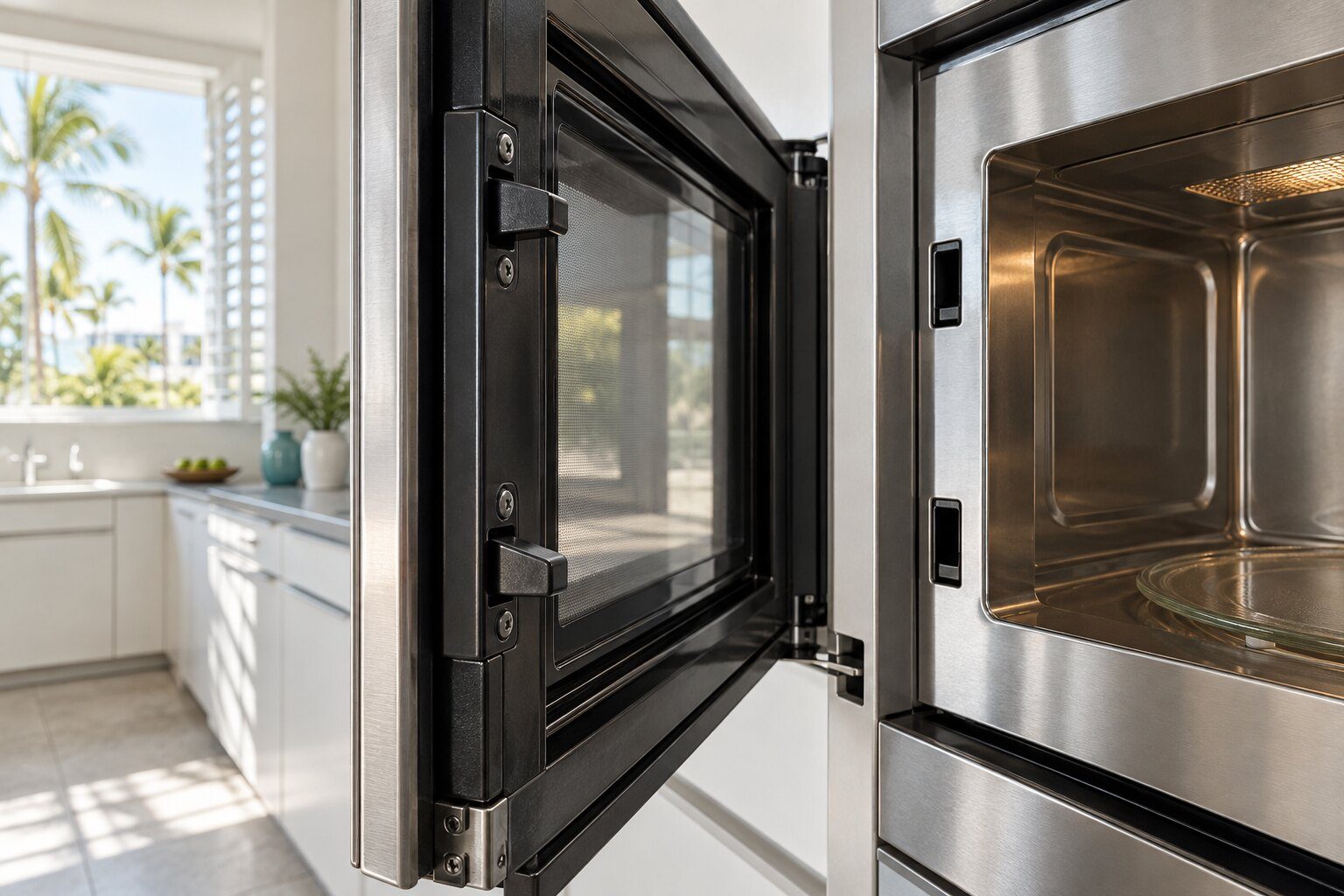
An Asko combination microwave that hums but does not heat is very often the door interlocks rather than the magnetron. There are three switches in series behind the latch, and all three have to agree the door is shut before the cavity will run; they are wear parts and they are the most common failure on these cavities. The useful test costs a minute: put a cup of water in and run it for sixty seconds. If the convection side heats and the microwave side does not, the interlocks and the magnetron circuit are where to look. If neither heats, the supply and the main board come first. And take a door that needs a push seriously in its own right — a microwave door is a shielding component rather than a lid, and one that has dropped on its hinges is worth a visit even while the machine still heats perfectly well.
The full guide
Most microwave complaints on this badge are the door, and the door is also the part where we would rather you stopped early than waited.
The one-minute test
Put a cup of water in the cavity and run the microwave function for sixty seconds.
- The water is hot. The microwave side works, and whatever is wrong is elsewhere — the convection element, the fan, the controls.
- The water is cold and convection still heats. The microwave side is out. Interlocks first, magnetron circuit second.
- Neither side heats. Supply and main board, in that order.
That single observation splits the visit in half and it costs a minute.
Three switches, all of which must agree
Behind the door latch are three interlock switches wired in series. They exist so that the cavity cannot run unless the machine is genuinely satisfied the door is closed and sealed. They are mechanical, they are operated thousands of times, and they wear.
When one stops confirming, the machine stops dead. It does not warn, it does not degrade, and it does not tell you which of the three it was — they are tested one at a time, which is most of the labor on this repair.
The parts themselves are inexpensive.
Why a door that needs a push is not a habit to live with
The door of a microwave is shielding, not a cover. Its shape, its seal and its catch all work together to keep energy inside the cavity. Hinges that have let the door settle, a catch wanting more pressure than it once did, or visible movement at the upper corner all report the same thing: the geometry has shifted.
The machine may well still heat perfectly. That is not reassurance — it means the interlocks have not yet given up, not that the door is doing its job properly.
Book it while it still works.
What the display will not tell you
If the cavity shows ERROR and two digits, nothing published decodes them. Four manuals across the range print the same instruction — disconnect from the mains for a few minutes, reconnect, reset the clock, call a technician if it persists — and no table behind it. The digits mean something to a service tool and nothing in print, and we would rather say that than repeat a list nobody sourced.
One thing we will not do over the phone
Tell you it is safe. A microwave with a door problem gets looked at rather than reasoned about remotely, and that is the whole of our advice on this one.
If it turns out to be a repair
What this leads to, and what it costs
Every job on this site is priced the same way: an on-site diagnostic first, the figure agreed in writing before anybody starts.
-
Microwave door interlock repair
A door that needs a push, a latch with play in it, or a cavity that has stopped running altogether — one circuit behind all three. The interlocks are safety switches, wired so that the machine cannot run unless all of them agree the door is shut, and a door that has dropped on its hinges stops satisfying them long before it looks wrong. This is worth a visit on its own even while the machine is still heating perfectly well, and we would rather say that than wait to be called for something else.
- A microwave door is a shielding component, not a lid
- Three switches in series: one out of agreement stops everything
- Worth booking while the machine still works, not after it stops
-
Built-in microwave repair
The combination cavities — microwave and convection in one built-in oven — which are the only form this badge takes here. Like the ovens they report ERROR and two digits that no published manual decodes, so the useful split is done at the appliance and it is quick: if convection heats and microwave does not, the magnetron circuit and the door interlocks are the place to look; if neither does, the supply and the main board come first. A cup of water for a minute settles that before anybody drives over.
- ERROR XX is undecoded in four manuals — the split is made at the appliance
- Convection working while microwave does not halves the diagnosis immediately
- Fitted into a cut opening, so replacing it is a joinery job, not a purchase
-
Microwave signal ERROR XX
Asko microwave — reported by blinking lights rather than by a code. The same generic line as the ovens, printed word for word in four microwave manuals — OM8334S, OT8687S, OP8664A and OCM8456S.
What the lights are telling you
Questions people ask about this
The display shows ERROR and two digits.
No published document decodes it. Four microwave manuals — OM8334S, OT8687S, OP8664A and OCM8456S — print the same generic line and none carries a table. Do the reset the manual asks for, and note what the machine was doing when it stopped.
Is it worth repairing a built-in combination cavity?
Usually, and for a reason that has nothing to do with the machine: it is fitted into a cabinet cut to its dimensions, and the replacement that fits that opening is not a shelf item. Interlocks, fans, boards and door parts are ordinary repairs. A magnetron on an old cavity is where the arithmetic changes, and we say so at the diagnostic.
Can I keep using it if the door is loose?
No, and this is the one place on the site where we would rather be blunt. The door and its seal are what contain the energy. A hinge with play in it, a latch that needs a push, or a door that no longer sits square are all reasons to stop and book.
Safety & Risks
More guides like this one
-
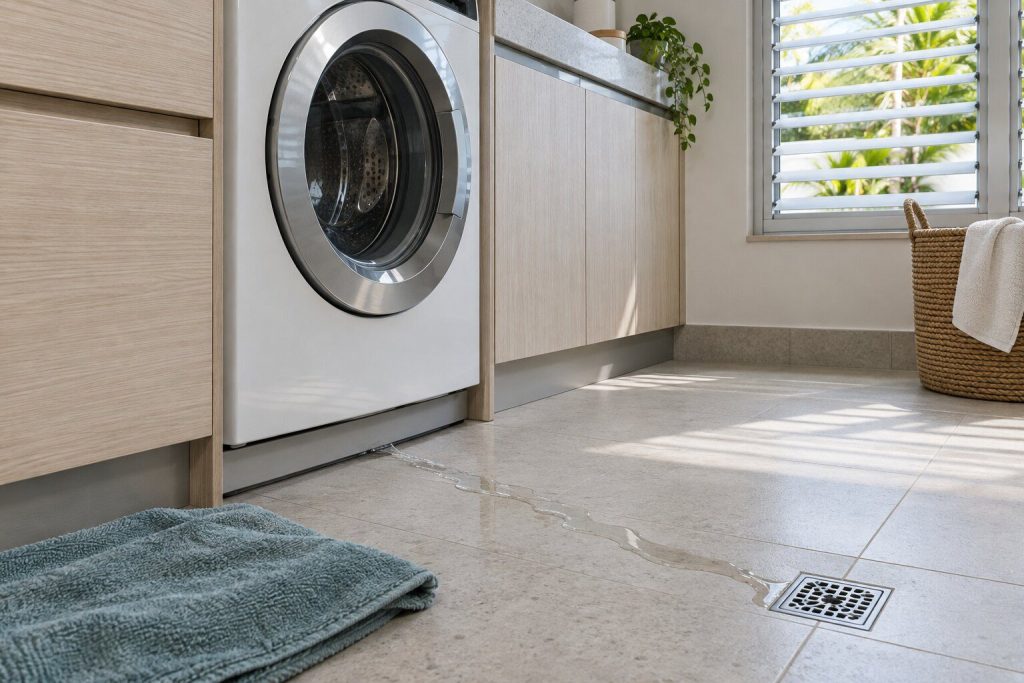
A Small Leak Under an Asko Washer Is Not a Small Problem in a Condominium
A washing machine moves several gallons per program. A leak that puts a cup on the tile during a wash puts considerably more into the structure over a week of ordinary use.
Read more -
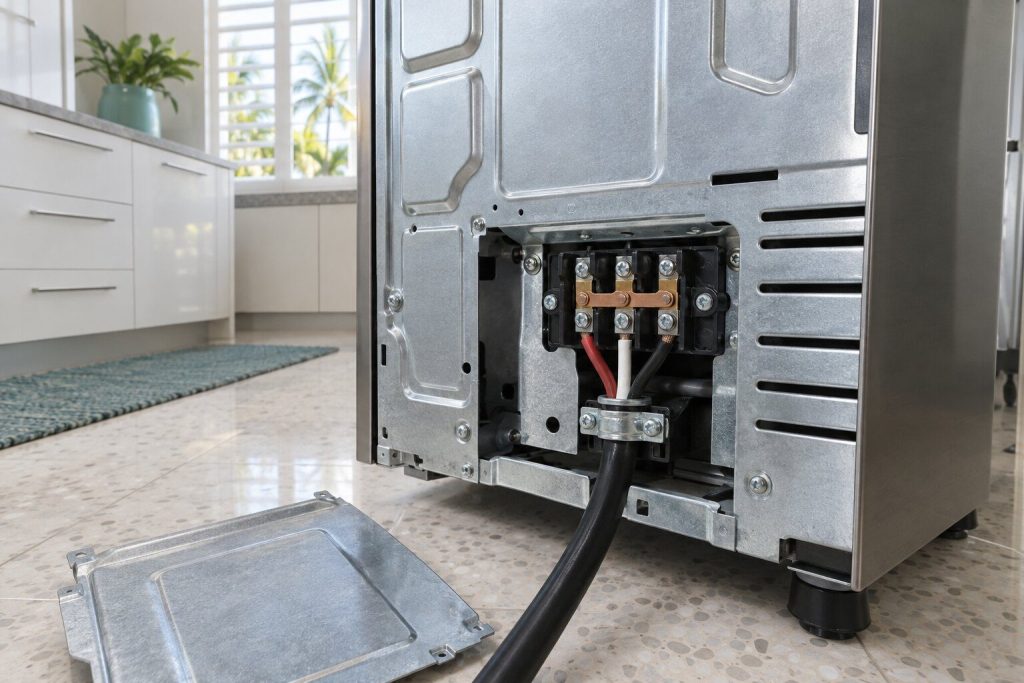
An Imported Asko Cooker and the Supply It Was Built For
Asko has never sold a freestanding cooker in the United States. The ones here arrived by import, and the first question is not what has failed — it is what the machine is plugged into.
Read more -
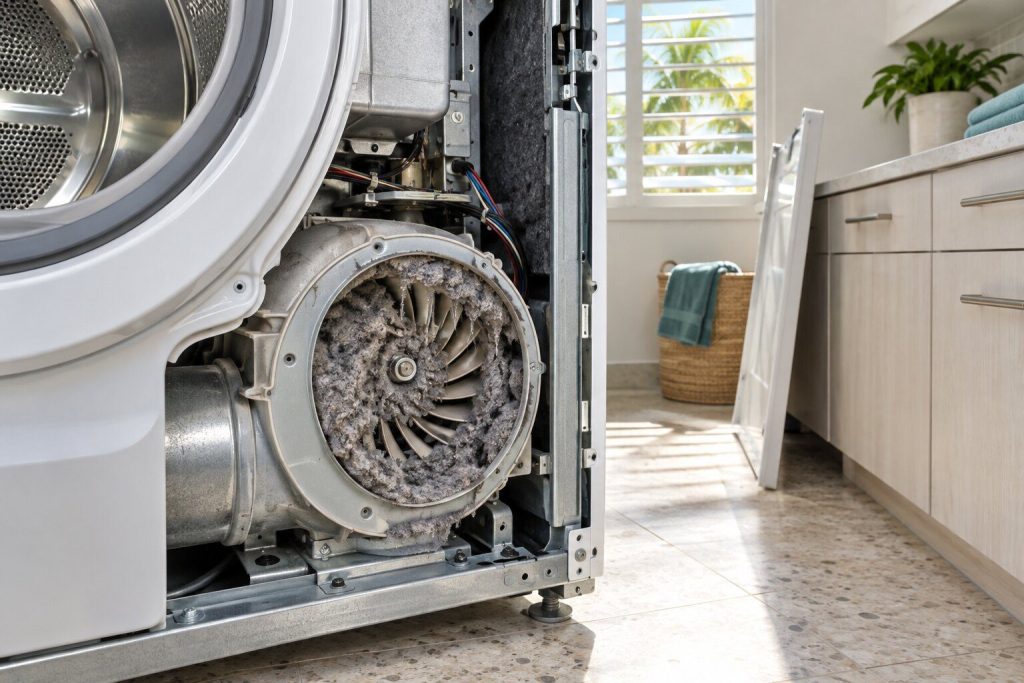
The Lint You Cannot See in an Asko Dryer
The door filter catches the big lint. What gets past it collects inside the cabinet, around the fan and against the heat exchanger — where no owner check reaches and no code exists.
Read more
Tell us the model number and what it is doing.
This article is based on:
- Official manufacturer documentation
- Internal repair procedures
- Technician repair history
- Company quality standards