Common Problems
One Asko Induction Zone Dead and the Rest Fine
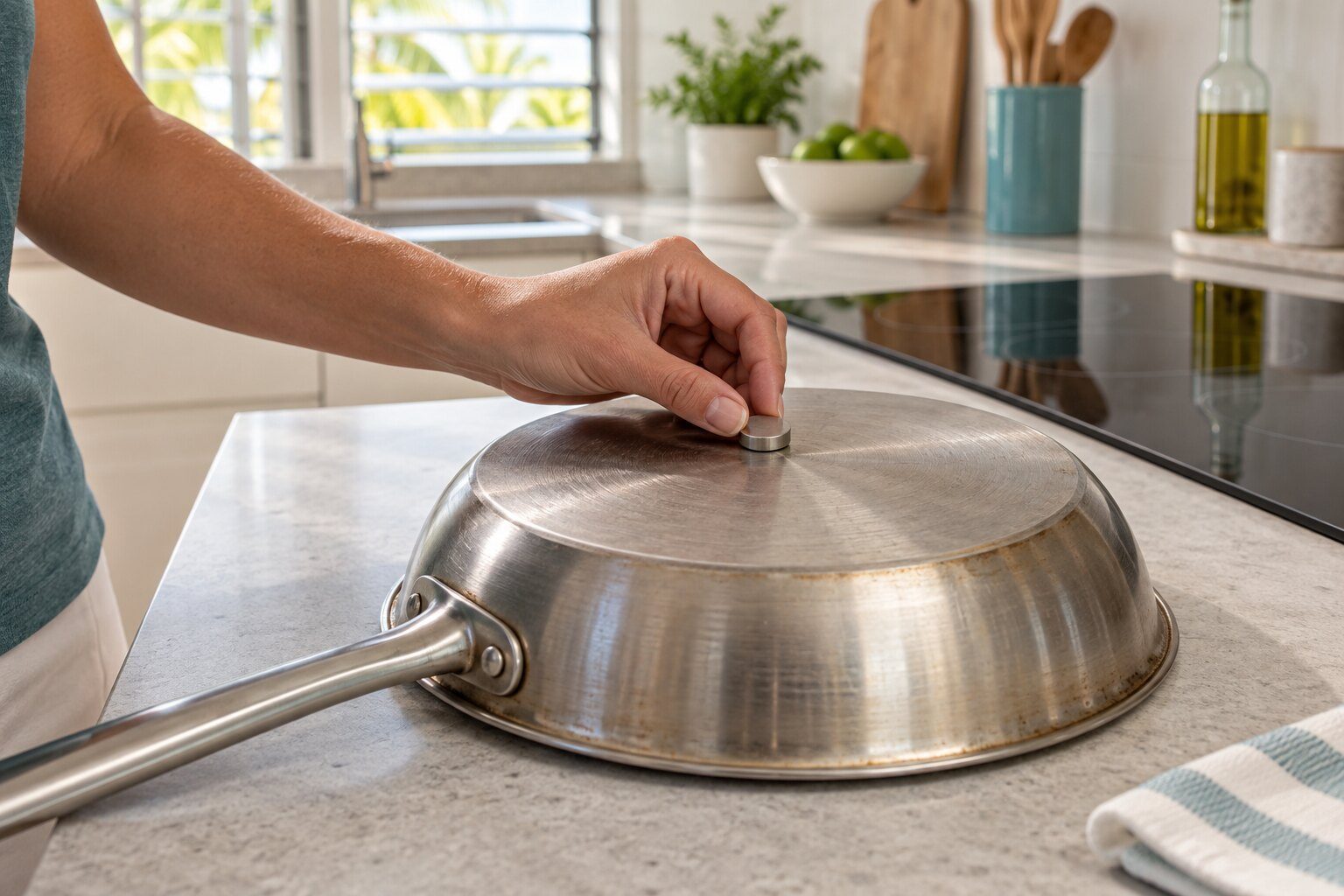
One Asko induction zone dead while the others work is better news than it sounds: the problem is nearly always local to that zone's coil or to its section of the board, which leaves the supply and the main control out of it. Two free checks come first because both produce an identical symptom. Hold a magnet to the base of the pan — if it does not stick, the hob is right and the pan is wrong. Then clear every lock and child-safety state, which look exactly like a dead zone from the front. If the zone is still dead with a suitable pan and no locks, note whether two adjacent zones are affected rather than one: adjacent pairs point at a board section rather than a coil, and that is a different part and a different figure.
The full guide
Three zones work and the fourth does nothing. On induction that is a better starting point than it feels like.
Two checks that cost nothing
Cookware. Induction needs a ferromagnetic base and nothing else will do. Put a fridge magnet against the underside; weak grip or none at all means the hob is right and the pan is wrong. This catches out more people than it should, because a pan that worked on the old gas hob is not necessarily going to work here, and because some stainless bases are magnetic only in the center.
The lock. Every one of these hobs has a control lock and a child-safety state, and both are easy to set while wiping the glass down. From the front, a locked zone and a dead zone look identical.
Why one zone is good news
Each zone has its own coil and its own section of the generator electronics. A failure that affects one zone and leaves the others working implicates that local hardware and clears the supply, the main board and the touch panel in one observation.
Two adjacent zones failing together means something different: they usually share a generator section, and that is a larger part. Worth noticing before anybody comes.
The case where nothing is broken
A zone that runs briefly and then drops out — and does it more readily late in the day than early — is a hob defending itself from heat. A fan below the glass pulls air through the cabinet underneath to cool the electronics, and joinery closes that route more often than anyone expects — a drawer stack pushed hard against the underside, a fitted oven directly beneath with no gap, a cupboard packed full.
The F-family says this in as many words: the ambient temperature is not good, switch off heat sources near the cooking plate, and make sure the venting holes under the plate are open. Fixing the airflow fixes it, and no part substitutes for that.
Two families, no shared numbers
If your hob is showing a code, which family it belongs to matters more than the digits. One generation prints F-strings — F00, F0 through F6, F7, F8, F9, F99, FA, FC and FAN. The other prints E and Er strings — Er03, E2, E3, E5, E6, U400 and Er47.
They are documented per model and they do not overlap. Reading an E-code against an F-series table is how the wrong board gets ordered on this make.
When to stop and isolate
A cracked or shattered top. Not a cosmetic matter: moisture travels down a crack onto the coils and the board underneath, and what follows is an electrical failure. Stop cooking on it and open the circuit.
If it turns out to be a repair
What this leads to, and what it costs
Every job on this site is priced the same way: an on-site diagnostic first, the figure agreed in writing before anybody starts.
-
Induction zone and coil repair
One zone dead while the others work, which on induction is better news than it sounds: the problem is usually local to that zone's coil or to its section of the board, and the supply and the main control are out of it. What we check before opening anything is the pair of things that produce an identical symptom for nothing — the pan, and a bridged or linked zone setting that has moved a zone's power somewhere else without anybody meaning to.
- One dead zone implicates its own coil, not the hob's supply
- Bridge and link settings can move power silently and look like a failure
- Glass lifted only after the electrical reading says it has to be
-
Induction cooktop repair
The majority of what this make put into kitchens here, and the codes divide into two families that share no numbers at all: one generation prints F-strings, the other prints E and Er strings, and reading one against the other's table is how the wrong board gets ordered. Two free checks come before any of that, because they account for a good share of these calls: whether the pan is actually induction-capable, and whether the hob has been left in a lock or child-safety state that looks identical to a failure.
- Two code families, no shared numbers — the model settles which table applies
- Pan and lock state checked first, because both mimic a dead hob exactly
- Overheating from a blocked air path under the counter, which is common here
-
Cooktop error code Er03
Asko cooktop error code Er03: Two generator families exist and they share no numbers. Which machines can raise it, what the maker publishes about it, and what to do next.
What this one means

Questions people ask about this
It cuts out after a few minutes instead of dying outright.
That is heat rather than electronics. The cooling fan under the glass draws air through the cabinet below, and in a tight island with a drawer stack behind it the hob overheats and protects itself. It shows as an intermittent failure that gets worse through the afternoon, which is exactly what a Miami kitchen does to it. Fixing the airflow costs less than any part.
What does Er03 mean?
That the panel is wet or dirty — and it places your hob in the E-family, which is useful by itself. Wipe and dry the control area thoroughly. If it continues on a dry panel, the touch electronics are the next question.
Why does the code list I found not match?
Because there are two induction families on this badge and they share no numbers. F-strings belong to one generator, E and Er strings to the other, and a meaning taken from the wrong one buys the wrong board.
Common Problems
More guides like this one
-
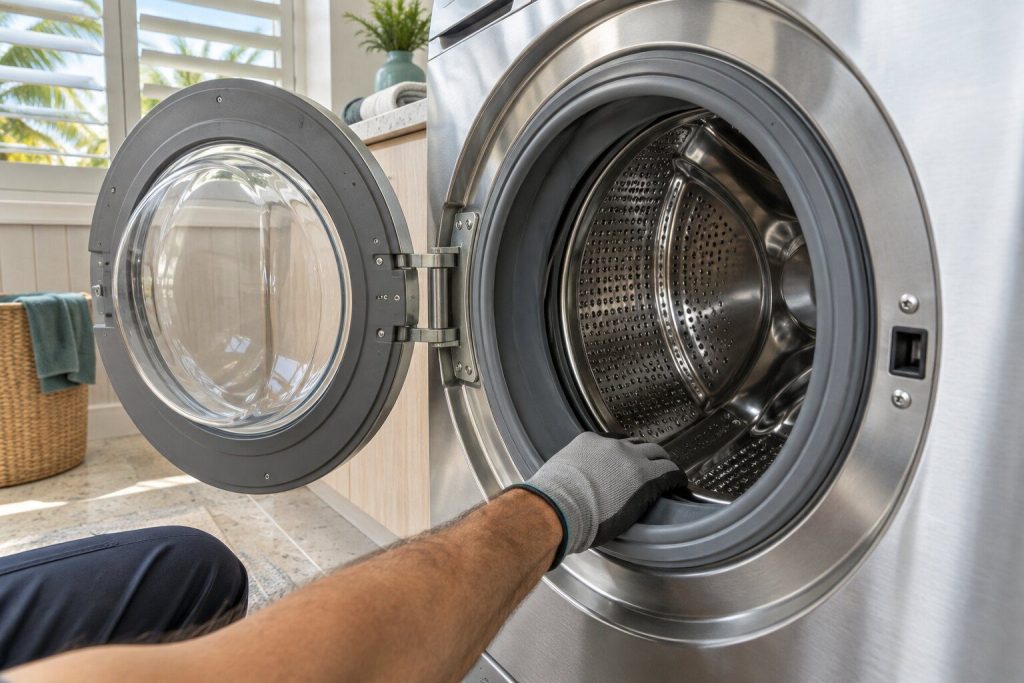
An Asko Washer That Will Not Spin: The Empty-Drum Test
Run a spin-only program on an empty drum. That one test separates three causes in five minutes, and two of them cost nothing to fix.
Read more -
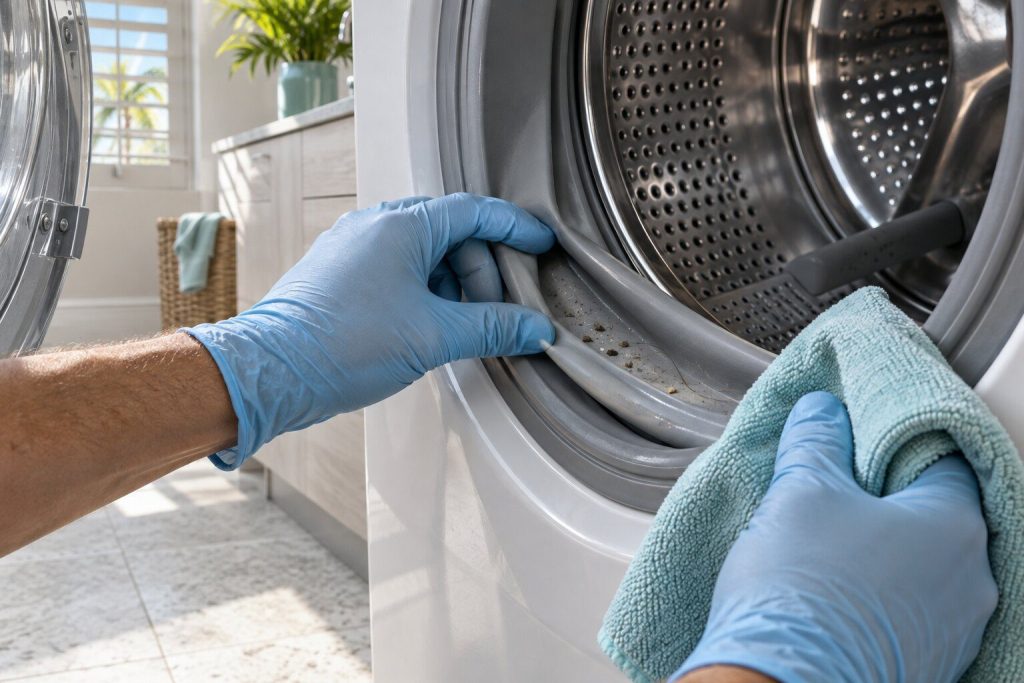
The Part We Replace Most on an Asko Washer, and Why It Fails
Grit collects in the bottom fold of the door bellows and cuts the rubber from the inside. It leaks for months before anything reaches the floor, and in a condominium that is the expensive part.
Read more -
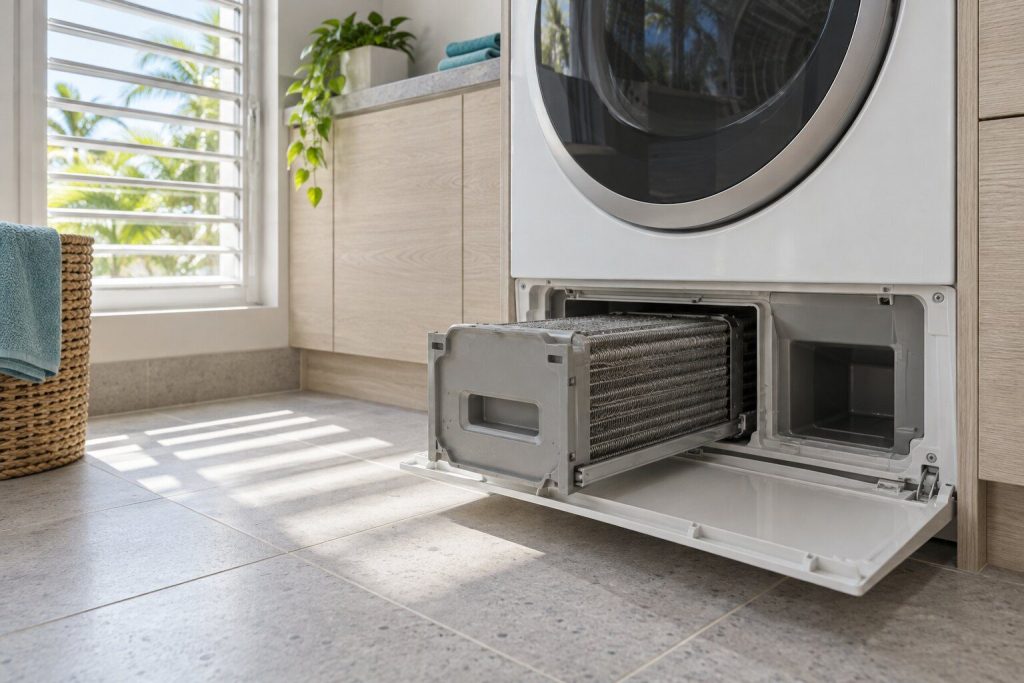
The Asko Dryer Filter Almost Nobody Knows About
There are three filters on a condenser dryer, not one. The third is behind the plinth at the bottom front, and in this climate it packs solid within months.
Read more
Tell us the model number and what it is doing.
This article is based on:
- Official manufacturer documentation
- Internal repair procedures
- Technician repair history
- Company quality standards