Common Problems
The Part We Replace Most on an Asko Washer, and Why It Fails
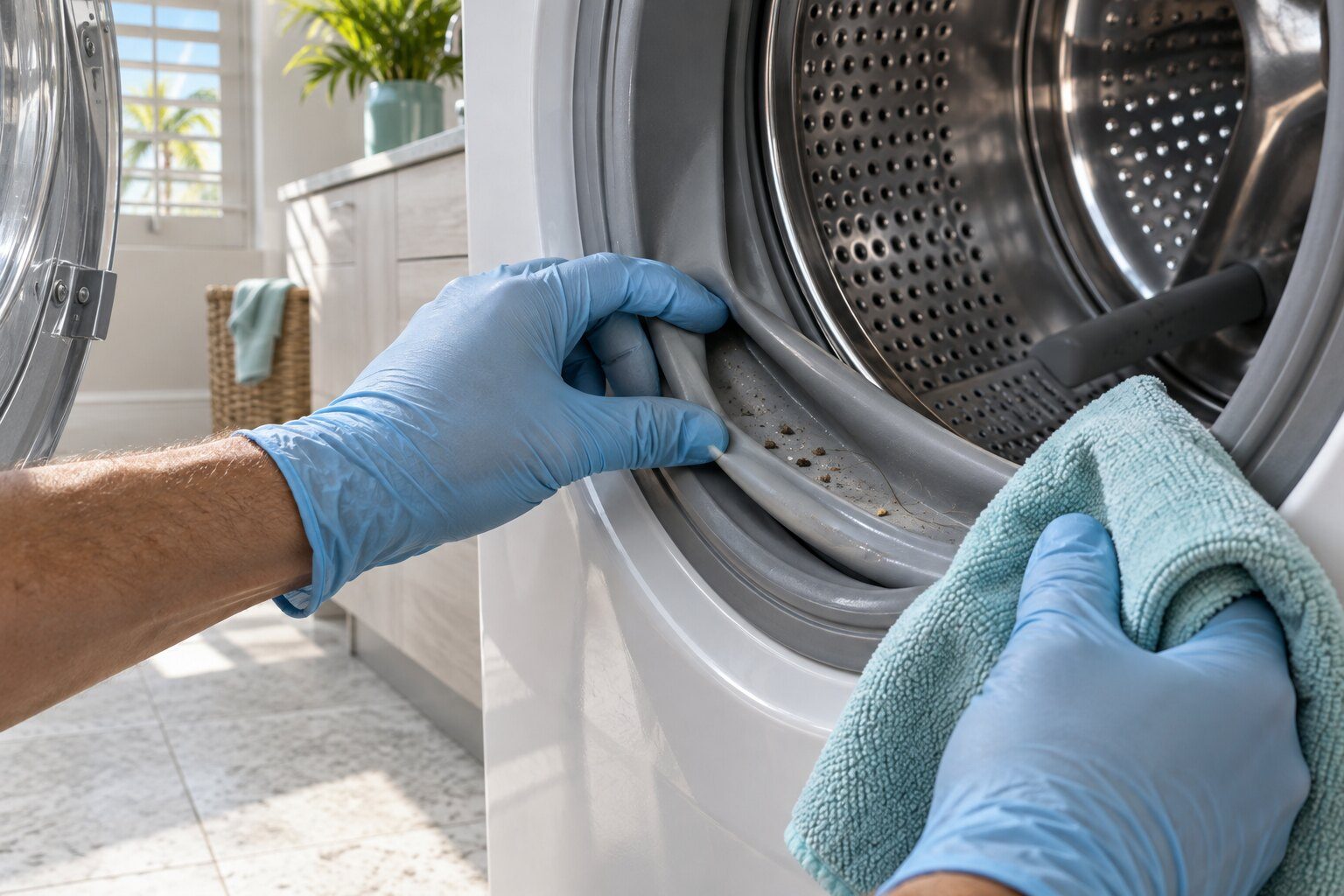
An Asko washing machine leaking at the front is most often the door bellows, and the cause is mechanical rather than a defect: the fold at the bottom of the seal holds a little water and everything that came out of pockets, and sand and grit work into the rubber until it splits from the inside. It leaks during the wash phase first, when water is being thrown about, and the water tracks along the frame and appears at the front — so where you see it is not where it started. Wiping the bottom fold dry occasionally genuinely extends the seal's life. What matters more than the part is the timing: a seal that has been cutting for a month puts water into a floor slab, and in a condominium that stops being a laundry repair and becomes several units' problem.
The full guide
It is the component we change more often than any other on this make, and almost every one of them failed the same way.
What the fold does
The door seal on a front loader is a rubber bellows, and its lowest point forms a fold that retains a little water between loads. That was intended: it is how the rubber beds against the glass. What is not by design is what ends up in it: sand off a beach towel, grit from work clothes, hair, the corner of a tissue.
That material sits against the rubber, and the drum turning presses it in. Over months it abrades the seal from the inside out, which is why the split, when you finally see it, is usually at the bottom and looks like wear rather than damage.
How it announces itself
Not with a puddle. It weeps during the wash itself, while water is being flung round the drum, and what escapes travels down inside the frame to emerge at the front. By the time there is enough to see on the floor, the machine has been putting smaller amounts into the cabinet and the floor beneath it for some time.
Which is why a damp patch that appears and dries and appears again is worth acting on, rather than watching.
Why we are firm about this one in a building
A washing machine moves several gallons per program. In a condominium laundry closet the floor under the machine is a slab, the slab has somebody's apartment under it, and water that has been going into it for a month does not stop being a problem when the seal is finally changed. The part is inexpensive. The ceiling below is not.
That is the whole reason we say to stop using the machine rather than to run it carefully until somebody can come.
The two free things
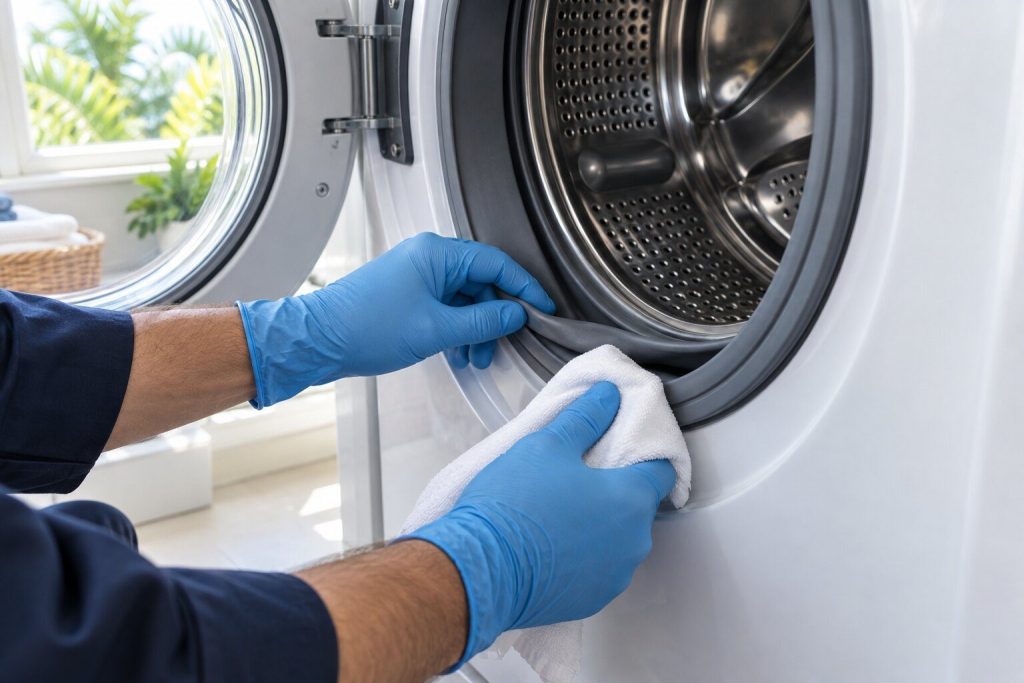
Clear the fold. A cloth round the base of the bellows once a week, lifting out whatever has gathered. Ten seconds of work, and it separates a bellows that gives up at five years from one still sealing at nine.
Leave the door ajar. A door shut on a damp drum keeps the fold wet and the machine smelling. Ajar, it dries, and so does the seal.
What we do beyond fitting the part
We read the old seal before removing it. Where it cut, and on which side, tells us whether this was grit, a hinge that has dropped, or a machine standing out of level — and fitting a new bellows without answering that buys about a year. The clamps go back at their proper positions, the drain port in the new seal is checked clear, and the machine is leveled on its own feet rather than on the floor's opinion.
If it turns out to be a repair
What this leads to, and what it costs
Every job on this site is priced the same way: an on-site diagnostic first, the figure agreed in writing before anybody starts.
-
from $175 Washer door seal replacement
The single most common part we replace on this make, and the one where waiting costs the most. Grit collects in the bottom fold of the bellows, works into the rubber and cuts it from the inside, so the seal is usually failing for months before water reaches the floor. In a condominium that matters more than the part does: water from a laundry closet reaches the slab and then somebody else's ceiling, and a seal is a fraction of what that costs to put right.
- Grit in the bottom fold is the cause — the seal is the symptom
- Caught early it is a part; caught late it is a floor slab and a neighbor
- Clamp and drain path renewed with it, or the new seal goes the same way
-
Water on the laundry floor and no obvious source Washer leaking
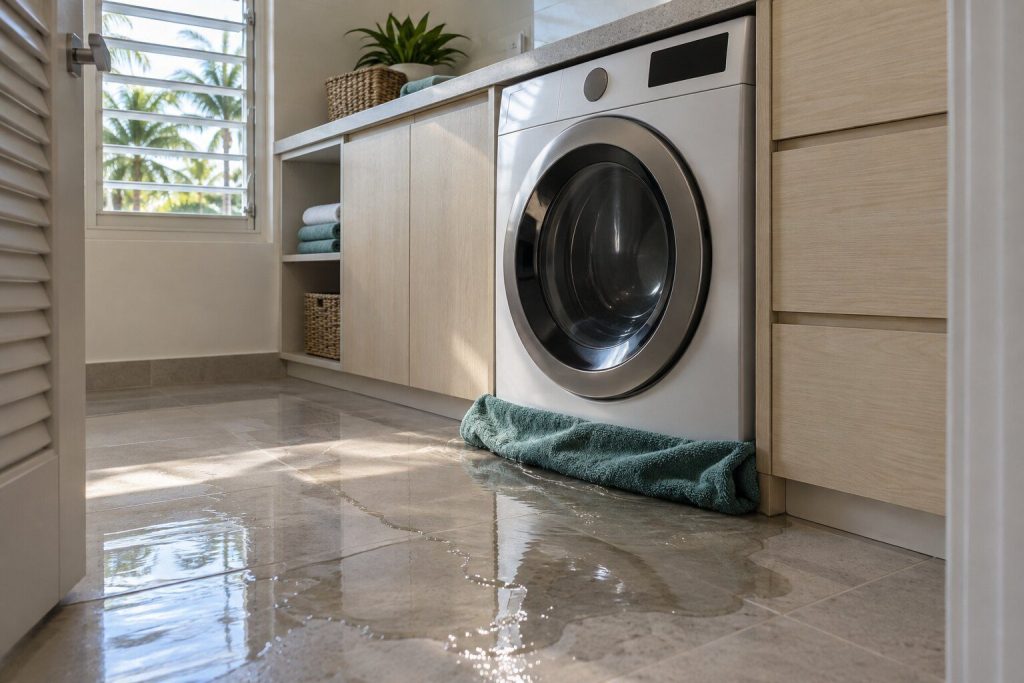
Water appearing under or beside the machine, and by the time it shows on the tile it has usually traveled along the frame from somewhere else. Three places account for nearly all of it: the door seal, where grit collects in the bottom fold and cuts the rubber from the inside over months; the pump filter cap, very often after somebody cleared a blockage and did not seat it; and the hose unions at the wall. In a condominium this matters further than the machine does, because water in a laundry closet reaches a floor slab and then somebody else's ceiling.
- Turn the taps off and stop using the machine — a program uses several gallons
- Check the filter cap first if anyone has cleared a blockage recently
- In a building this is a shared problem long before it is an expensive one
Questions people ask about this
Can a split seal be patched?
No. It is a molded component under repeated flexing and heat, and a patch fails within weeks in a place where the failure costs more than the part. It is replaced, along with both clamps, and the drain port in the bellows is cleared at the same time — a blocked port holds water against the new rubber from the first wash.
Why did it go on this machine and not the last one?
Usually the door being shut on a damp drum. A closed door on a front loader keeps the fold wet, the grit stays in suspension against the rubber, and the seal works harder. Leaving the door ajar between washes is the single cheapest thing you can do for it.
How do I know it is the seal and not a hose?
When the water appears. During the wash phase points at the seal; during fill points at an inlet hose or valve; only while pumping out points at the drain path or the filter cap. Watching one cycle answers it.
Common Problems
More guides like this one
-
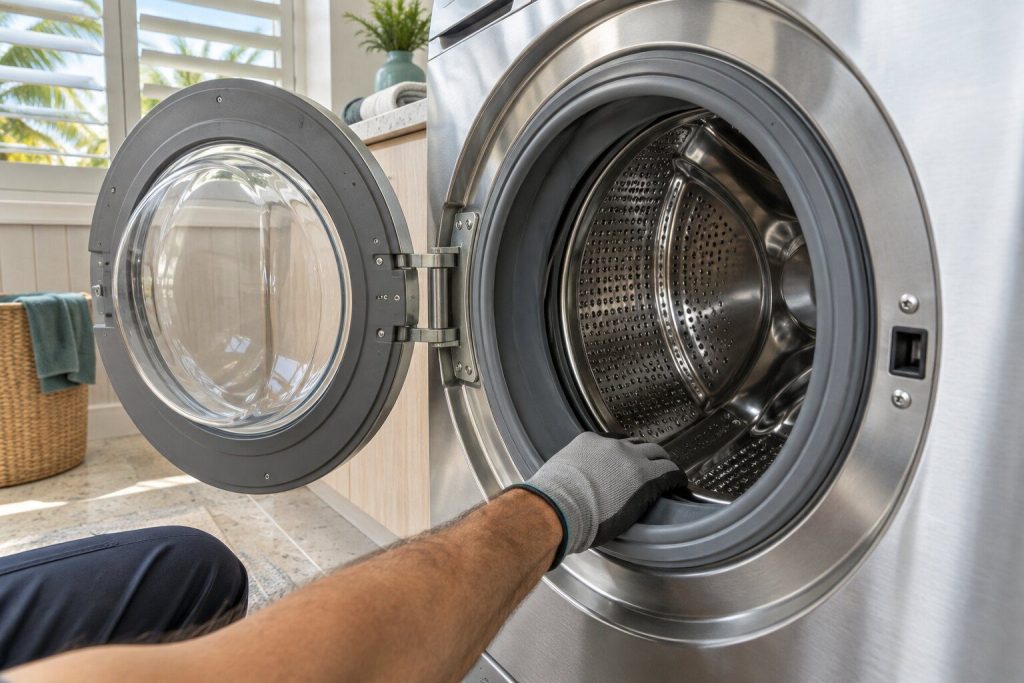
An Asko Washer That Will Not Spin: The Empty-Drum Test
Run a spin-only program on an empty drum. That one test separates three causes in five minutes, and two of them cost nothing to fix.
Read more -
One Asko Induction Zone Dead and the Rest Fine
On induction a single dead zone is better news than it sounds — the problem is usually local to that zone. Two free checks come first, and both mimic a failure exactly.
Read more -
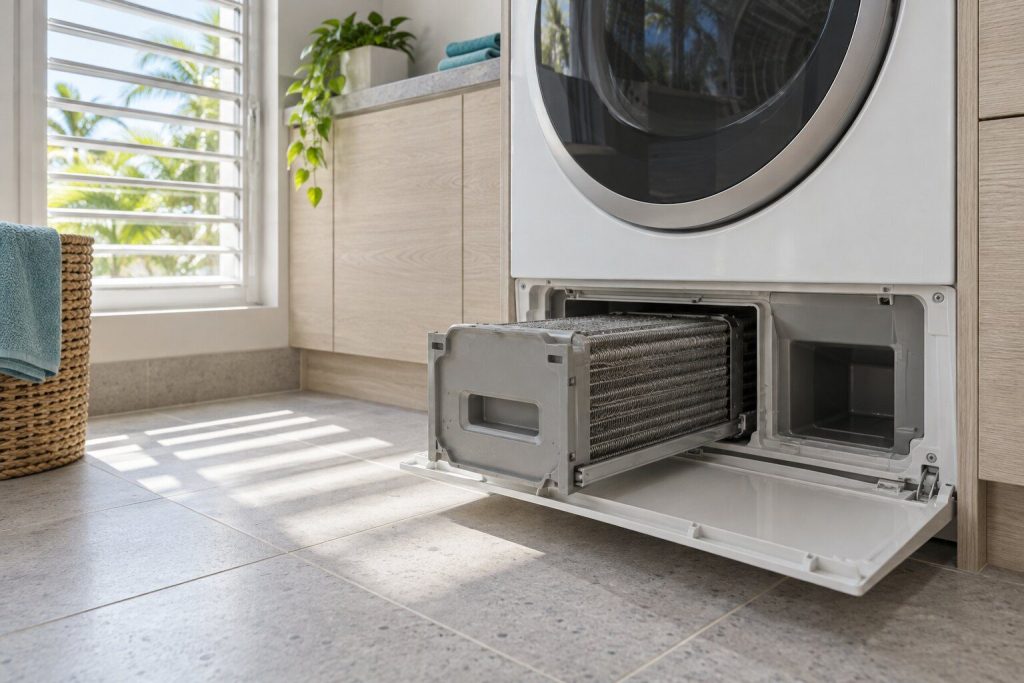
The Asko Dryer Filter Almost Nobody Knows About
There are three filters on a condenser dryer, not one. The third is behind the plinth at the bottom front, and in this climate it packs solid within months.
Read more
Tell us the model number and what it is doing.
This article is based on:
- Official manufacturer documentation
- Internal repair procedures
- Technician repair history
- Company quality standards