Appliance
Asko dishwashers
The machine that made this badge, and also the one where a number on the display tells you least. Three generations are in South Florida kitchens and each numbers its errors differently: the legacy DW20.1 boards blink their trouble through the program lights and keep the F-label in a service menu nobody opens; the current generation prints F10 upward on a full-text panel; and the Outdoor door, built for a terrace kitchen and therefore common here, uses a third scheme written with a colon that means different things again. All three are twenty-four inches wide and look alike behind a cabinet panel. Which one is in the run decides the reading, the part number and whether the number on the screen reports an error at all.
- 5 symptoms we are called out to
- From $95 diagnostic, credited to the repair
- 59 cities and neighborhoods covered
- OEM parts available on order
The short version
What this equipment is, for a repair
Configurations
Twelve US models · panel-ready, Touchproof steel and the Outdoor door
Access
Planned before the visit, not discovered on arrival
Parts
OEM, available on order
Diagnostic
From $95, credited to the repair
What goes wrong with it
Symptoms we are called out to on Asko dishwashers
Each one covers the likely causes in the order they are worth checking, and what to do in five minutes before booking anything.
-
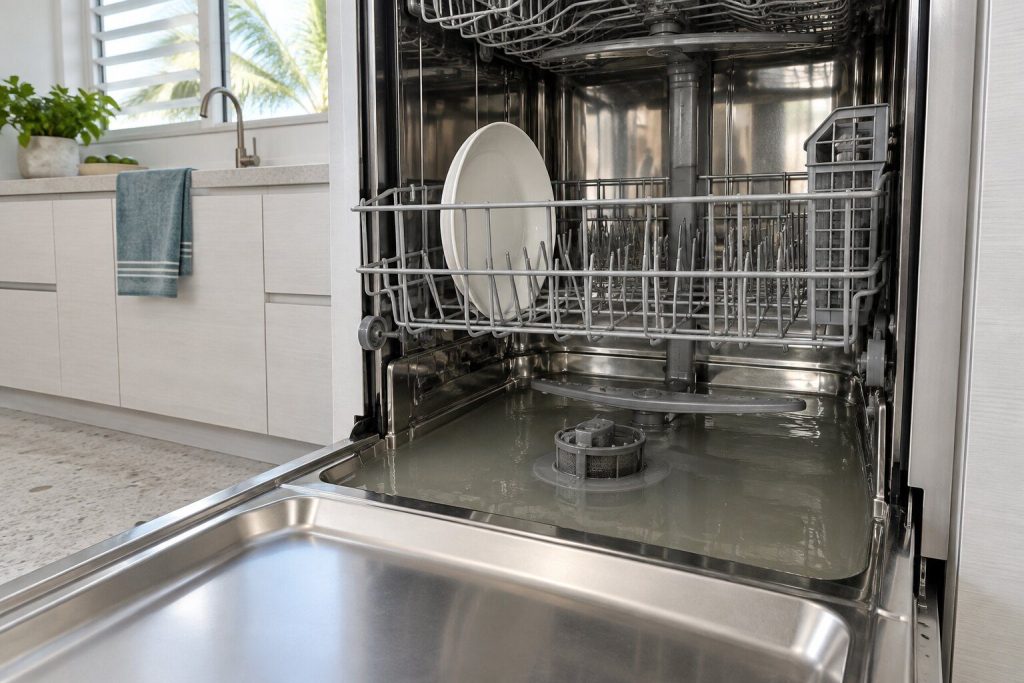
Water standing in the bottom when the program ends Dishwasher not draining
The program finishes and there is a pool in the sump. On this make the machine will tell you so in one of three unrelated ways depending on which generation is behind the panel — a printed number on the current display machines, a blink pattern on the legacy boards, and a colon-format string on the Outdoor door whose digits mean something else again. Underneath all three the machine is identical: a filter stack, a drain pump, a hose and whatever the sink end was connected to. Two of those four are free to check and they end this complaint more often than any part does.
- The filter stack lifts out by hand, costs nothing, and usually ends this
- Three code schemes describe this behavior; the model decides which one you are reading
- If the sink drains slowly too, the appliance is innocent
-
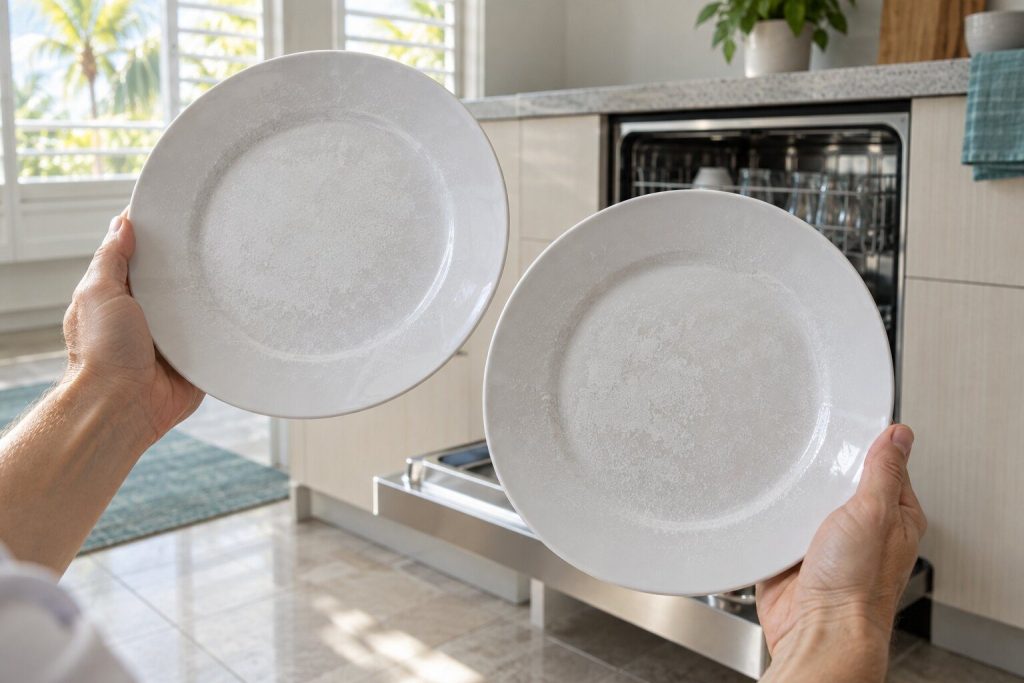
Everything runs, nothing errors, the dishes are gritty Dishes come out dirty
The machine completes its program without complaint and the load is worse than when it went in. There is no code for this on any of the three generations, which people find unsettling and which is actually the useful fact: nothing has failed. Four ordinary things decide whether a dishwasher cleans on this water, and all four drift slowly enough that nobody notices until the difference is obvious — spray jets liming shut, a filter rinsed but never lifted, a hardness setting still on the number it left the factory with, and a detergent dose meant for softer water than South Florida has.
- No code and no failure — this is performance, and it is usually reversible
- The hardness setting is the one nobody touches, and this water is not soft
- Both spray arms come off by hand and every jet should pass light
-
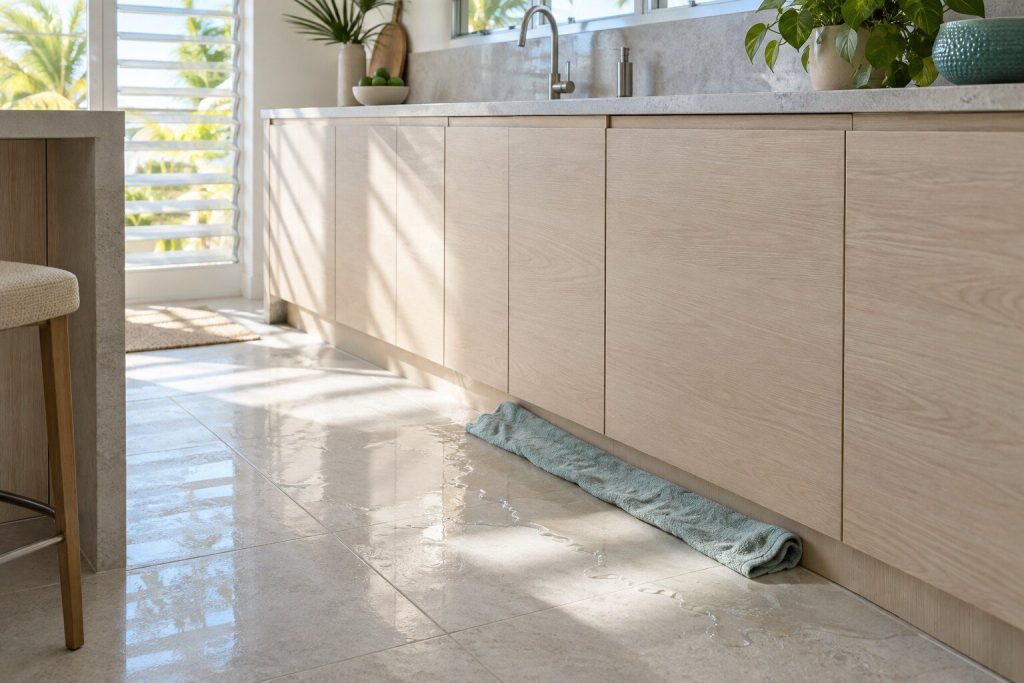
Water on the floor, and the machine is behind a panel Dishwasher leaking
Water appearing at the toe kick, which on an integrated machine is almost never where the leak started — it tracks along the frame and comes out at the front. That single fact decides how this is handled: the panel comes off and the machine comes forward before anybody says where the water is from, because a good door seal gets replaced every day by somebody guessing from the front. On a legacy machine the base float may raise an overfill message while the tray fills, and that message is the machine protecting your floor rather than a separate problem.
- An overfill message with a wet base tray is a leak, not a sensor
- Turn the water off at the sink and stop using the machine
- Where it shows at the front is not where it started
-
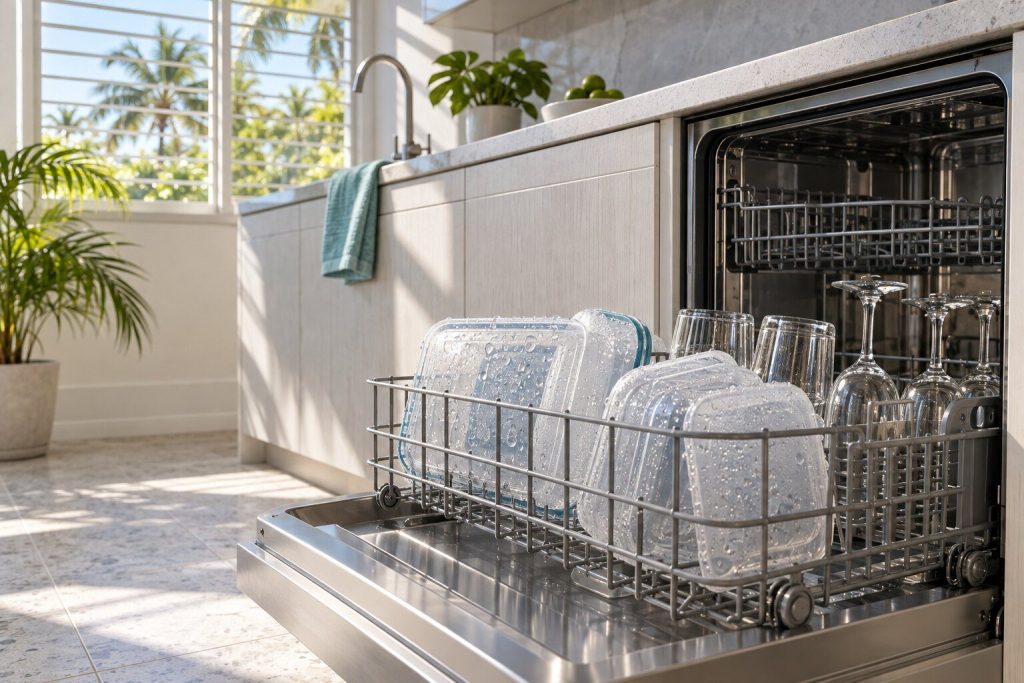
Everything is clean and nothing is dry Dishes come out wet
A load that washes perfectly and comes out soaked. The useful split happens early and you can make it yourself: if the dishes are also cold, the machine is not heating and this is a heating problem with a part behind it; if they are hot and wet, the machine heated correctly and this is about how the moisture leaves. Those are different repairs at different prices, and on the turbo drying models there is a third possibility again, because those add a fan that can fail on its own.
- Warm and soaked means condensation; cold and soaked means heat
- Rinse aid does more for drying on this make than people expect
- Plastic will always dry worse than china — that is heat capacity, not a defect
-
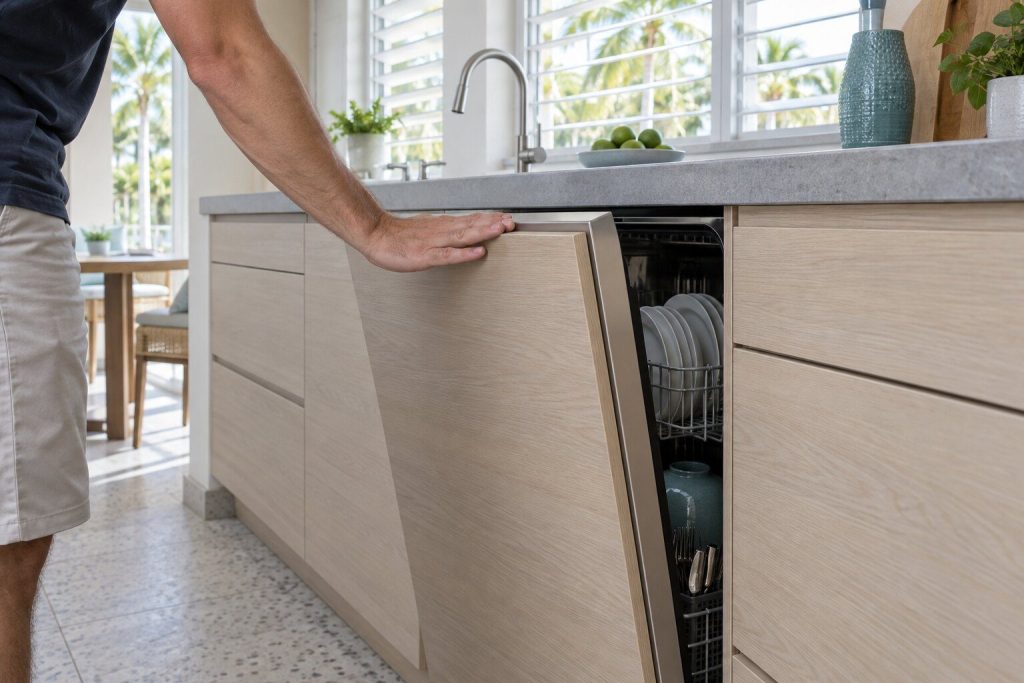
The door shuts, the program is chosen, and nothing happens Dishwasher will not start
Dead silence, and on an integrated machine the prime suspect is mechanical rather than electrical: is the door. A custom panel adds weight the hinge springs were set for on installation day, joinery settles over the years, and a door that looks perfectly shut can be sitting a millimeter proud of the switch that proves it. On the Outdoor machines there is even a message for it in as many words. After the door there is the supply, and then a control that is genuinely not responding — in that order, because that is the order of cost.
- Push the door firmly and try again — on an integrated machine this is the usual answer
- A delay start nobody cleared behaves precisely like a dead machine
- Check the socket behind the cabinet, which nobody can see
What we do on it
Repairs we carry out on Asko dishwashers
Starting figures for this equipment in South Florida. The exact cost is confirmed after an on-site diagnostic — and this is not the whole list of what can go wrong, so call if your problem is not here.
-
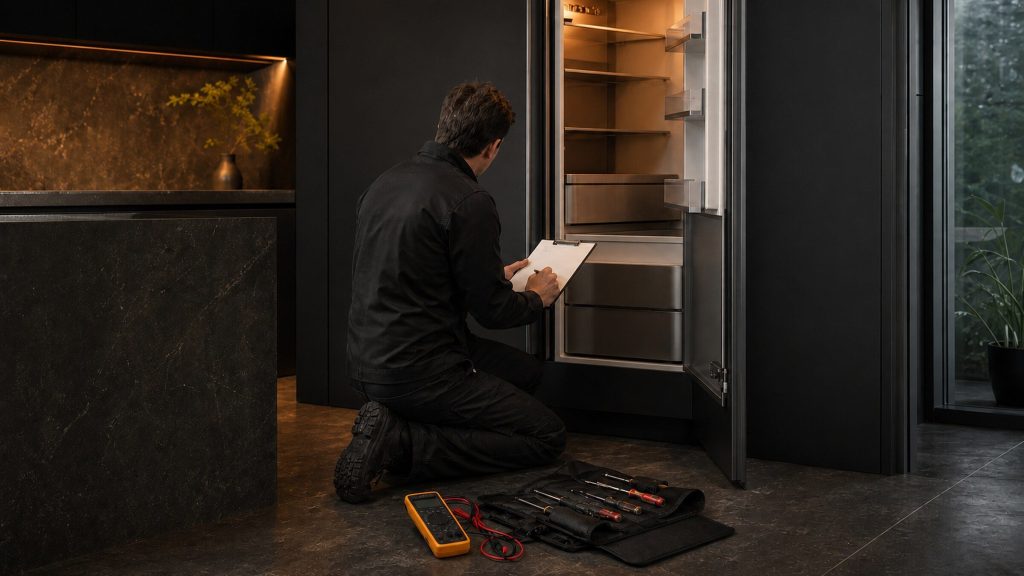
from $95 Diagnostic visit
Establishing what is actually wrong with the machine, ahead of naming or costing a part. Here one thing has to be settled before the complaint can even be read: which generation is standing in the kitchen. Digits on this badge belong to whichever board prints them, so a dishwasher, washer or dryer measured against the wrong table produces a confident answer and an incorrect part. You keep the charge against the repair when the work goes ahead; where our view is that spending money on this machine makes no sense, that view is what you have paid for and the amount stays the same.
- Generation before symptom — it settles which table the digits belong to
- The number is written down before the work, and it comes off the repair
- Where mending makes no sense we say it, instead of finding a part to sell
-
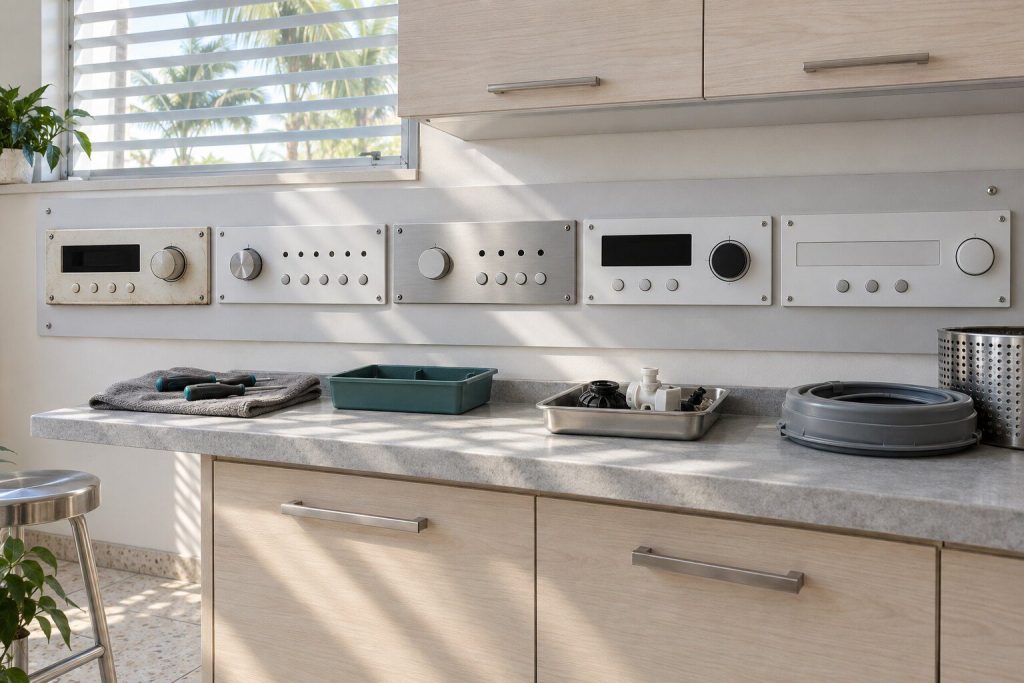
from $115 Platform identification
The job this make needs and no other make on our list does. Three dishwasher generations, five washer code families, dryer schemes that change with the control board and two induction families that share no numbers — and from the front of the kitchen they are indistinguishable. This is the visit that settles which machine is actually in the run, records it, and gives you a code table that applies to your appliance instead of to the badge in general. For anyone who intends to keep the machine another decade it is the cheapest useful thing we sell.
- Which generation, which board, which code table — established and written down
- Turns every future number on the display into something readable
- Credited in full against a repair if it is booked in the same visit
-
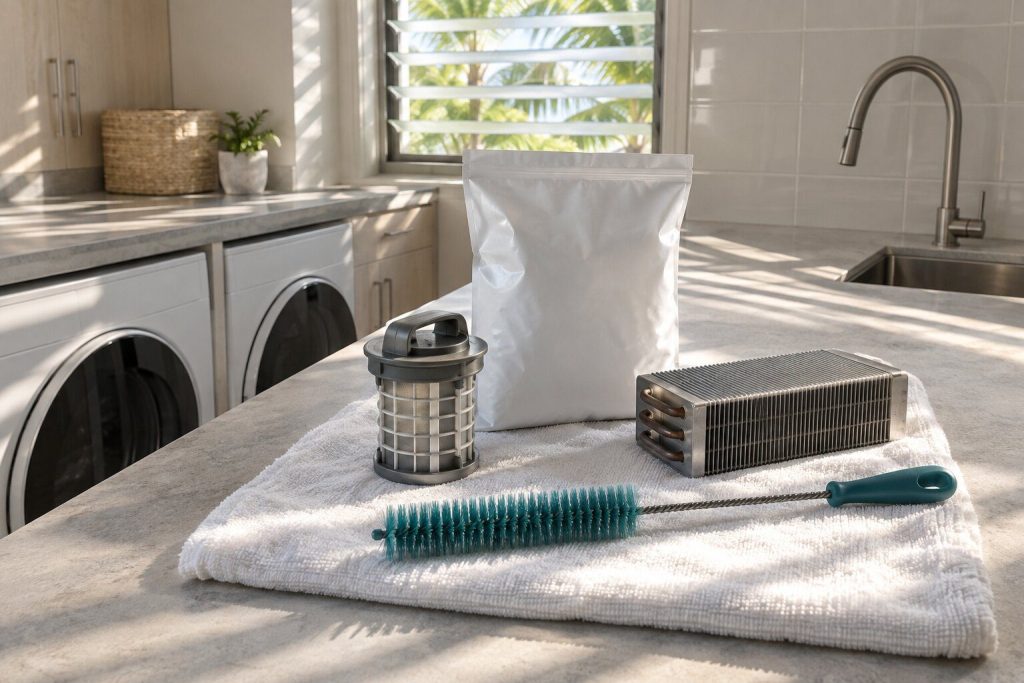
from $155 Appliance maintenance
A planned visit rather than a rescue, and on this make it pays for itself faster than on most. These are machines built to run for twenty years, which means the things that end them early are almost all maintenance items — a condenser filter packed solid in a laundry closet at eighty per cent humidity, a dishwasher filter stack nobody knew lifted out, a door seal cutting itself on grit. Every one of those is minutes of work and none of them announce themselves before they cost a part.
- Filters, seals, drains and airflow — the four that end machines early here
- One visit covers every Asko appliance in the property, not one machine
- Written record of what was found, so the next visit is not a fresh start
-
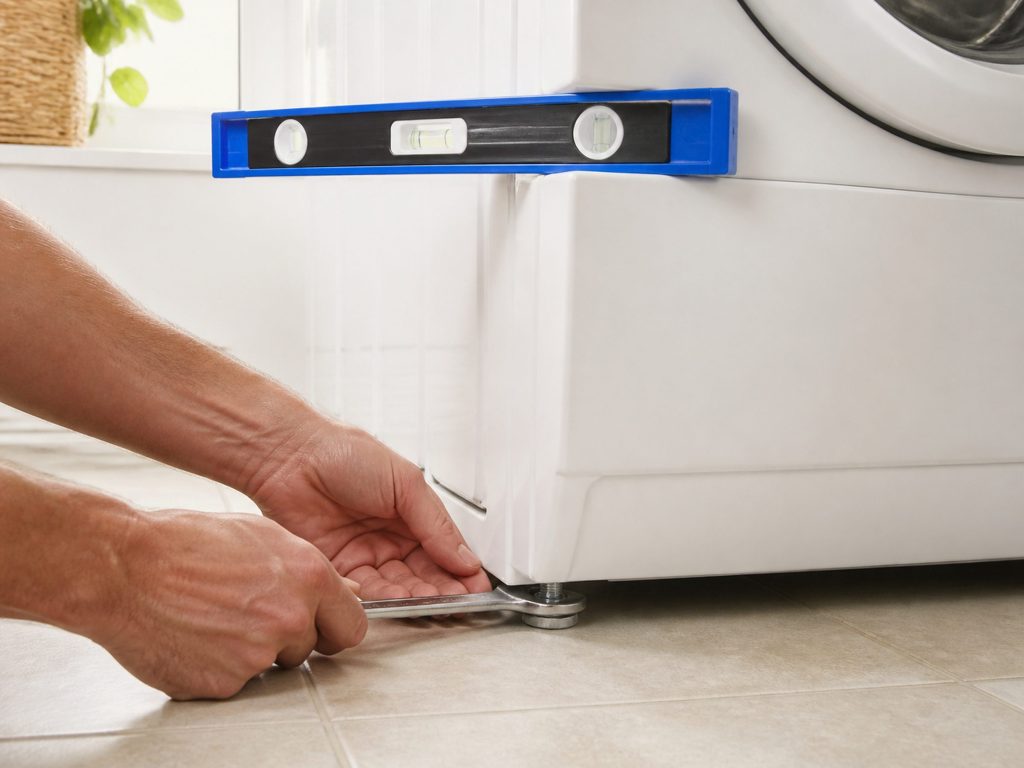
from $185 Appliance installation
Fitting a machine into a space that was drawn for another one, which in this county is most installations. On integrated equipment the appliance is the easy half: the panel, the scribe, the toe kick, the services behind and the air the machine needs to breathe are the work. We measure the opening before anything is ordered, because an integrated cabinet that does not fit is not a delivery problem, it is a joinery problem, and it is far cheaper to find out on a Tuesday with a tape measure.
- The opening measured before anything is ordered, not after it arrives
- Panel, scribe and toe kick treated as part of the job, not as somebody else's
- Air path checked and recorded — a boxed-in machine fails whatever is fitted
-
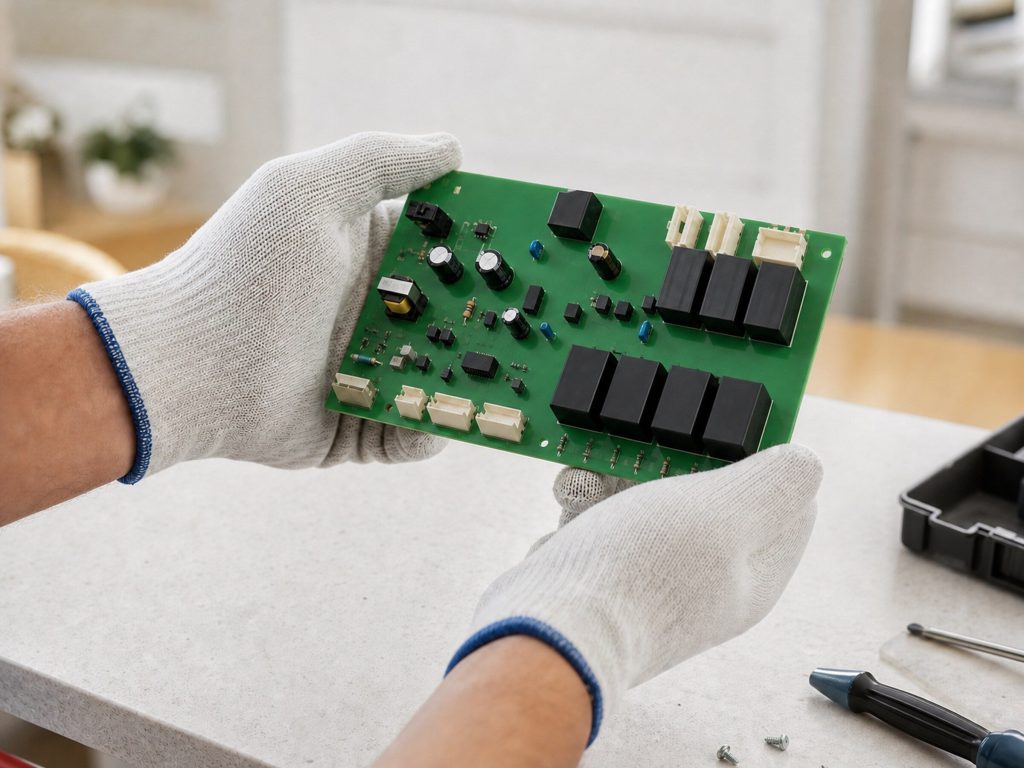
from $285 Control board repair
The repair where being honest about the supply chain matters more than being quick. Boards on this make come through a European channel, and on a machine that is no longer in the US catalog that is a real wait rather than a phrase. So the order here is fixed: prove the board is the problem, price the part with its lead time attached, and only then decide. A board fitted to cure a supply problem or a water-ingress problem will fail the same way in a season, and we would rather find the water.
- Proven, not assumed — the board is the last suspect, never the first
- Lead time is quoted with the price, because on this make it is part of the answer
- Water ingress and supply errors found first, or the new board follows the old one
-
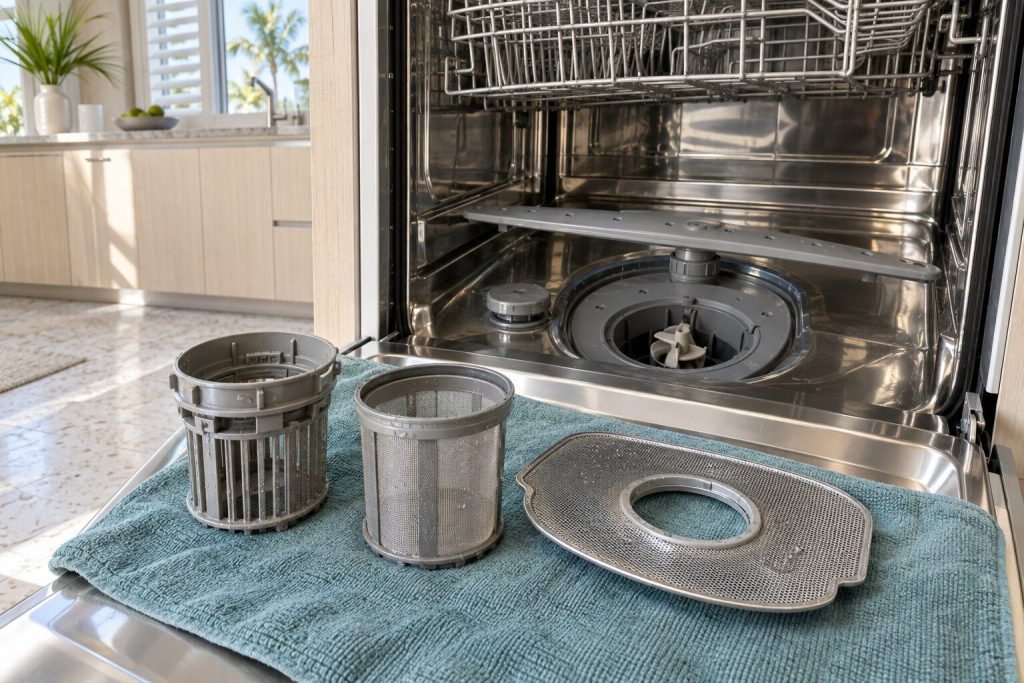
from $165 Dishwasher drain and pump repair
A pool left in the sump when the program ends — which this make announces in three unrelated ways, depending on the generation. The current display machines print it as a printed code; the legacy boards blink it through the program lights; the Outdoor door prints its own string that belongs to neither table. Underneath all three the machine is the same: a filter stack, a drain pump, a hose and an air gap, and the water has stopped at one of them.
- Filter stack first — it is free, and it ends this call more often than a pump does
- Drain hose and the air gap at the sink, which are somebody else's install
- The pump proved on a meter before it is replaced, not diagnosed by elimination
-
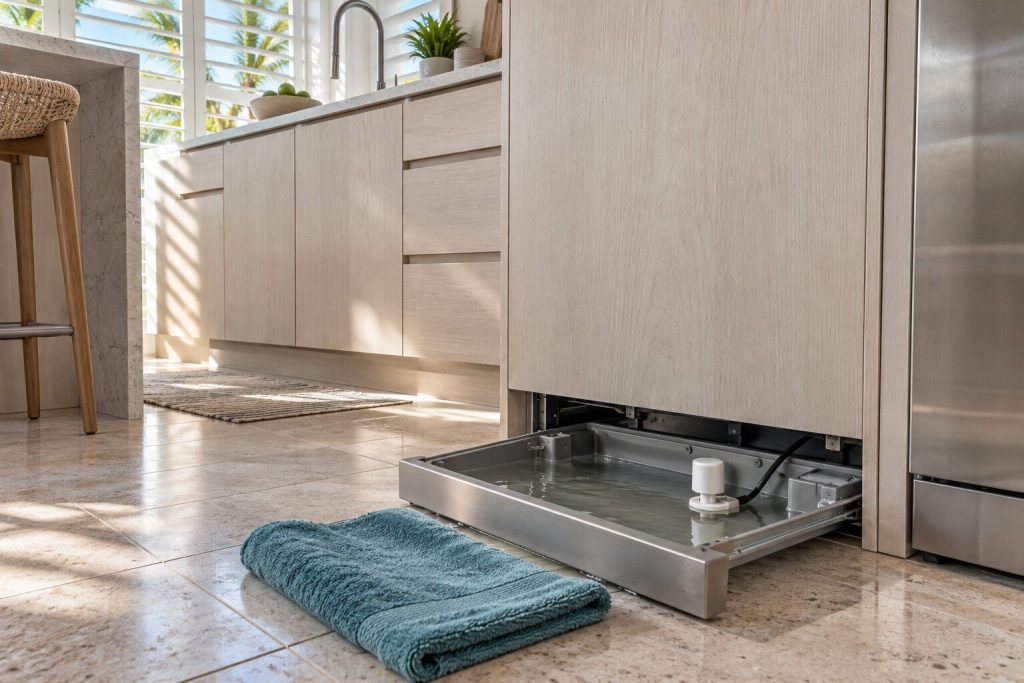
from $159 Dishwasher leak repair
Water on the floor of a kitchen where the machine is behind a custom panel, which means the leak has been running longer than anybody realized — it tracks along the frame and appears at the toe kick rather than where it started. On integrated machines the order of work is not optional: the panel comes off, the machine comes forward, and only then can anybody honestly say where the water is from. Guessing at it from the front is how a door seal gets replaced on a machine leaking at the sump.
- The panel off and the machine out — a leak is not diagnosed from the front
- Door seal, sump, hose unions and the inlet, in that order of likelihood
- Cabinet floor and joinery checked for what the water has already reached
-
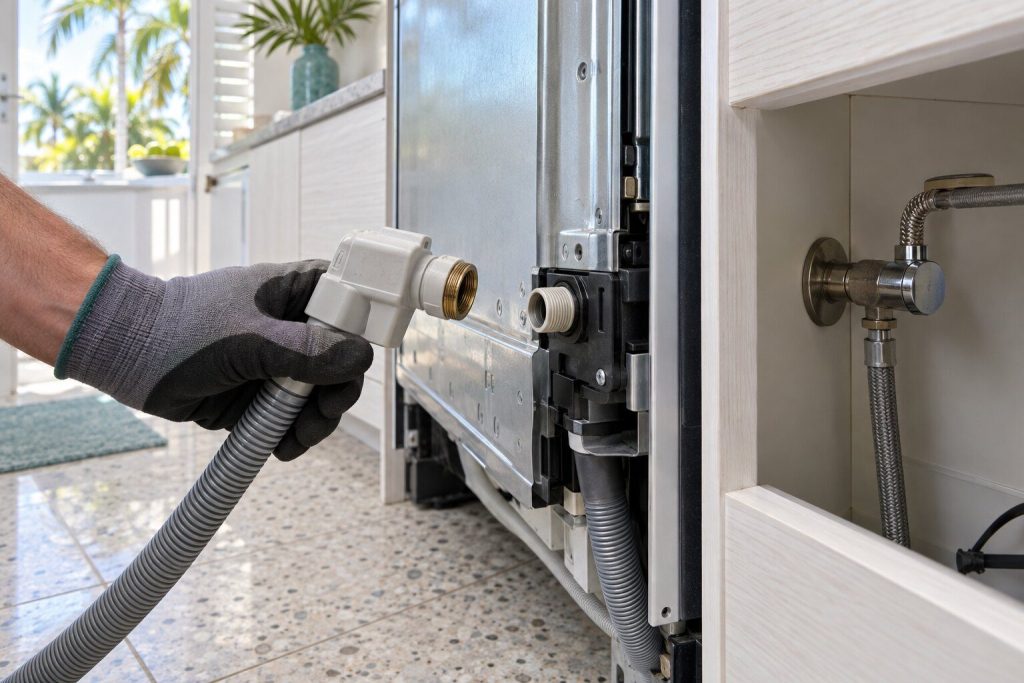
from $155 Dishwasher water inlet repair
The machine will not fill, fills too slowly, or fills when it should not — three complaints with one circuit behind them. On the current generation this is the family of codes around water inlet and inlet valve leakage; on the legacy boards it is a blink pattern for a pulse count never reached; and on both the first suspect is outside the machine altogether, at a service valve under the sink that somebody closed most of the way during other work.
- The service valve under the sink before the machine, every time
- Inlet valve, flow meter and the hose screen, which is a five-minute clean
- A valve that leaks when off is a different problem from one that will not open
-
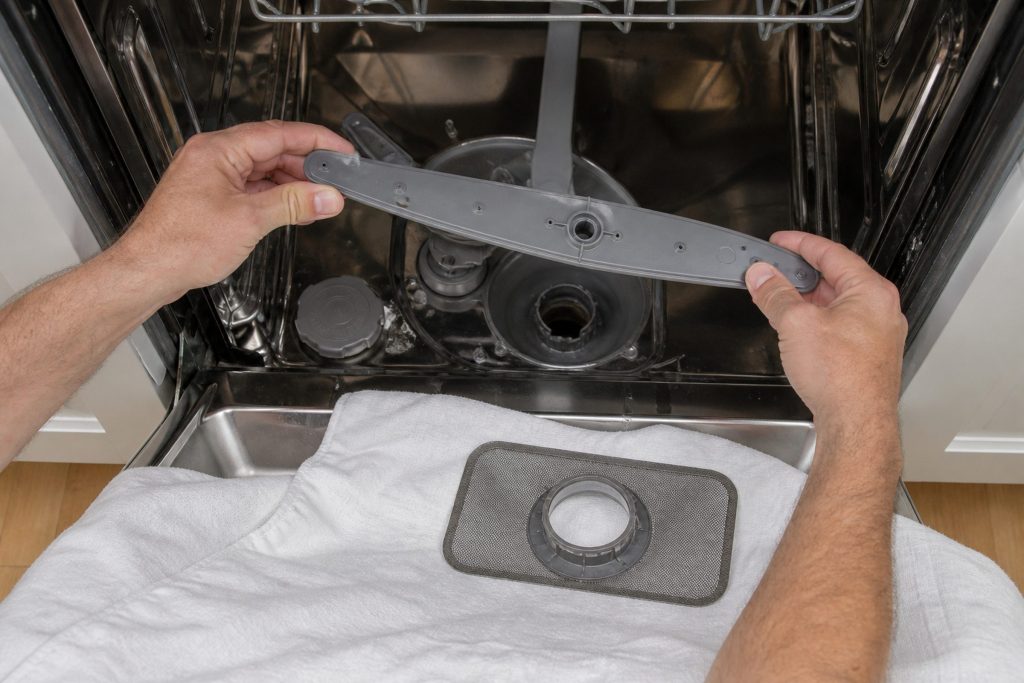
from $139 Dishwasher wash performance service
Everything runs, nothing errors, and the dishes come out gritty or filmed. This is the call with no code behind it on any of the three generations, and it is nearly always four ordinary things rather than one broken one: spray arms whose jets have limed shut, a filter that has been rinsed but never lifted, a water hardness setting nobody adjusted when the machine arrived on this supply, and a detergent dose meant for softer water than we have.
- No code, no failure — this is a performance call and it is priced as one
- Spray arms, filter, hardness setting and dose, which is the whole list
- Water hardness set to this supply, not to the number it left the factory with
-
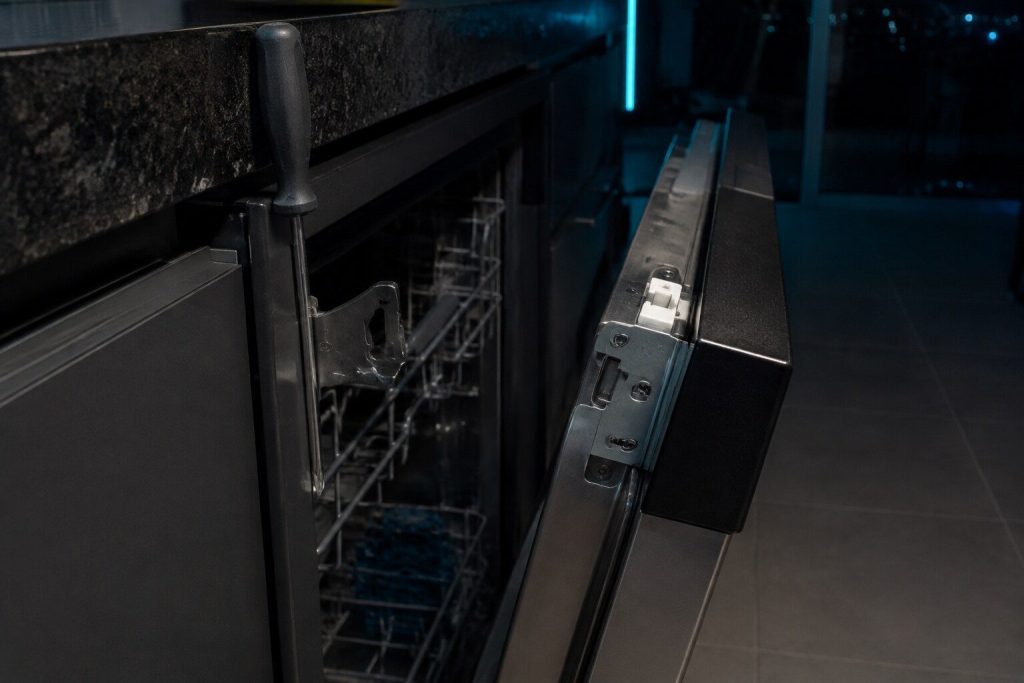
from $135 Dishwasher door and latch repair
A door that has to be pushed to start, drops open on its own, or will not release at the end of a program. On integrated machines this is more often the panel than the appliance: a custom door adds weight the springs were tensioned for at installation, and joinery settles. So the springs get set to the door that is actually hanging there rather than to a factory figure, and the latch and its switch are checked as the pair they are.
- Springs tensioned to the panel that is actually on the machine
- Latch and door switch treated as one circuit, because that is how they fail
- Hinge wear on integrated doors, which carries more weight than a plain one
-
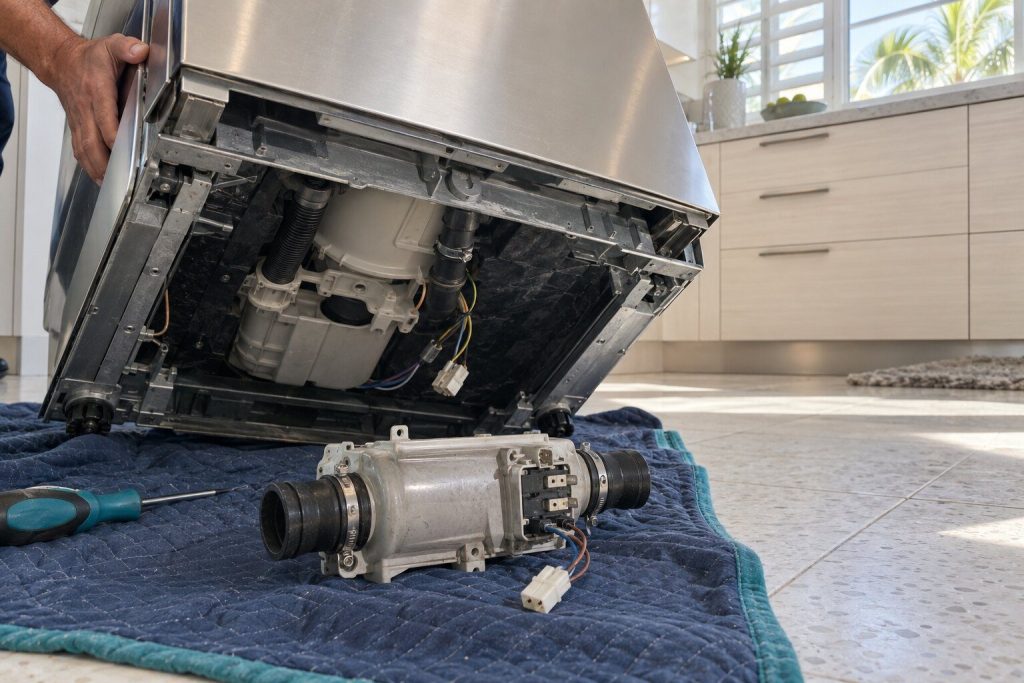
from $155 Dishwasher heating and drying repair
Dishes coming out wet, or a program that runs cold and takes forever. On this make the two are one circuit and the diagnosis splits early: a heater that has failed outright shows in the water temperature and, on the newer boards, in a heating code; a machine that heats correctly but dries badly is a condensing and airflow question and the heater is innocent. The turbo drying models add a fan to that list, and it is a separate part with a separate failure.
- Heating and drying separated before anything is priced
- Heater, thermistor and the control that decides between them
- On turbo drying models the fan is its own part and its own repair
-
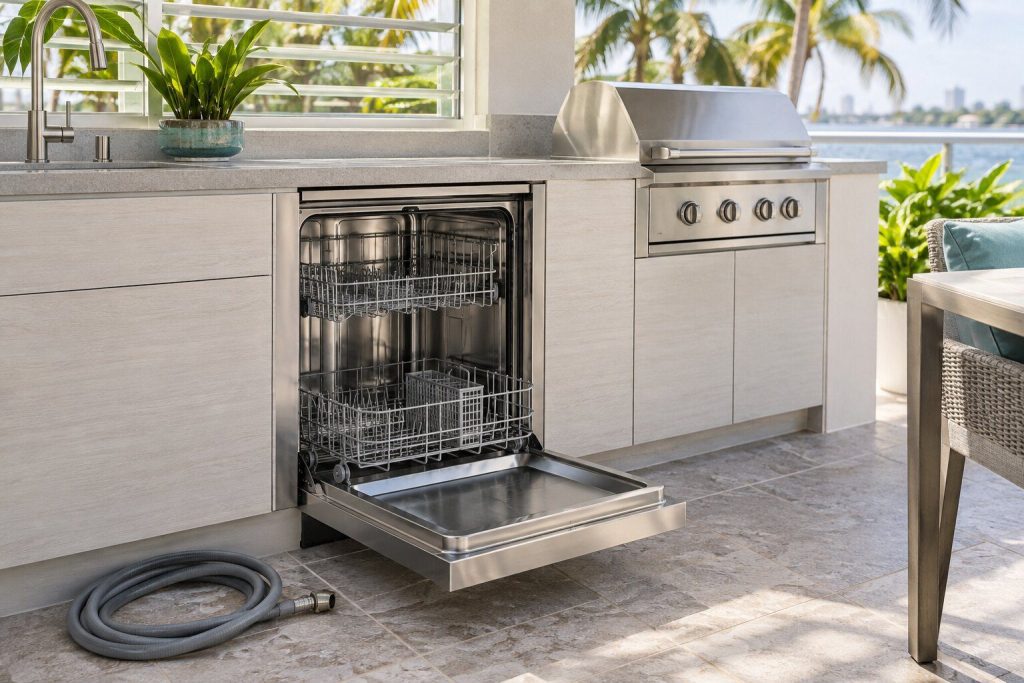
from $195 Outdoor dishwasher service
The terrace machine, and on this coast it is a different appliance from the same model indoors. It has its own service scheme — written with a colon, and clashing with the indoor generation's numbers — its own stainless specification and its own door seal part. What actually ends these is not the electronics but the environment: salt at the hinges and fasteners, rain finding the top edge of a cabinet that never dries, and a machine asked to work at outdoor humidity for eleven months a year.
- Its own code scheme, which clashes with the indoor machines' numbers
- Salt at hinges, fasteners and the door seal — the real failure path here
- Cabinet drainage and the top edge, which is usually the joinery's problem
-
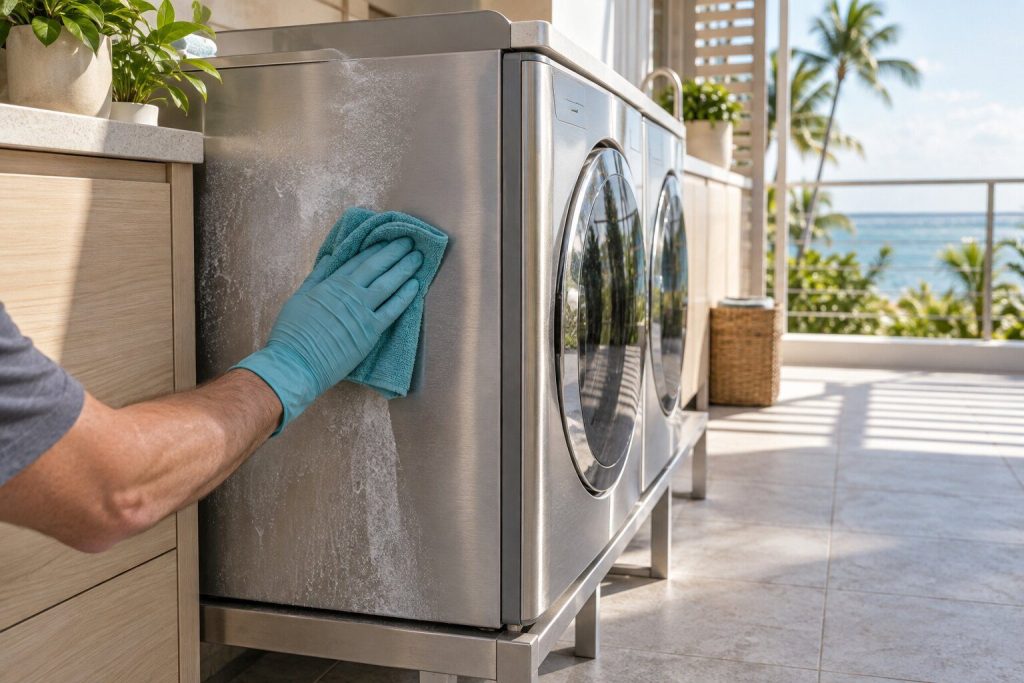
from $135 Salt air protection service
A visit that exists because of where these machines are rather than what they are. On a barrier island or a terrace kitchen, salt reaches hinges, fasteners, trim, backdraft dampers and the outdoor dishwasher's door long before anything electrical goes wrong, and every one of those is cheap while it is still moving and expensive once it is not. Nothing here is exotic: it is cleaning, treating and freeing things on a schedule, and it is the difference between a ten-year machine and a five-year one on this coast.
- Written for this coast: hinges, fasteners, dampers and outdoor doors
- Everything on the list is cheap while it still moves
- Best booked with another visit, since it is an hour rather than an afternoon
In more detail
About Asko dishwashers
Three generations behind one cabinet front
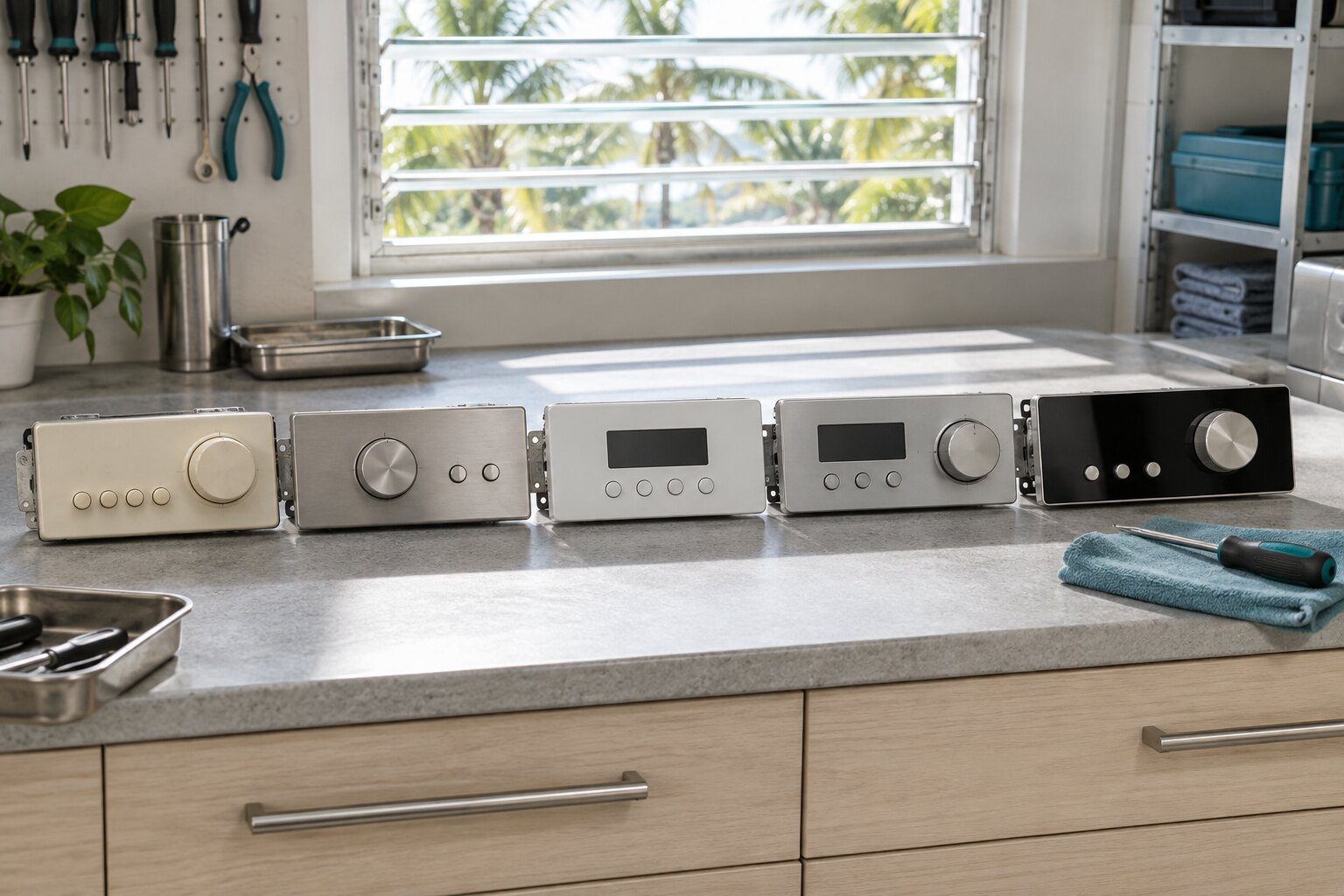
Twelve dishwashers are in the current US catalog and three distinct generations are in South Florida kitchens. The legacy DW20.1 boards signal by blinking the program lights; the current machines print F-numbers on a full-text panel; the Outdoor door built for a terrace uses a colon format whose meanings clash with the indoor list. All three are twenty-four inches wide and look identical behind a custom panel.
What that changes for a repair
The model code from the door edge decides which table applies, which part number is correct and whether the number on the screen is reporting a problem at all. It is asked for before the digits, every time.
This article is based on:
- Official manufacturer documentation
- Internal repair procedures
- Technician repair history
- Company quality standards
Before you book
Questions about Asko dishwashers
The display says F10. What is it?
That depends on which machine is printing it, and this is the one make where that is not a pedantic answer. On the current display generation F10 is an overfill — the machine has taken more water than the program asked for and is protecting itself. On an Outdoor model the same digits appear as F:10 and belong to a different table with different meanings. And on a legacy machine there is no F10 at all: those boards go F1 to F9 and then to letters, and they do not print anything — they blink it. So what we ask for first is the model code from the door edge; the digits on the screen come second.
It fills and then stops with the lights flashing.
On the legacy boards a flashing pattern is the error code, and the pattern matters more than the fact that it is flashing: one light is a heating stage that gave up, two is an overfill, the fourth is a water intake that never reached its pulse count. On the newer machines the same behavior comes with a printed code and the reading is quicker. Either way the split is between water coming in and water going out, and the free checks are the same on both — the filter stack lifted out and rinsed, the drain hose not kinked behind the cabinet, the air gap at the sink clear.
Can it be pulled out without taking the panel off?
On the integrated machines — most of what is here — the custom door and its furniture have to be taken off before anything else happens. The custom door is carried on the appliance door, so it has to be separated before anything slides forward, and the toe kick and the joinery scribe usually come away with it. None of it is hard, but all of it takes time, which is why a dishwasher visit here is priced from the getting-in rather than from the component — that component is frequently the cheapest item of the day.
How is the Outdoor model different?
It is built to live on a terrace, which in this county means salt air, afternoon rain and a cabinet that never fully dries. Its stainless is specified for it and its door seal is a different part from the indoor machines. It also has its own service scheme, printed with a colon, and its codes clash with the current indoor generation — the same digits, other meanings. For a terrace kitchen, the door model settles what any number means, and we ask for it first.
Where we do it
Across Miami-Dade, Broward, and Palm Beach
Same terms everywhere we go: an on-site diagnostic first, the price agreed in writing, and the exact figure confirmed once we have seen the unit.
Neighborhoods people ask for by name