Cost Expectations
What the Diagnostic Buys on an Asko, and Why It Is Two Answers
The diagnostic on an Asko is from $95 — the same figure across this fleet — and it is credited against the repair when you go ahead. The difference on this badge is that you get two findings instead of one. Finding number one is the familiar kind — the component that has gone, established by making the behavior happen and metering whatever could produce it. The second is which generation the machine is, and on this make that is not a formality: three dishwasher code schemes, five washer code families and dryer codes that change form with the control board mean that the same digits belong to different tables on different machines. A correct diagnosis read against the wrong table still produces the wrong part. Where our candid view is that spending money here makes no sense, that view is what you receive, at the same charge: the measurement was the product.
The full guide
A diagnostic charge is the same idea everywhere: somebody comes, establishes what is wrong, and tells you what it will cost to put right. On this make it does one extra thing that is worth paying for on its own.
The figure
From $95 — the figure every site in this group charges, not one invented here. Go ahead with the work and it is deducted.
Finding one: the component
The familiar half, handled conventionally. We make the behavior happen in front of us instead of taking a description of it, and we meter whatever could be producing it. Then the job, the figure it starts from and the specific things that would move it are written down before anything is opened.
Finding two: which machine this actually is
Here is what is different. Asko does not have one code table per appliance. It has one per platform:
- Three dishwasher schemes, two of which use the same digits for different problems.
- Five washer code families, and two machines of the same generation that give the same L-numbers opposite meanings.
- Dryer codes that change form across revisions of one platform — L-numbers, then F-numbers, then S-numbers, then spelled-out ERROR strings.
- Two induction families that share no numbers at all.
So establishing which platform is in your kitchen is not administrative. It is the thing that stops a correct diagnosis from ordering the wrong component, and it is why the model code from the door edge is the first thing we ask for.
What you keep afterwards
Which scheme the machine uses, what its common strings mean, and which parts channel serves it — written down and left with you rather than kept in our file. On a machine you intend to keep for another decade, that is the cheapest useful thing we sell.
When the answer is no
There are visits where the measurement concludes that mending exceeds what the appliance is worth, or that a component for a discontinued platform can no longer be got at all. That answer arrives at the same price as any other, and it is the one we would rather give early than discover halfway through a job.
You have paid for a measurement, not for a part.
Booking sensibly
A laundry closet nearly always holds two Asko machines, and a kitchen specified around the brand often holds more. Everything after the first is far cheaper, because the journey and the setup happen once. Say what else is in the property when you call.
If it turns out to be a repair
What this leads to, and what it costs
Every job on this site is priced the same way: an on-site diagnostic first, the figure agreed in writing before anybody starts.
-
from $115 Platform identification
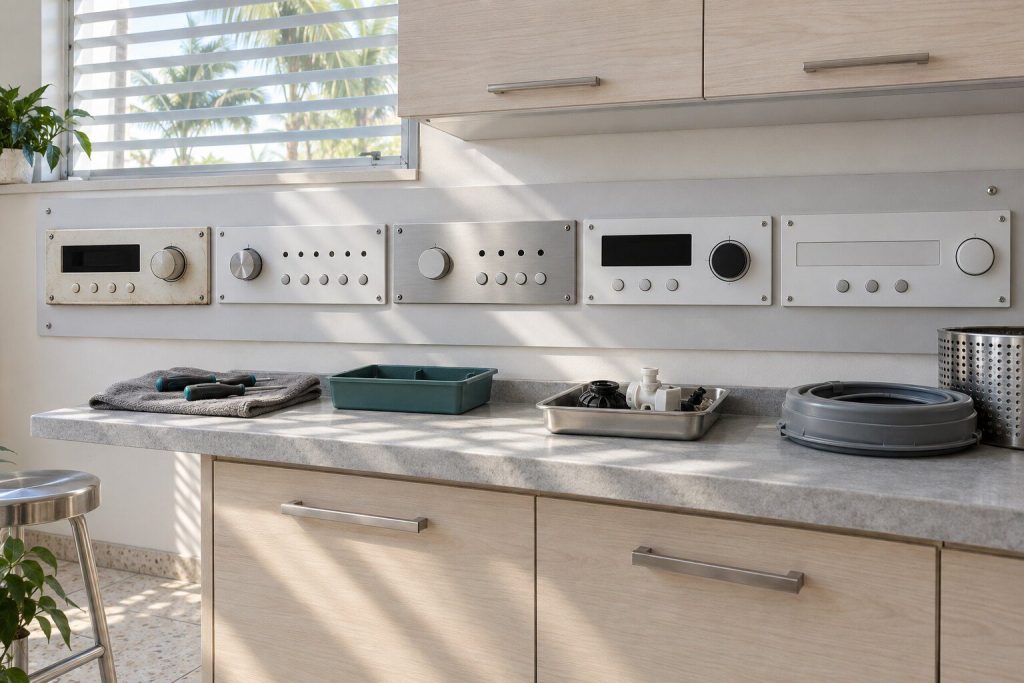
The job this make needs and no other make on our list does. Three dishwasher generations, five washer code families, dryer schemes that change with the control board and two induction families that share no numbers — and from the front of the kitchen they are indistinguishable. This is the visit that settles which machine is actually in the run, records it, and gives you a code table that applies to your appliance instead of to the badge in general. For anyone who intends to keep the machine another decade it is the cheapest useful thing we sell.
- Which generation, which board, which code table — established and written down
- Turns every future number on the display into something readable
- Credited in full against a repair if it is booked in the same visit
-
from $95 Diagnostic visit
Establishing what is actually wrong with the machine, ahead of naming or costing a part. Here one thing has to be settled before the complaint can even be read: which generation is standing in the kitchen. Digits on this badge belong to whichever board prints them, so a dishwasher, washer or dryer measured against the wrong table produces a confident answer and an incorrect part. You keep the charge against the repair when the work goes ahead; where our view is that spending money on this machine makes no sense, that view is what you have paid for and the amount stays the same.
- Generation before symptom — it settles which table the digits belong to
- The number is written down before the work, and it comes off the repair
- Where mending makes no sense we say it, instead of finding a part to sell
Questions people ask about this
Do I pay if you cannot fix it?
You pay for the diagnosis, which is what you asked for. When the finding is that a component can no longer be got, or that the arithmetic is against the appliance, that finding is what you bought — and it is worth more than a repair that would have been the wrong call.
Is it cheaper if you look at two machines?
Considerably, per machine. The journey and the setup are paid once, and a laundry closet almost always holds two Asko appliances. Say what else is in the property when you book.
What is platform identification, then?
The same second answer, sold on its own for a machine that has no current complaint. It is for somebody who intends to keep the appliance another decade and wants its code table written down while nothing is wrong. Booked with a repair, it is credited in full.
Cost Expectations
More guides like this one
-
Is an Asko Washer Worth Repairing? The Arithmetic, Honestly
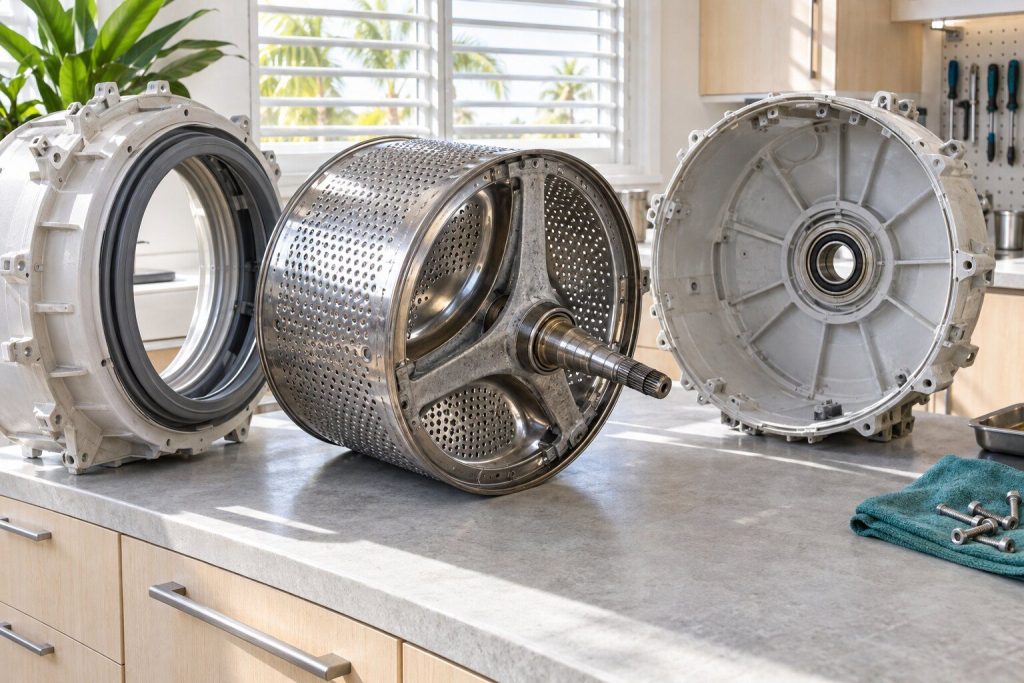
On most makes a drum bearing at ten years ends the machine. On a steel-framed Asko it frequently does not, and this is the reasoning we use out loud.
Read more -
Why an Asko Part Sometimes Takes Weeks, and When It Does Not
Dishwashers, washers and dryers are supported in the United States and their parts are ordinary. Ovens, hobs, hoods and refrigeration are not sold here at all, and that is a lead time rather than a surcharge.
Read more -
Keeping an Asko for Twenty Years: What It Actually Takes
These are built to a twenty-year test, and the machines that get there are not the lucky ones. They are the ones where four cheap things were done on a schedule.
Read more
Tell us the model number and what it is doing.
This article is based on:
- Official manufacturer documentation
- Internal repair procedures
- Technician repair history
- Company quality standards