Common Problems
An Asko Dishwasher That Stopped Cleaning: Four Things, and This Water
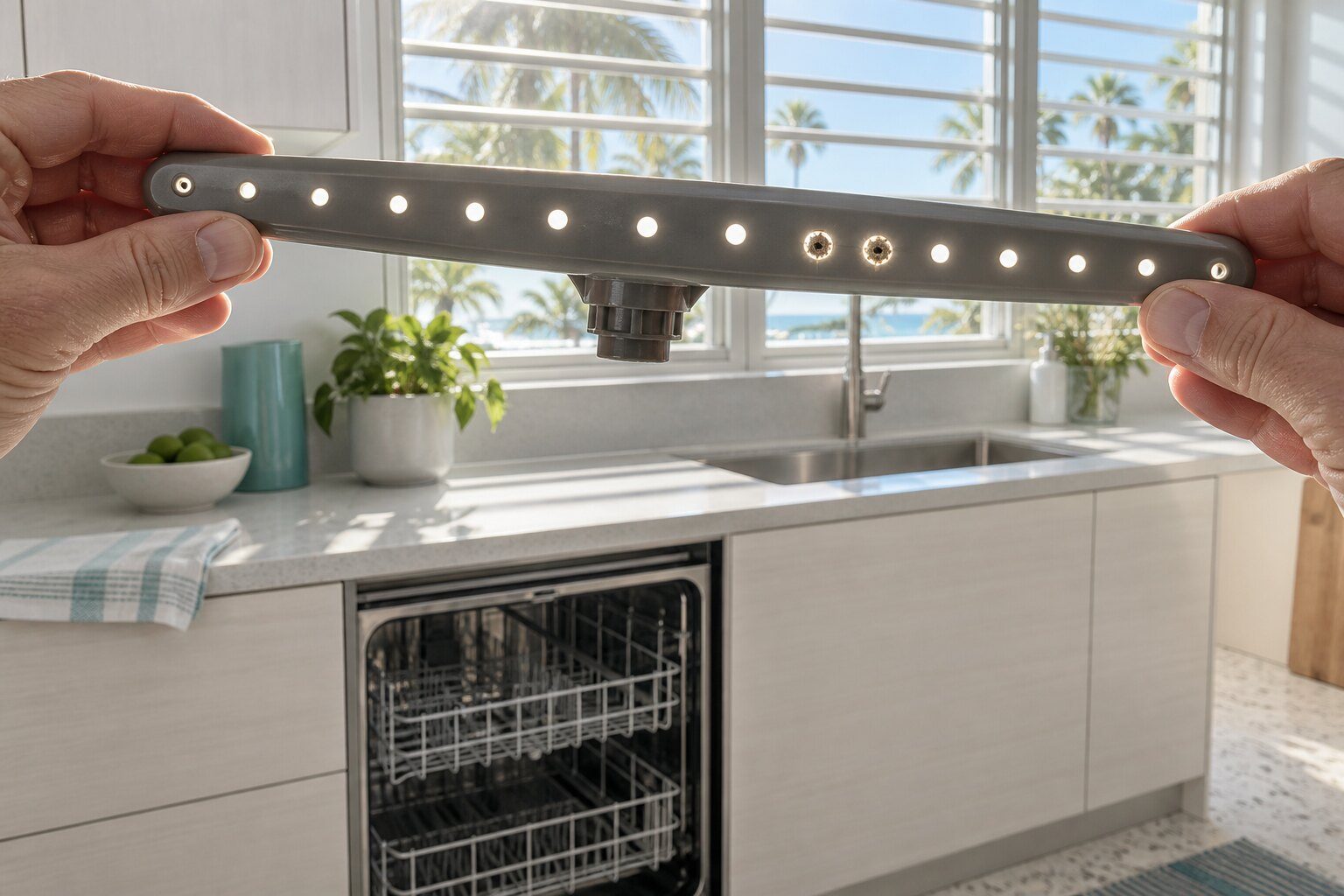
An Asko dishwasher that has stopped cleaning usually has nothing wrong with it. There is no error code for this on any of the three generations, and that absence is the useful fact: the pump runs, the heater heats, the program completes. Four ordinary things decide whether a dishwasher cleans on South Florida water, and all four drift slowly enough that nobody notices until the difference is obvious. Spray jets lime shut, so the arms come off and every jet is checked against a light. The filter stack gets rinsed but never lifted, so the plate underneath keeps its load. The water hardness setting is still on the number the machine left the factory with, chosen for a softer supply. And the salt reservoir — the separate one in the base, not the rinse aid — is empty, so the softener does nothing at all.
The full guide
Everything runs, nothing errors, and the load comes out worse than it went in. This is the dishwasher complaint with no code behind it, and that is good news.
Nothing has failed
A dishwasher raises a message when a component stops doing its job. Here the pump runs, the heater heats and the program completes on time. What has changed is performance, and performance on this machine is decided by four ordinary things that all drift slowly.
One: the spray arms
Take both arms off — they unclip or unscrew by hand — and hold each up to a light. Every jet should pass light. Any that does not is a jet that is not washing, and on this water they close from the smallest upward over a couple of years.
Clear them with a pin, rinse the arms through, and spin each on its mount to check it turns freely. An arm catching on a tall item in the basket washes half the load, which is the simplest explanation on this whole page.
Two: the filter stack
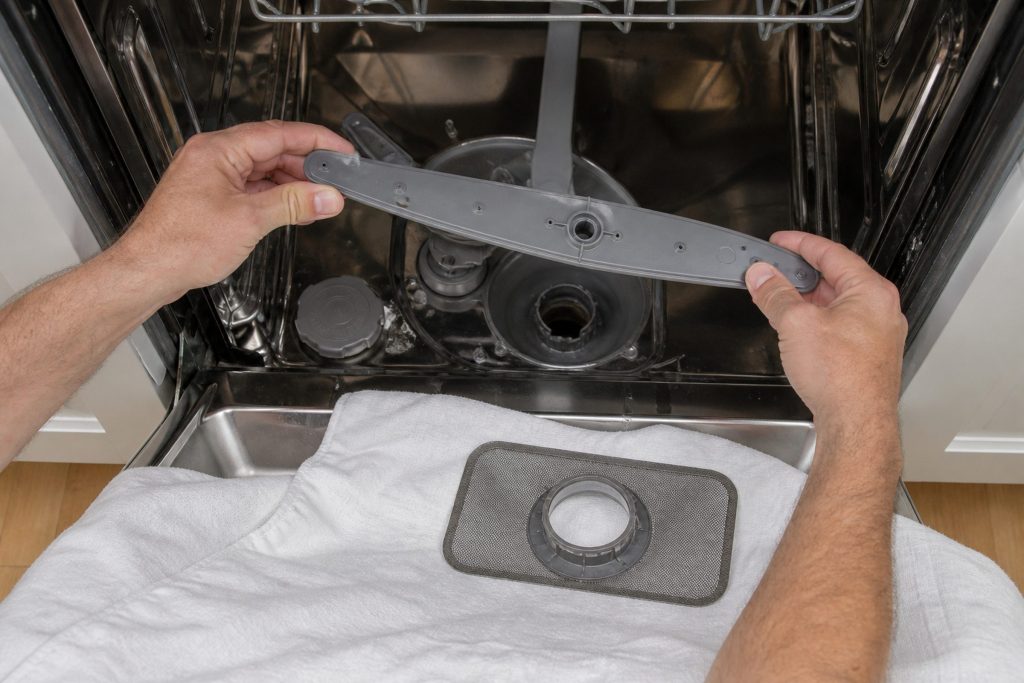
Not a rinse in place. Lift the cylindrical filter out, lift the flat plate beneath it out, and clean the sump they sit in. People routinely do the first and skip the second, and the second is where the load is.
Three: the water hardness setting
Every one of these machines has a hardness setting, and most of the machines we open are still on the number they were shipped with — chosen for a softer supply than South Florida has. Set correctly, with salt in the reservoir, the difference is visible on the first load.
This is the check nobody knows to make, and it is free.
Four: the dose
Tablets vary more than people expect, and a dose that worked in another city may be short here. If the first three are correct and the load is still filmed, try a full-size tablet or a slightly heavier dose for a fortnight before assuming anything is broken.
What this water actually does
South Florida supply is hard, and the dishwasher notices before anything else in the house. Scale forms in the heater, in the jets, on the tub surfaces, quietly and over years. The machine has a softener built in for exactly this reason — it only works when the hardness setting matches the supply and the reservoir is not empty, and on the machines we open one of those two is usually wrong.
When it is genuinely a repair
Arms clear, filter clean, hardness set, salt present, and the wash still poor. Then the circulation pump is measured under load, and occasionally a diverter is not sending water where the program thinks it is. That is a repair, and it is priced as one — but it is the last answer here, not the first.
If it turns out to be a repair
What this leads to, and what it costs
Every job on this site is priced the same way: an on-site diagnostic first, the figure agreed in writing before anybody starts.
-
from $139 Dishwasher wash performance service
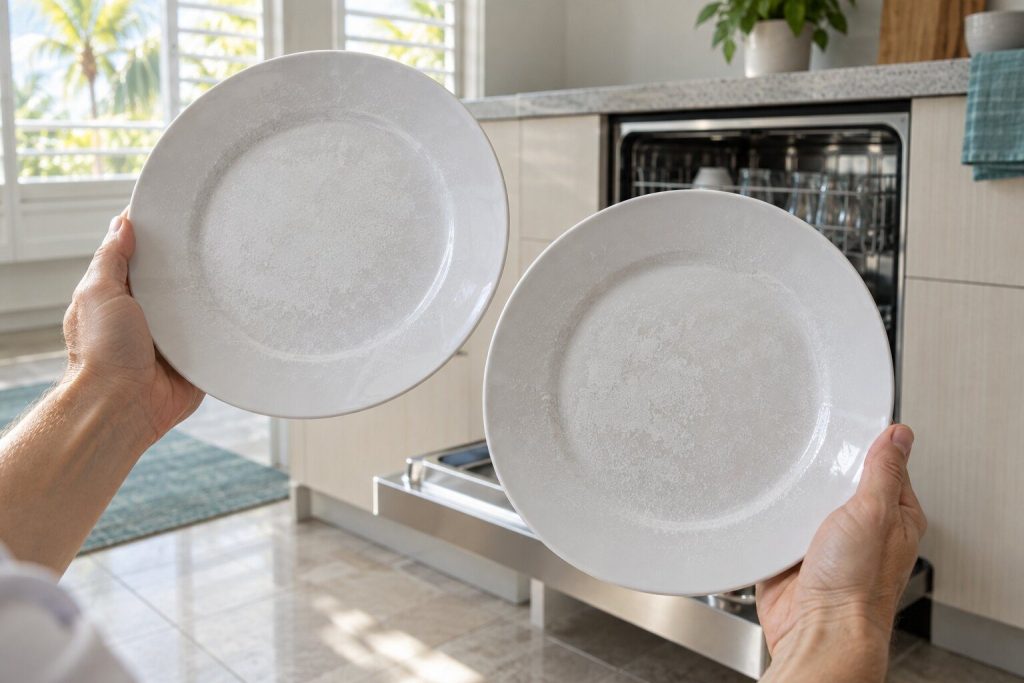
Everything runs, nothing errors, and the dishes come out gritty or filmed. This is the call with no code behind it on any of the three generations, and it is nearly always four ordinary things rather than one broken one: spray arms whose jets have limed shut, a filter that has been rinsed but never lifted, a water hardness setting nobody adjusted when the machine arrived on this supply, and a detergent dose meant for softer water than we have.
- No code, no failure — this is a performance call and it is priced as one
- Spray arms, filter, hardness setting and dose, which is the whole list
- Water hardness set to this supply, not to the number it left the factory with
-
Everything runs, nothing errors, the dishes are gritty Dishes come out dirty
The machine completes its program without complaint and the load is worse than when it went in. There is no code for this on any of the three generations, which people find unsettling and which is actually the useful fact: nothing has failed. Four ordinary things decide whether a dishwasher cleans on this water, and all four drift slowly enough that nobody notices until the difference is obvious — spray jets liming shut, a filter rinsed but never lifted, a hardness setting still on the number it left the factory with, and a detergent dose meant for softer water than South Florida has.
- No code and no failure — this is performance, and it is usually reversible
- The hardness setting is the one nobody touches, and this water is not soft
- Both spray arms come off by hand and every jet should pass light

Questions people ask about this
Should I pre-rinse the dishes?
No, and it makes things worse. Modern programs judge how dirty the water is and adapt; a pre-rinsed load makes the machine run lighter than it should. Scrape, do not rinse.
Is a cleaning tablet worth it?
Once or twice a year on this water, yes, and it costs less than a visit. It will not open jets that have already limed shut, though, which is why the arms come off first.
Where is the salt reservoir?
A screw cap in the floor of the tub, usually beside the filter, and separate from the rinse aid door on the inside of the door. Plenty of owners have never opened it. Empty, the built-in softener does nothing and every small jet in the machine starts to close.
Common Problems
More guides like this one
-
An Asko Washer That Will Not Spin: The Empty-Drum Test
Run a spin-only program on an empty drum. That one test separates three causes in five minutes, and two of them cost nothing to fix.
Read more -
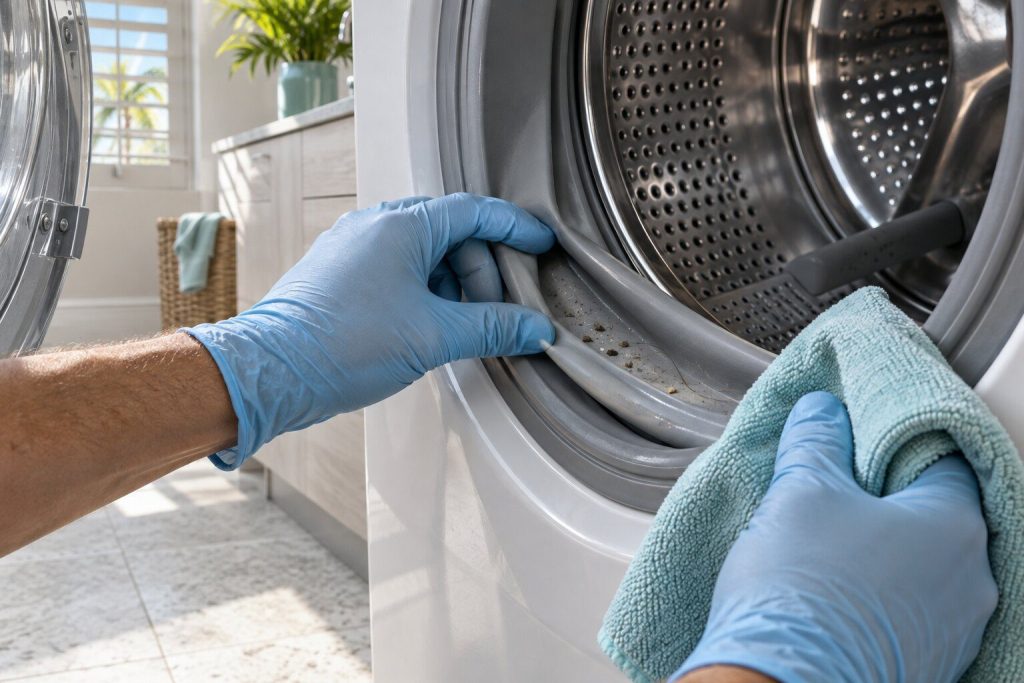
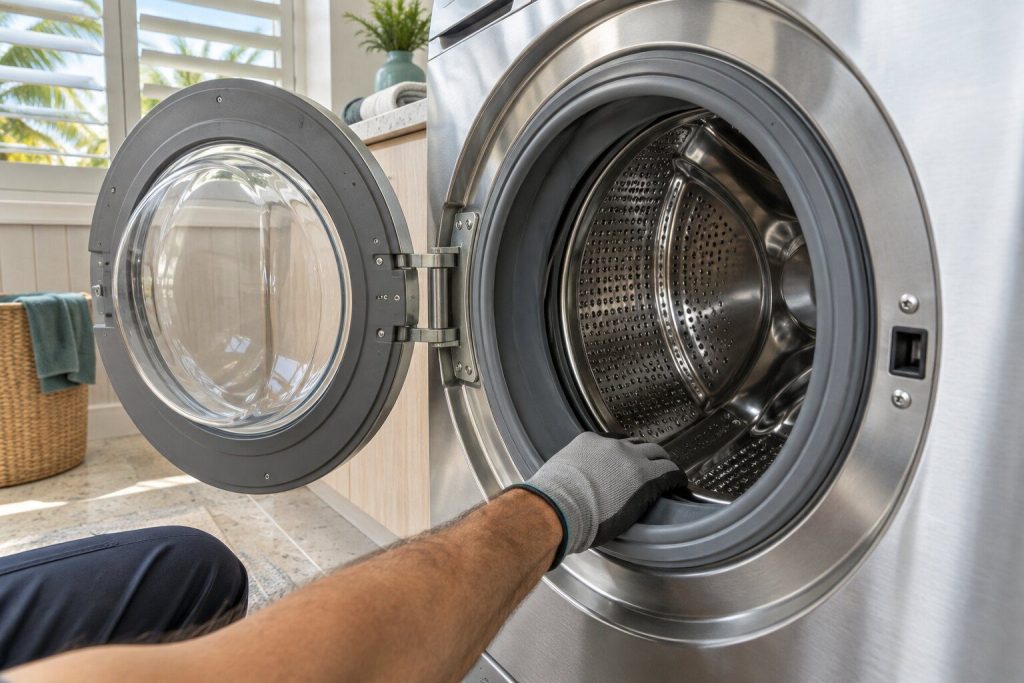
The Part We Replace Most on an Asko Washer, and Why It Fails
Grit collects in the bottom fold of the door bellows and cuts the rubber from the inside. It leaks for months before anything reaches the floor, and in a condominium that is the expensive part.
Read more -

One Asko Induction Zone Dead and the Rest Fine
On induction a single dead zone is better news than it sounds — the problem is usually local to that zone. Two free checks come first, and both mimic a failure exactly.
Read more
Tell us the model number and what it is doing.
This article is based on:
- Official manufacturer documentation
- Internal repair procedures
- Technician repair history
- Company quality standards