Maintenance & Prevention
Asko Laundry in a Building: Count Cycles, Not Months
Domestic Asko laundry doing building duty needs its maintenance interval set from cycles rather than from the calendar. A household pair runs perhaps five cycles a week; an amenity room in a fifty-unit building can run that in a day, which means it reaches a year of domestic wear in about six weeks. Wear parts arrive years early and everything else arrives on schedule, so the failure pattern is its own thing: door seals, pump filters and shock absorbers in that order, all worn out by cycle count. The consequence of missing them is what costs money rather than the parts — a seal that has been cutting for a month puts water into a floor slab, and in a condominium that stops being a laundry repair. The first visit is where the cycle count comes from and where the interval is set.
The full guide
The maintenance schedule in the manual is written in months. In a building, months are the wrong unit.
What Asko washer service means in a building
A household maintenance visit and a building one are different products, and the difference is the schedule rather than the work.
The arithmetic that decides everything else
A household with two people runs a washer perhaps five times a week. An amenity room in a fifty-unit building can run that before lunch. Same machine, same parts, roughly ten times the duty.
Which means the machine reaches a year of domestic wear in about six weeks. Everything that follows — the interval, the parts held on site, the way the work is quoted — comes out of that one number, and the first visit exists partly to establish it from a cycle count off the machine rather than a guess.
What fails, and in what order
Door seals. First, and by a distance. Grit works into the bottom fold and cuts the bellows from the inside. In a household that takes years; here it takes months.
Pump filters. Not a failure so much as a certainty — they fill with what a building's laundry carries, and a blocked one stops the machine and then stops the spin.
Shock absorbers. Silent, gradual, and the one that protects the drum bearing. Worn damping lets the drum travel further on every spin, and the bearing takes the load.
Inlet hoses. Not wear so much as age and risk, and the one with the largest downside.
Why we are firm about the seal
A door seal that has been cutting for a month puts water into a floor slab. In a condominium the slab has somebody's apartment beneath it, and the conversation stops being about a laundry machine.
That is the entire argument for a schedule, and it is the only argument we make for one.
How planned work differs from a call-out
A building wants three things a household does not: a visit that is booked rather than summoned, the machines back in service the same day because there is no second laundry room, and a written record for somebody who is not a resident.
We quote that as planned work with the figure agreed in writing before anything goes in a calendar, rather than as an emergency rate applied after the fact.
The cheapest thing a manager can agree to
Spares on site. A seal, a pump filter and a set of hoses in a cupboard cost very little, do not expire, and turn a two-visit repair into one — which in a room that fifty apartments depend on is worth more than the parts.
If it turns out to be a repair
What this leads to, and what it costs
Every job on this site is priced the same way: an on-site diagnostic first, the figure agreed in writing before anybody starts.
-
from $195 Building laundry maintenance plan
Planned work for amenity rooms and housekeeping closets, priced as planned work rather than as a series of emergencies. The argument for it is one number: a household pair runs perhaps five cycles a week, and an amenity room in a fifty-unit building can run that in a day — so it reaches a year of domestic wear in about six weeks. The consequence of missing that is not an inconvenience. A door seal that has been cutting for a month puts water into a slab, and in a condominium that becomes several units' problem.
- The interval is set by cycles per week, not by the calendar
- A cutting door seal in a condominium ends as somebody else's ceiling
- Spares held on site turn a two-visit repair into one
-
from $225 Commercial laundry service
Domestic Asko laundry doing commercial-scale work, which is the honest description of almost every building machine on this badge — there is no US professional catalog to pretend otherwise about. A condominium amenity room, a boutique hotel's housekeeping closet, a salon washing towels twice a day. These machines tolerate it better than most, which is exactly why they end up doing it, and the failure pattern is its own: wear parts arrive years early and everything else arrives on time.
- Said plainly: these are domestic machines under building duty
- Same-day turnaround, because there is no second laundry room
- One contact who is not a resident, and a written record after every visit
Questions people ask about this
Can you fit commercial machines instead?
Not on this badge — there is no US professional catalog behind it, and we would rather say so than imply one. What these machines do well is tolerate the duty, which is exactly why they end up doing it, and the honest answer is a schedule rather than a different appliance.
What should the building hold in a cupboard?
A door seal, a pump filter and a set of inlet hoses for the specific machines in the room. They do not expire, and they turn a two-visit repair into one. We will say which parts are worth holding rather than sell a kit that half fits.
Who do you deal with?
One contact who is not a resident, and a written record after every visit — what was found, what was done, what is close to needing attention, and when the next visit should be. A manager who changes next year inherits that.
Maintenance & Prevention
More guides like this one
-
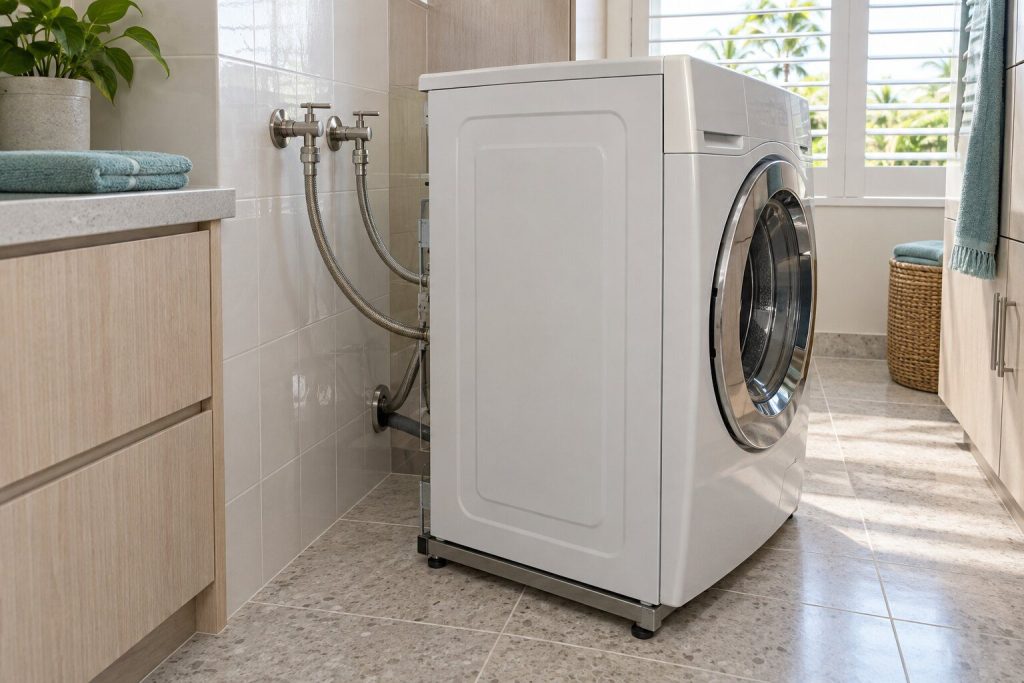
The Cheapest Thing You Can Do for an Asko Washer in an Apartment
Inlet hoses perish out of sight behind a machine nobody moves. A hose that lets go while the apartment is empty is the most expensive thing that can happen in a laundry closet.
Read more -
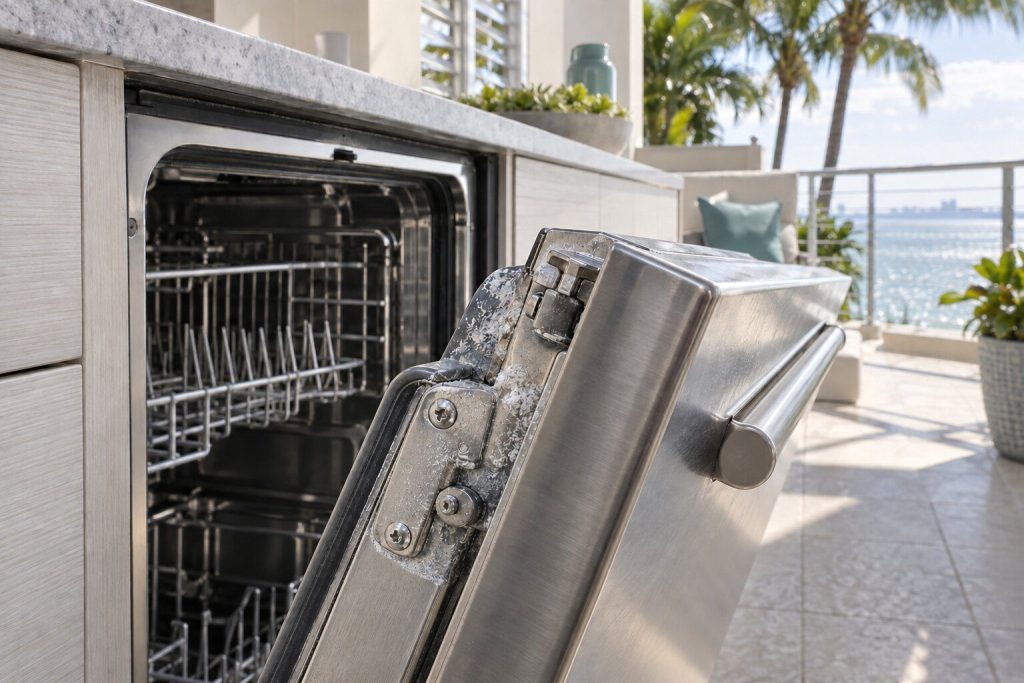
The Outdoor Asko Dishwasher and What Salt Air Takes First
On a terrace the electronics are rarely what ends the machine. Hinges, fasteners, the latch and the door seal go years before anything electrical does, and every one of them is cheap while it still moves.
Read more -
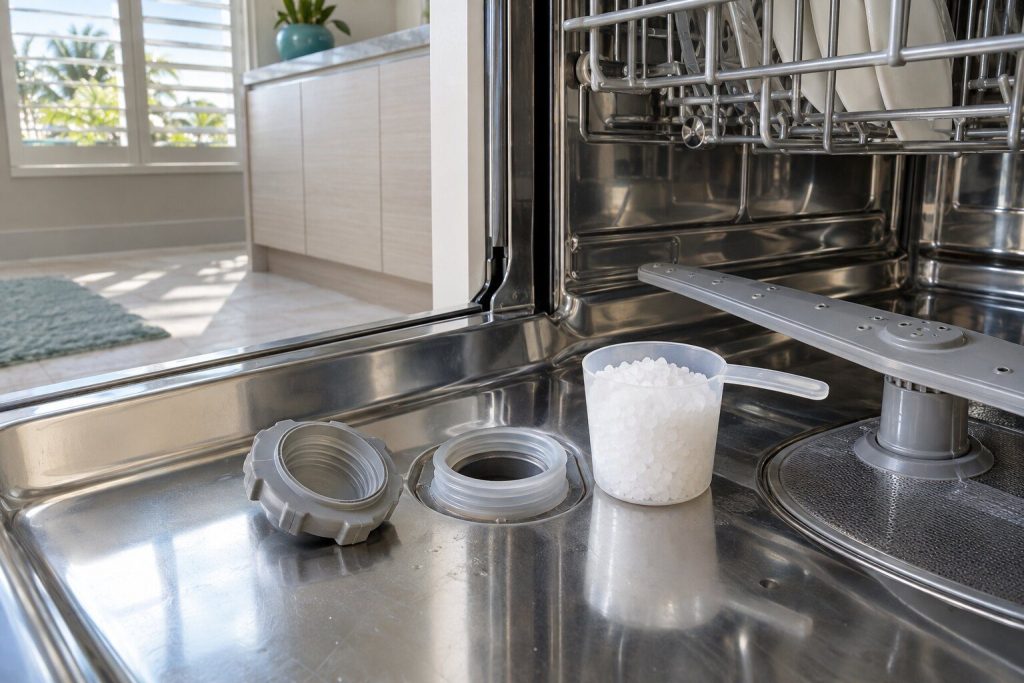
The Asko Dishwasher Setting Almost Nobody Changes
Every one of these machines has a built-in softener, a salt reservoir and a hardness number. On South Florida water, all three have to be right or the jets start closing.
Read more
Tell us the model number and what it is doing.
This article is based on:
- Official manufacturer documentation
- Internal repair procedures
- Technician repair history
- Company quality standards