Maintenance & Prevention
The Outdoor Asko Dishwasher and What Salt Air Takes First
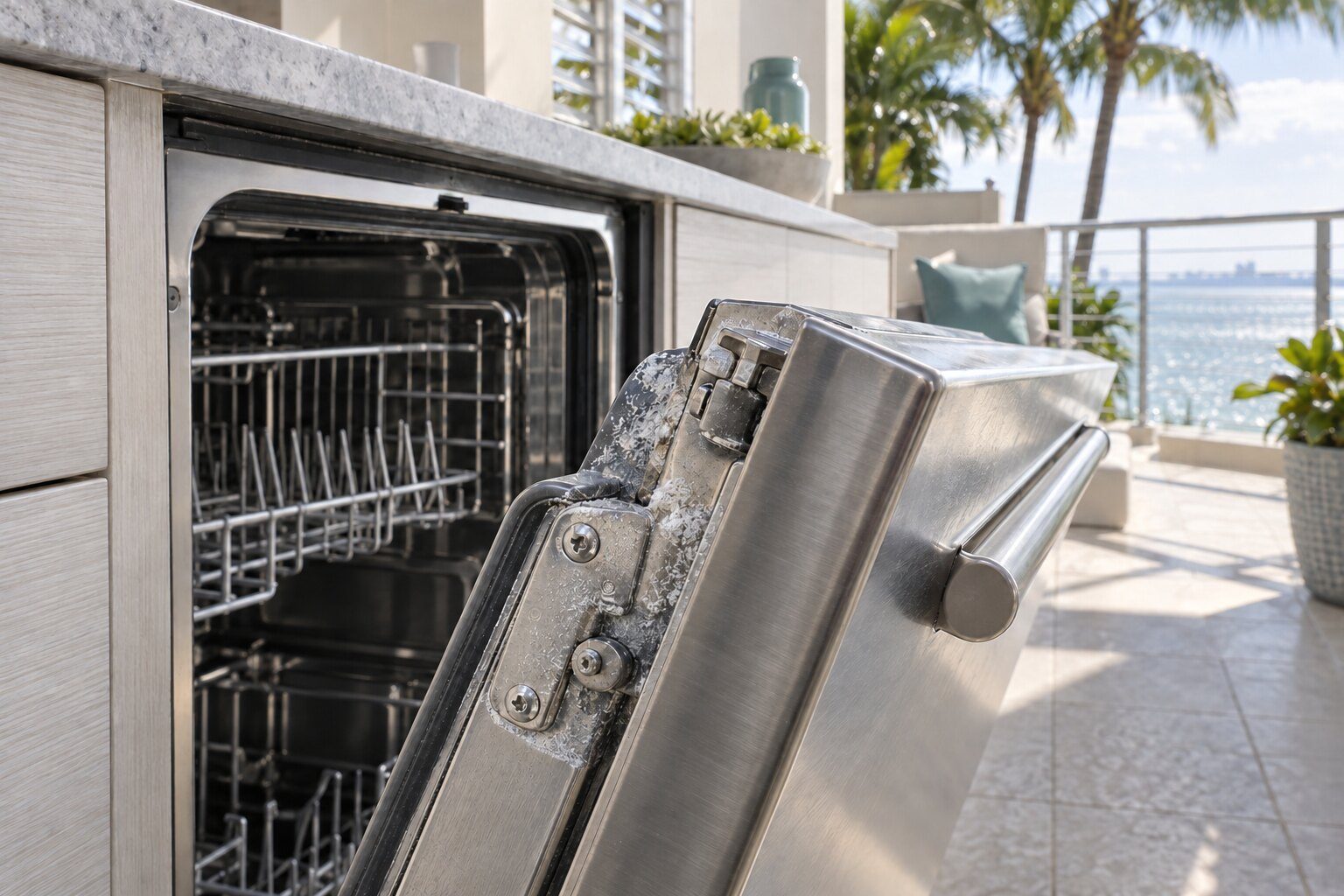
An Asko Outdoor dishwasher on a South Florida terrace is a different machine from the same model indoors, and it fails differently. Salt reaches the hinges, the fasteners, the latch and the door seal long before it reaches anything electrical, and each of those is inexpensive while it still moves and expensive once it has seized. The maintenance is not exotic: rinse the exterior with fresh water, clean and treat the hinges and latch, check the door seal along its whole length, and look at how the surrounding cabinet sheds rain. A surround that holds water against the machine will keep producing the same complaints whatever is replaced. The Outdoor machine also has its own service code scheme written with a colon, and its meanings clash with the indoor generation's — the model matters here more than anywhere else on the badge.
The full guide
A dishwasher built for a terrace is a dishwasher living outdoors in a marine climate for eleven months a year. It fails in a completely different order from its indoor twin.
What actually ends these machines
Not the electronics. On the terrace machines we open, the failures run in a predictable sequence and it starts with hardware:
- Hinges and fasteners. Salt gets into the pivots and the threads. A hinge that has stiffened is minutes of work; a hinge that has seized takes the door with it.
- The latch. Same mechanism, same problem, and it produces a door the machine believes is open — which on this scheme has its own message.
- The door seal. Specified differently from the indoor machines and working harder, against a cabinet that never fully dries.
- Trim and panel edges. Cosmetic until the corrosion goes through.
Everything on that list is inexpensive while it still moves.
The routine
Monthly, on a barrier island or anywhere with direct salt spray: rinse the exterior down with fresh water and dry it. That single habit does more than anything else on this page.
Twice a year: clean the hinges, latch and fasteners properly and treat them. Run a hand round the whole door seal and feel for grit or hardening.
Once a year: look at the cabinet rather than the machine. Where does rain reach the top edge? Does the surround drain, or does the machine stand in a puddle after a storm? We will say what needs changing even when it is joinery rather than appliance work, because a machine sitting in standing water will keep coming back.
Its own code scheme, and why that matters here
The Outdoor door does not share the indoor list. It uses a colon format — F:10, F:11, F:12, F:40, F:41, F:42, F:43, F:44, F:45 — and several of those numbers mean the opposite of what the same digits mean on an indoor display machine.
So on a terrace kitchen the model code is not a formality. Read a number against the wrong table and the answer is confident, specific and wrong.
The one message that is genuinely simple
F:41 means the door is open, and on an outdoor machine it usually means exactly that: the seal has stiffened in the weather and the door is sitting a fraction proud of its switch. Push it firmly shut and try again before assuming anything electrical.
If it turns out to be a repair
What this leads to, and what it costs
Every job on this site is priced the same way: an on-site diagnostic first, the figure agreed in writing before anybody starts.
-
Outdoor dishwasher service
The terrace machine, and on this coast it is a different appliance from the same model indoors. It has its own service scheme — written with a colon, and clashing with the indoor generation's numbers — its own stainless specification and its own door seal part. What actually ends these is not the electronics but the environment: salt at the hinges and fasteners, rain finding the top edge of a cabinet that never dries, and a machine asked to work at outdoor humidity for eleven months a year.
- Its own code scheme, which clashes with the indoor machines' numbers
- Salt at hinges, fasteners and the door seal — the real failure path here
- Cabinet drainage and the top edge, which is usually the joinery's problem
-
Salt air protection service
A visit that exists because of where these machines are rather than what they are. On a barrier island or a terrace kitchen, salt reaches hinges, fasteners, trim, backdraft dampers and the outdoor dishwasher's door long before anything electrical goes wrong, and every one of those is cheap while it is still moving and expensive once it is not. Nothing here is exotic: it is cleaning, treating and freeing things on a schedule, and it is the difference between a ten-year machine and a five-year one on this coast.
- Written for this coast: hinges, fasteners, dampers and outdoor doors
- Everything on the list is cheap while it still moves
- Best booked with another visit, since it is an hour rather than an afternoon
-
Dishwasher error code F:10
Asko dishwasher error code F:10: This is the DW Outdoor scheme, written with a colon, and it is not the indoor list. Which machines can raise it, what the maker publishes about it, and what to do next.
What this one means
Questions people ask about this
Should I cover it?
Only with something that breathes and only when the machine is dry. A tight cover over a damp machine traps salt-laden moisture against the stainless and does more harm than the weather would. Shade helps more than covering does.
The door is stiff. Is that a repair?
It is the warning before one. A stiff latch on a terrace machine is salt in the mechanism, and cleaning and treating it now is minutes. Left until it seizes, the latch and often the hinge come with it, and by then the door has usually stopped sealing properly too.
Why does my code not match what I read online?
Because the Outdoor machine uses a third scheme. F:10 here is a temperature stop where F10 on an indoor display machine is an overfill; F:11 is a leaking inlet valve where F11 indoors is drainage. Same digits, different tables.
Maintenance & Prevention
More guides like this one
-
The Cheapest Thing You Can Do for an Asko Washer in an Apartment
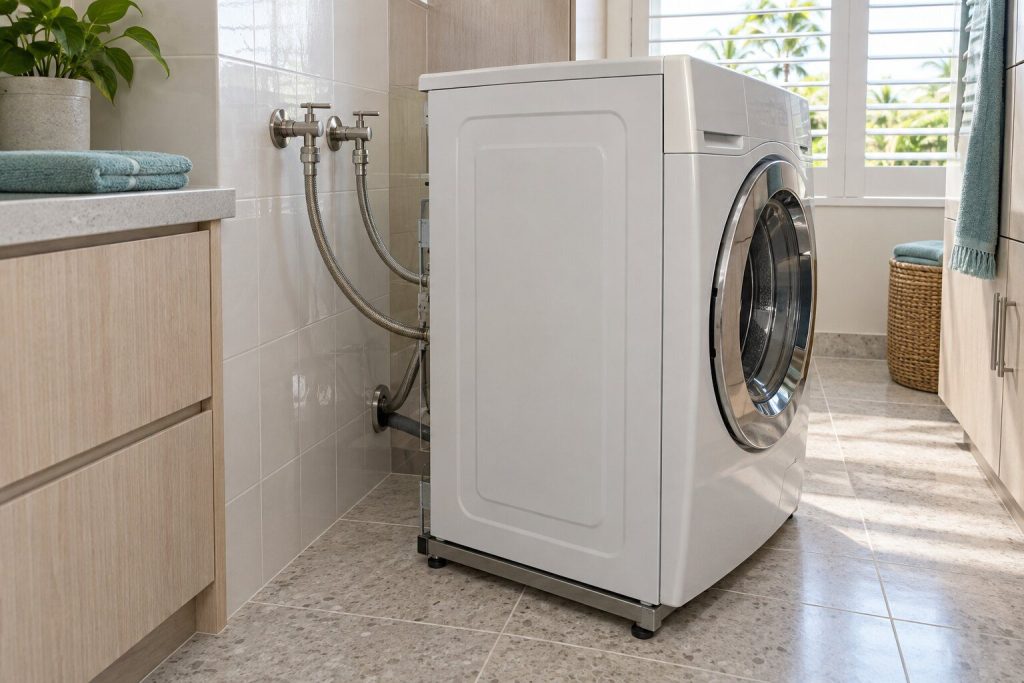
Inlet hoses perish out of sight behind a machine nobody moves. A hose that lets go while the apartment is empty is the most expensive thing that can happen in a laundry closet.
Read more -
The Asko Dishwasher Setting Almost Nobody Changes
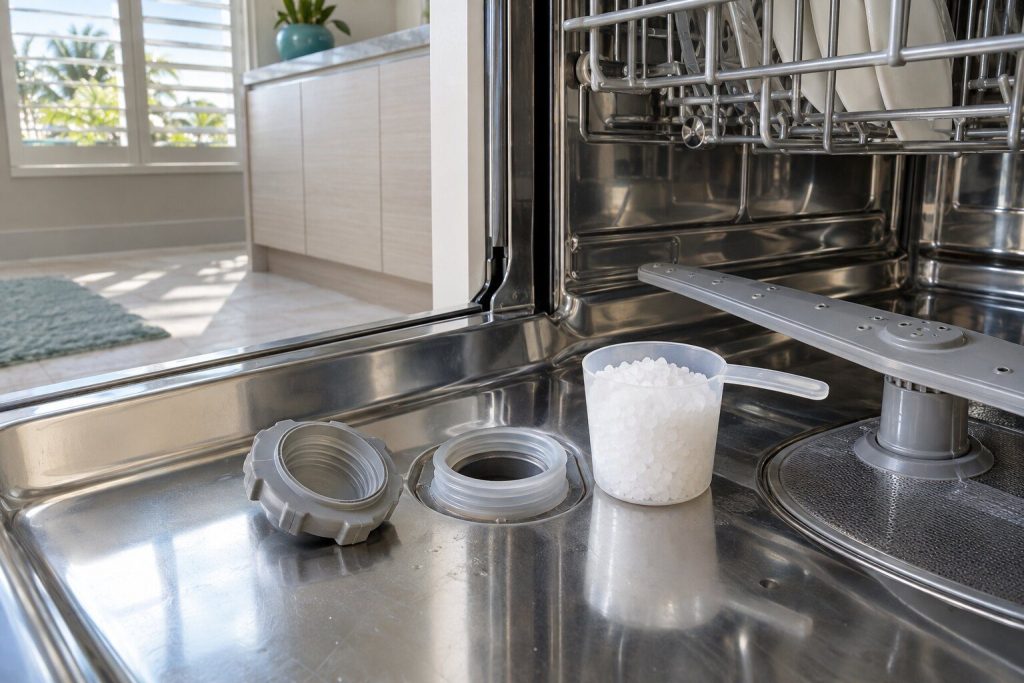
Every one of these machines has a built-in softener, a salt reservoir and a hardness number. On South Florida water, all three have to be right or the jets start closing.
Read more -
How Often an Asko Condenser Dryer Needs Servicing in South Florida
The manual's interval assumes a temperate laundry room. An interior closet here sits at high humidity for months, and the machine loads its filters in proportion.
Read more
Tell us the model number and what it is doing.
This article is based on:
- Official manufacturer documentation
- Internal repair procedures
- Technician repair history
- Company quality standards