Maintenance & Prevention
The Cheapest Thing You Can Do for an Asko Washer in an Apartment
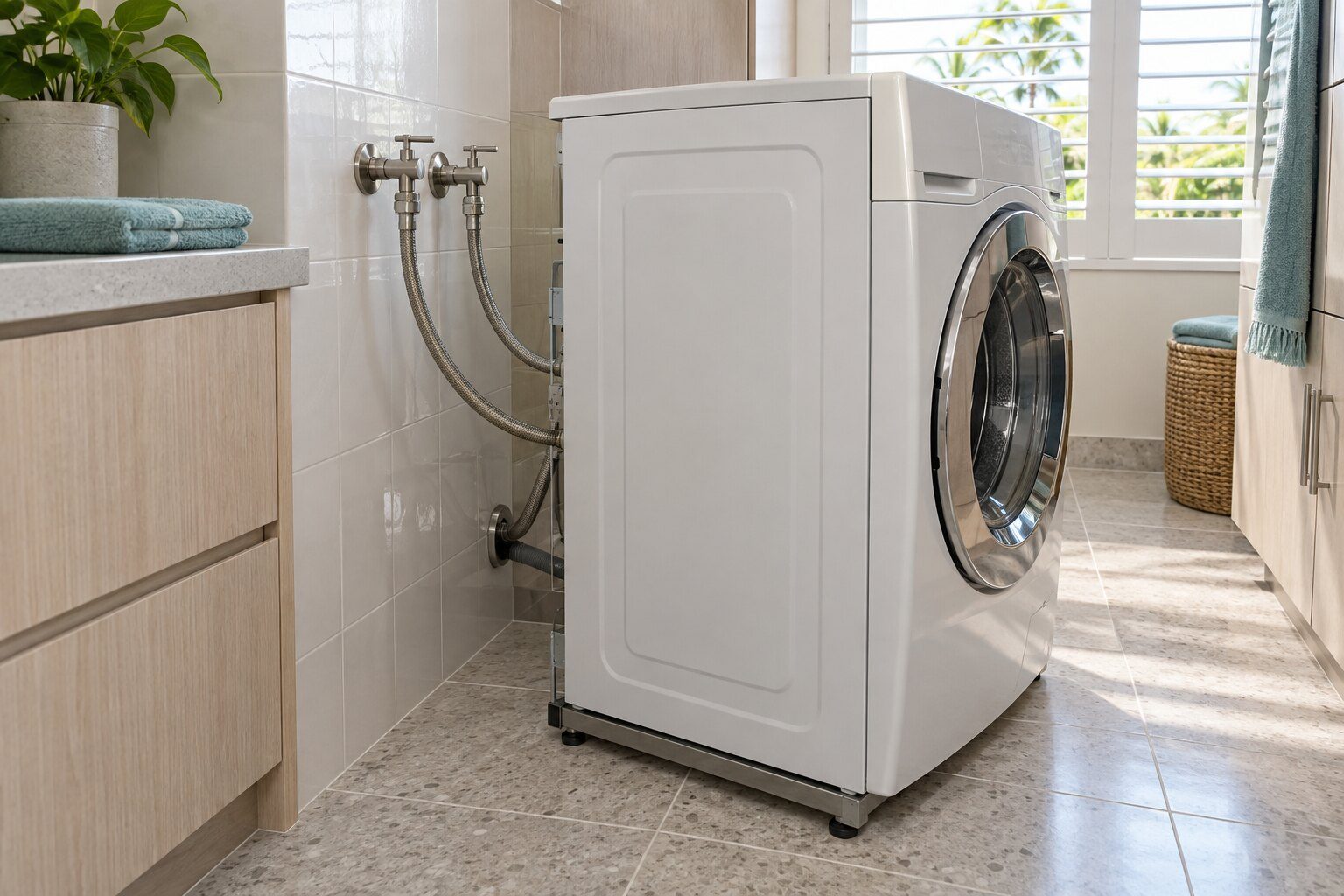
The inlet hoses behind an Asko washer are the least interesting part of the machine and the one with the largest downside. They are under mains pressure whenever the taps are open, they perish slowly out of sight behind an appliance nobody moves, and a hose that lets go while an apartment is empty puts water into the building for as long as it takes somebody to notice. Pull the machine forward once a year and look along the whole length of both hoses for bulges, crazing at the unions and a date stamp older than a decade. Replace them on age rather than on failure. And close both taps when you travel — it costs nothing, it is the one thing that makes the failure impossible, and it is the habit worth building in a condominium.
The full guide
Two rubber tubes behind a machine that nobody has moved since it was installed. They are the largest single risk in an apartment laundry closet, and the smallest thing to put right.
Why they matter more than the machine does
An inlet hose is under mains pressure the whole time the taps are open — not only during a wash. Everything else in the machine fails and stops working. A hose fails and keeps delivering water until somebody turns a tap.
In a house that is a bad afternoon. In a condominium it is the floor slab, the apartment below, and a conversation with a building manager.
The once-a-year look
With both taps shut, draw the machine out until the back of it is visible.
- Bulges. A hose that has swollen anywhere along its length is already failing internally.
- Crazing at the unions. The rubber closest to the fittings goes first; fine cracks there are the warning.
- A date stamp. Most hoses carry one. Older than a decade, replace it whether or not it looks tired.
- Folds. Where the appliance was shoved back onto a hose, the crush point slows the fill and in time splits open.
While the machine is out, look at the floor under it. A stain nobody has seen before is worth understanding now.
Replace on age, not on failure
This is the whole argument. A hose that has not failed yet is not evidence of anything, because the failure mode is sudden. Ten years is a reasonable ceiling, five if the machine is doing building duty, and braided stainless is worth the small extra.
The free habit
Close both taps when you travel. It takes ten seconds, it costs nothing, and for the period an apartment is empty — which is exactly when this failure is most expensive — it makes the problem impossible.
Plenty of people close them after every wash. That is fine too, though it puts wear on the tap.
The other end of the same circuit
While we are behind the machine: a valve that seeps while the machine is switched off is a related and more urgent problem. It fills the drum overnight and, on a machine with a marginal door seal, puts that water on the floor. There is a specific message for it on this make, and if you have seen water in the drum before starting a wash, that is what you are looking at.
What we do on this visit
Both hoses inspected along their whole length and renewed where they are aged, the inlet screens cleaned, the valve tested both opening and holding shut, and the unions torqued properly. And the service valve left somewhere a person can actually reach in a hurry, which on more installations than you would expect it is not.
If it turns out to be a repair
What this leads to, and what it costs
Every job on this site is priced the same way: an on-site diagnostic first, the figure agreed in writing before anybody starts.
-
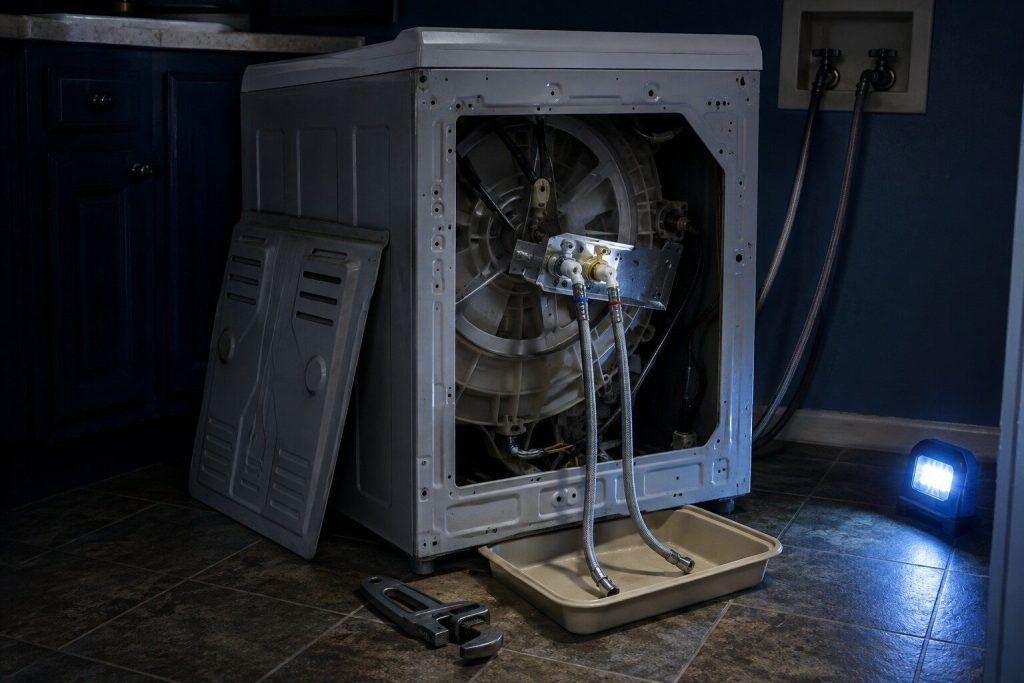
from $135 Washer inlet and hose service
Nothing about this visit is interesting, and it heads off the costliest thing that can happen in a laundry closet. Inlet hoses perish, valves stick part-open, and screens silt up on this supply. A machine that fills slowly is an annoyance; a hose that lets go while nobody is home is a claim on a building. On any machine over five years old in a condominium we recommend the hoses replaced whether or not that is what we were called for, and we say why rather than adding it to an invoice.
- Perished hoses are a building's risk, not just a machine's
- Inlet screens silt up on this water and are a five-minute clean
- A valve that seeps while off is a different failure from one that will not open
-
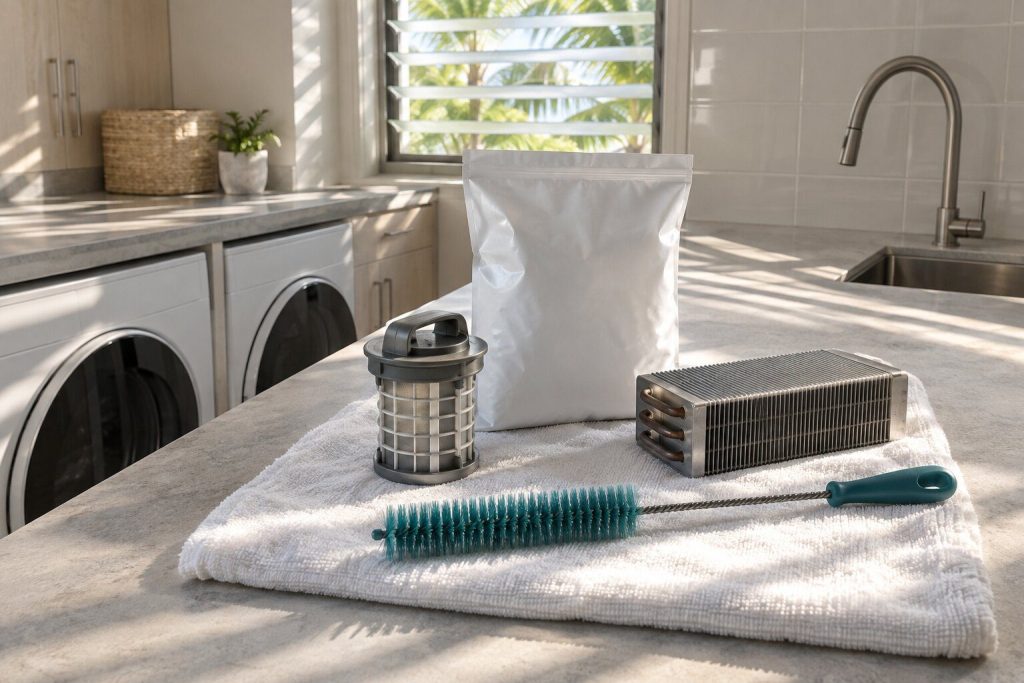
from $155 Appliance maintenance
A planned visit rather than a rescue, and on this make it pays for itself faster than on most. These are machines built to run for twenty years, which means the things that end them early are almost all maintenance items — a condenser filter packed solid in a laundry closet at eighty per cent humidity, a dishwasher filter stack nobody knew lifted out, a door seal cutting itself on grit. Every one of those is minutes of work and none of them announce themselves before they cost a part.
- Filters, seals, drains and airflow — the four that end machines early here
- One visit covers every Asko appliance in the property, not one machine
- Written record of what was found, so the next visit is not a fresh start
-
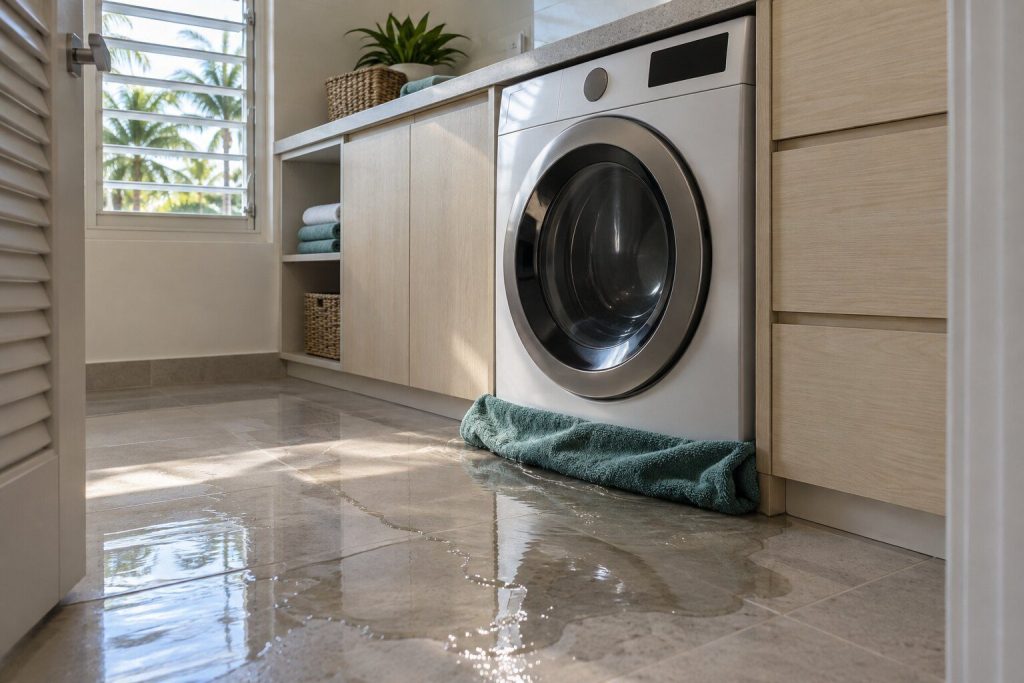
Water on the laundry floor and no obvious source Washer leaking
Water appearing under or beside the machine, and by the time it shows on the tile it has usually traveled along the frame from somewhere else. Three places account for nearly all of it: the door seal, where grit collects in the bottom fold and cuts the rubber from the inside over months; the pump filter cap, very often after somebody cleared a blockage and did not seat it; and the hose unions at the wall. In a condominium this matters further than the machine does, because water in a laundry closet reaches a floor slab and then somebody else's ceiling.
- Turn the taps off and stop using the machine — a program uses several gallons
- Check the filter cap first if anyone has cleared a blockage recently
- In a building this is a shared problem long before it is an expensive one
Questions people ask about this
Are braided hoses worth it?
Yes, and they are inexpensive. A braided stainless hose fails far more gracefully than a plain rubber one and buys years. It is not a substitute for replacing them on age, but on a machine in an apartment it is the sensible specification.
The machine fills slowly. Is that the hose?
More often the inlet screen at the valve, which silts up on this water and is a five-minute clean. But a hose kinked when the machine was last pushed back produces the same complaint, and both are checked together.
What is a valve that seeps while off?
An inlet valve that no longer closes cleanly lets water into the machine when nothing is running — which fills it overnight. There is a dedicated message for it on this make, and it should be treated as urgent rather than as a nuisance.
Maintenance & Prevention
More guides like this one
-
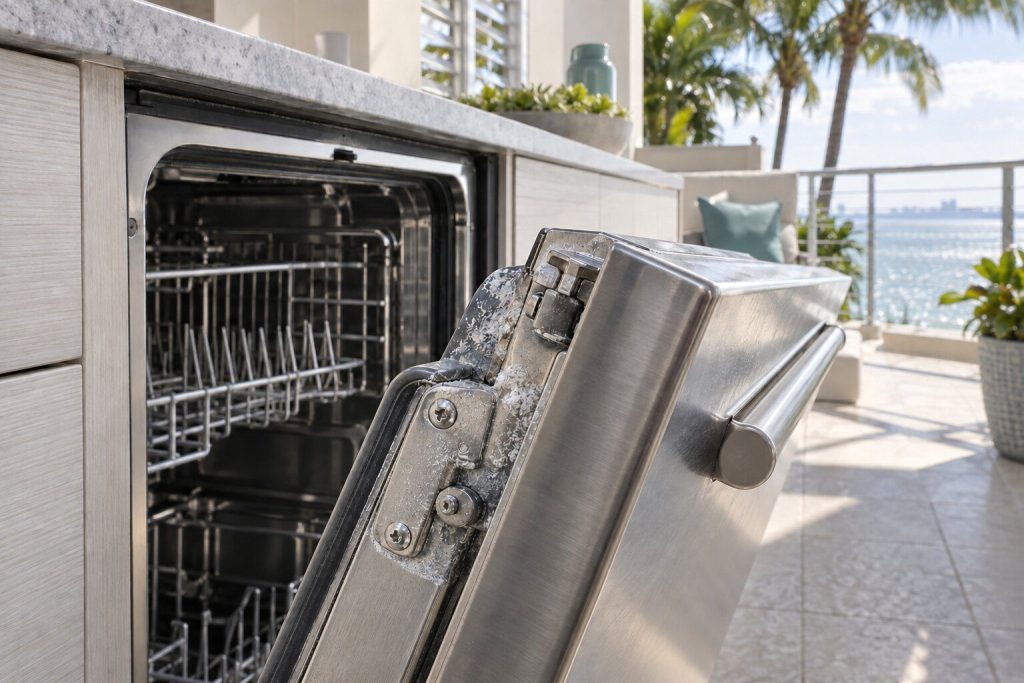
The Outdoor Asko Dishwasher and What Salt Air Takes First
On a terrace the electronics are rarely what ends the machine. Hinges, fasteners, the latch and the door seal go years before anything electrical does, and every one of them is cheap while it still moves.
Read more -
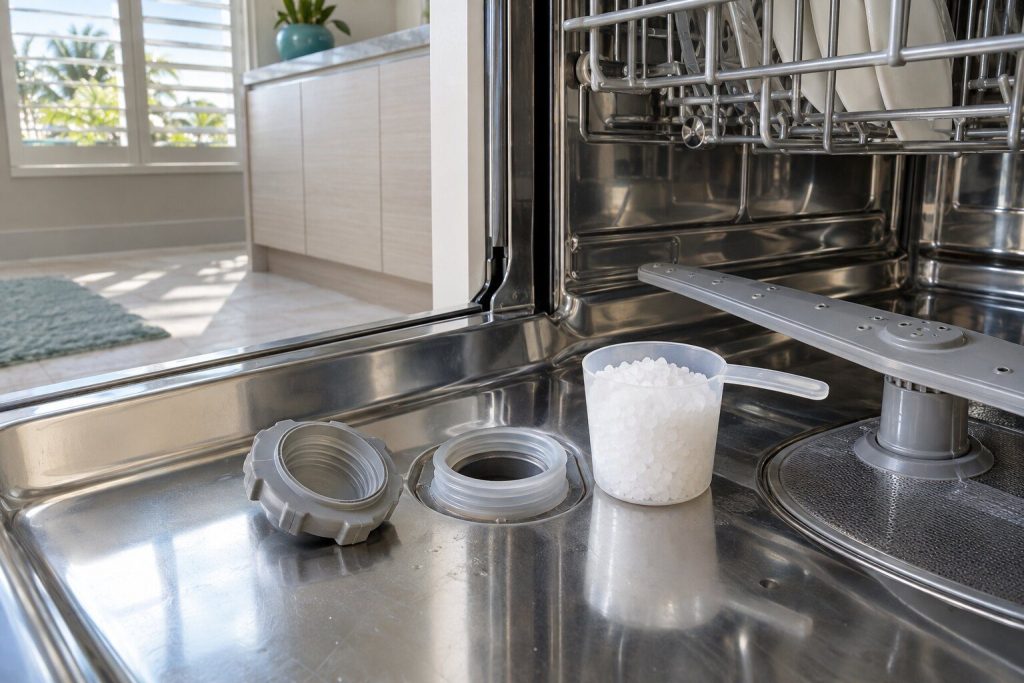
The Asko Dishwasher Setting Almost Nobody Changes
Every one of these machines has a built-in softener, a salt reservoir and a hardness number. On South Florida water, all three have to be right or the jets start closing.
Read more -
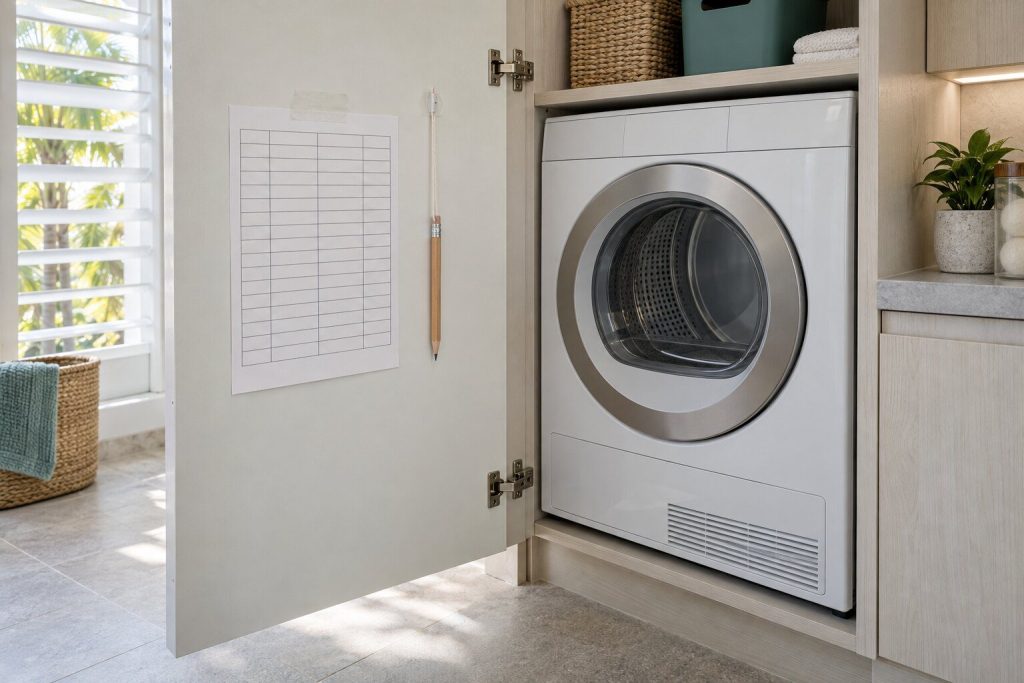
How Often an Asko Condenser Dryer Needs Servicing in South Florida
The manual's interval assumes a temperate laundry room. An interior closet here sits at high humidity for months, and the machine loads its filters in proportion.
Read more
Tell us the model number and what it is doing.
This article is based on:
- Official manufacturer documentation
- Internal repair procedures
- Technician repair history
- Company quality standards