Maintenance & Prevention
How Often an Asko Condenser Dryer Needs Servicing in South Florida
An Asko condenser dryer in South Florida needs its condenser washed about twice a year, which is more often than the manual suggests, because the interval in the manual assumes a temperate laundry room. An interior closet here sits at high humidity for months, the machine has more moisture to remove from every load, and the filters load in proportion to how much it is moving. The maintenance itself is short: empty and reseat the water container, rinse and dry the door lint filter, and pull the condenser block from behind the plinth and wash it until the water runs clear. Then time a standard load and write the number down, because cycle length is the earliest warning these machines give and it only means something if somebody recorded the previous figure.
The full guide
The interval printed in the manual was written for a laundry room somewhere cooler and drier than this one.
Why the local number is different
A condenser dryer works by taking moisture out of air. How hard it works depends on how much moisture there is — in the load and in the room. An interior laundry closet in South Florida spends months at high humidity, so the machine moves more water on every cycle and its filters load in proportion.
Nothing about that is a defect. It is a shorter interval, and the machines that reach fifteen years here are the ones where somebody kept to it.
What to do, and how often
Every load: the door lint filter. Pull it, rinse it, dry it. A wet filter blocks airflow as effectively as a clogged one, and people routinely refit them dripping.
Every load: the water container. Empty it and push it fully home. A container half-seated reads as full and stops the next cycle before it starts.
Twice a year: the condenser. Open the plinth at the bottom front, pull the block out, and run water through it from the clean side until it comes out clear. Turn it round and do the other side. Look into the housing while it is out and clear what has collected there.
Quarterly: the sensor bars. Two metal strips inside the drum measure how wet the laundry is. Fabric softener leaves an invisible film that makes the machine read a wet load as dry. Wipe them back to bare metal.
The measurement that makes all of it useful
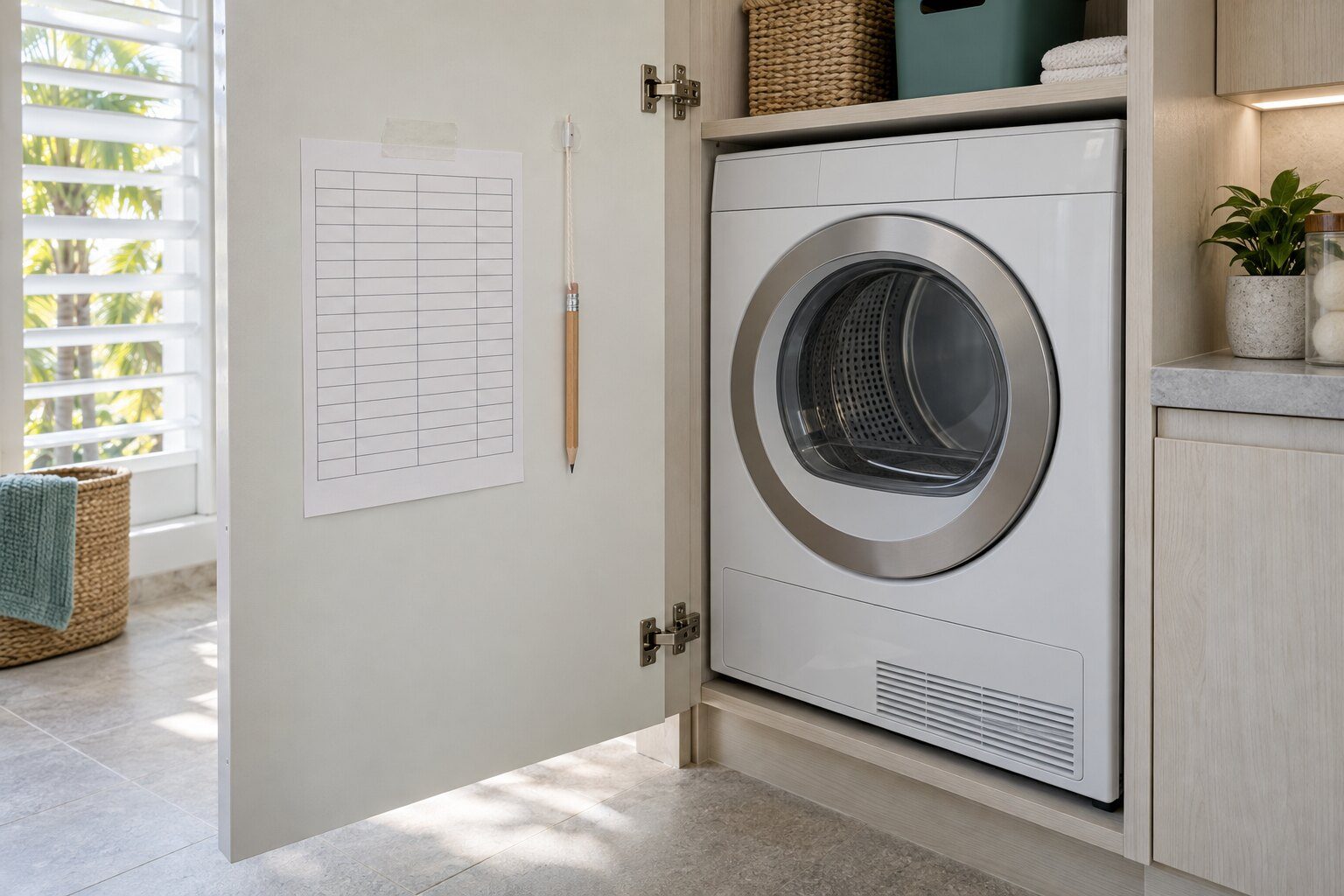
Time one standard load, start to finish, and write the number on a card inside the closet door. Do it again in six months.
That single figure is the earliest warning these machines give. A cycle that has drifted from ninety minutes to two hours is telling you the condenser wants washing, months before it starts leaving loads damp — and every dryer platform on this badge stops a program at two hundred minutes and reports it, under a different name on each revision.
Buildings work on cycles, not months
An amenity room in a fifty-unit building runs a household week of cycles in a day, so it reaches a year of domestic wear in about six weeks. The schedule there is set from a cycle count off the machine rather than from a calendar, and the first visit is where that number comes from.
What it prevents
Long cycles and damp loads are the visible half. The invisible half is lint that gets past the filters and collects inside the cabinet, around the fan and against the heat exchanger, where it raises the running temperature. No owner-level check reaches it, and there is no code for it.
If it turns out to be a repair
What this leads to, and what it costs
Every job on this site is priced the same way: an on-site diagnostic first, the figure agreed in writing before anybody starts.
-
from $145 Condenser dryer service
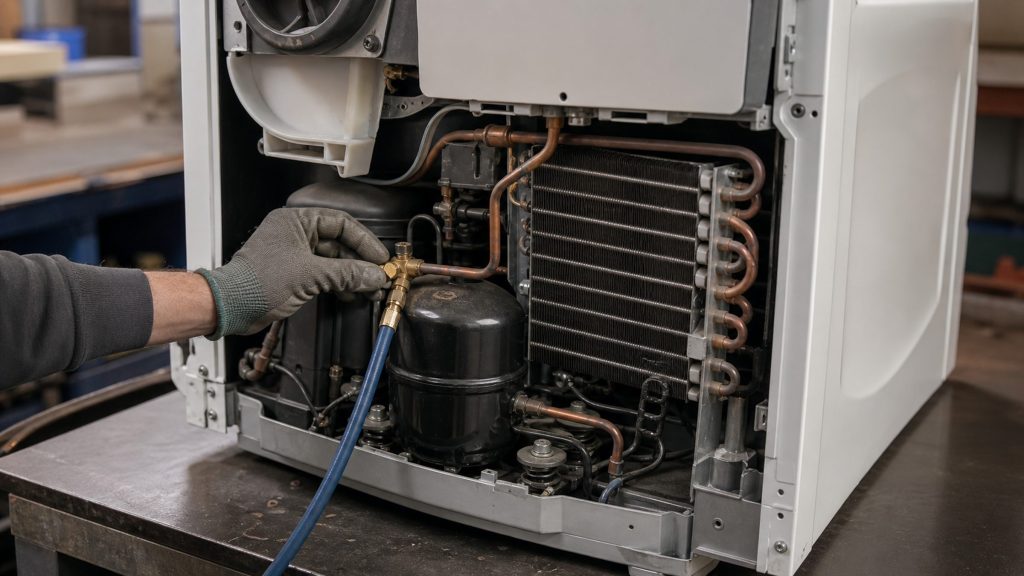
The maintenance visit these machines need on a schedule and rarely get. A condenser dryer works by pulling moisture out of air and giving the heat back, and it is being asked to do that in a closet that may sit at eighty per cent humidity for half the year. Nothing about that is a failure — it is a shorter interval. The machines that reach fifteen years here are the ones where somebody cleared the condenser twice a year instead of waiting for a cycle that never ended.
- A schedule, not a rescue — and the interval here is shorter than the manual's
- Condenser block washed out properly rather than tapped clear
- Cycle times recorded, so the next visit can see whether it is drifting
-
from $155 Appliance maintenance
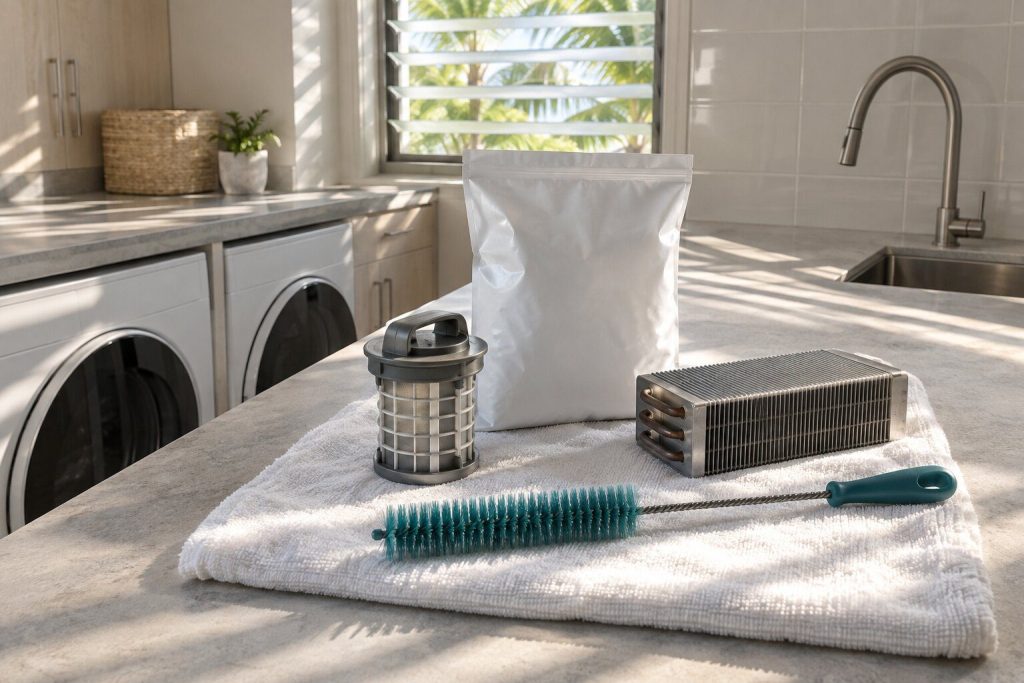
A planned visit rather than a rescue, and on this make it pays for itself faster than on most. These are machines built to run for twenty years, which means the things that end them early are almost all maintenance items — a condenser filter packed solid in a laundry closet at eighty per cent humidity, a dishwasher filter stack nobody knew lifted out, a door seal cutting itself on grit. Every one of those is minutes of work and none of them announce themselves before they cost a part.
- Filters, seals, drains and airflow — the four that end machines early here
- One visit covers every Asko appliance in the property, not one machine
- Written record of what was found, so the next visit is not a fresh start
Questions people ask about this
My dryer cleans its condenser automatically.
Several of the 5-series and 7-series models do, and it genuinely extends the interval. It does not remove the need: the automatic cycle flushes, and what it flushes still has to go somewhere. The TD70.3 panels even raise a clean-the-condenser message every hundred cycles, which is the machine agreeing with this article.
What is a standard load for timing?
Whatever you usually dry — the point is comparability, not a laboratory figure. Same size, same program, door shut, timed start to finish. Write it on a card inside the closet door. Two numbers a year is enough to see drift.
Is any of this different for a heat pump machine?
The evaporator behind the plinth matters even more, because a starved refrigeration circuit is a far more expensive thing to be wrong about than a heating element. Everything else is the same.
Maintenance & Prevention
More guides like this one
-
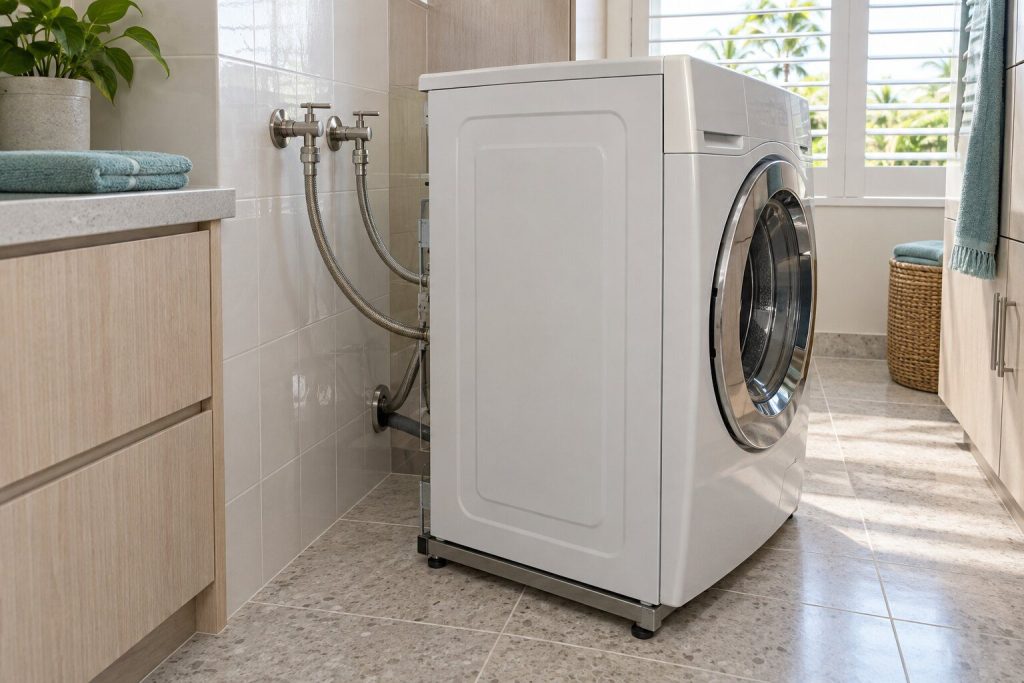
The Cheapest Thing You Can Do for an Asko Washer in an Apartment
Inlet hoses perish out of sight behind a machine nobody moves. A hose that lets go while the apartment is empty is the most expensive thing that can happen in a laundry closet.
Read more -
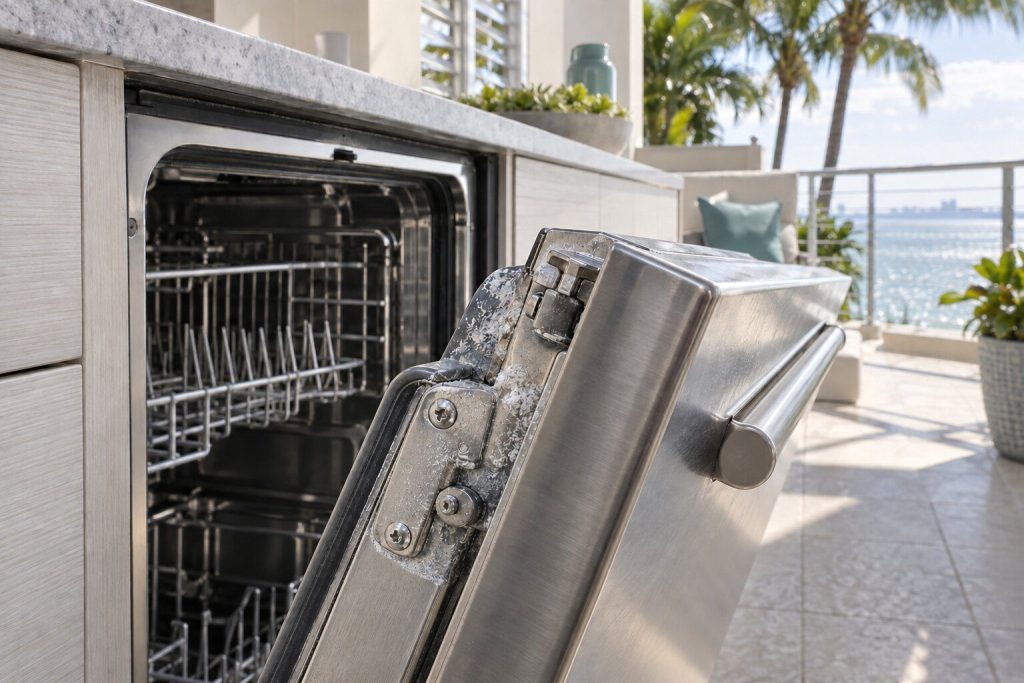
The Outdoor Asko Dishwasher and What Salt Air Takes First
On a terrace the electronics are rarely what ends the machine. Hinges, fasteners, the latch and the door seal go years before anything electrical does, and every one of them is cheap while it still moves.
Read more -
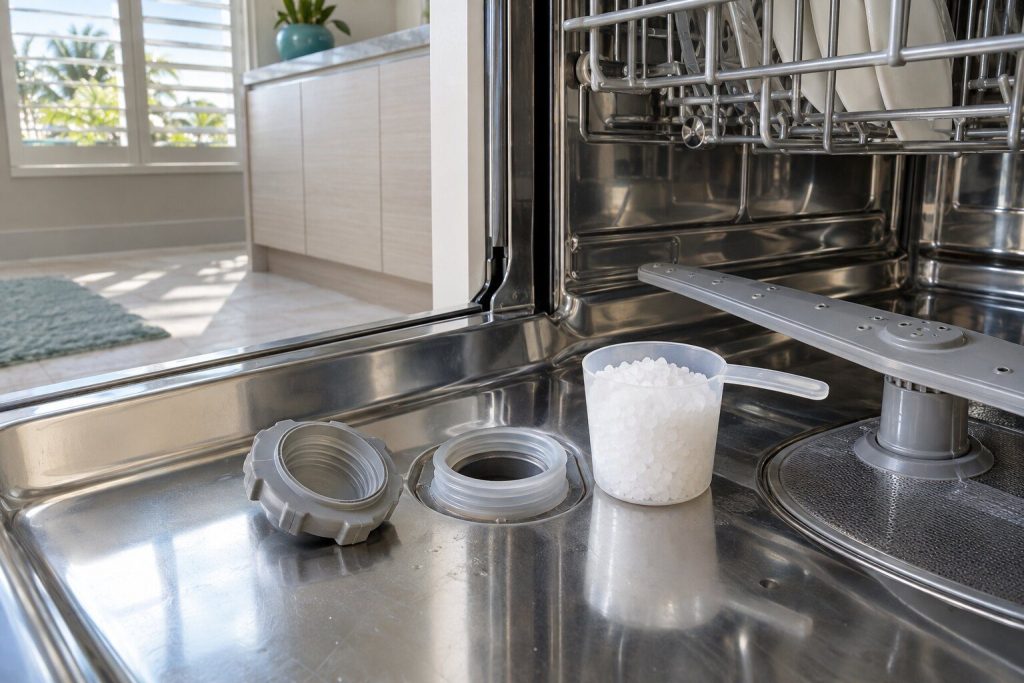
The Asko Dishwasher Setting Almost Nobody Changes
Every one of these machines has a built-in softener, a salt reservoir and a hardness number. On South Florida water, all three have to be right or the jets start closing.
Read more
Tell us the model number and what it is doing.
This article is based on:
- Official manufacturer documentation
- Internal repair procedures
- Technician repair history
- Company quality standards