Appliance
Asko dryers
Condenser and heat pump machines, which is the right choice for a closet with no external wall and the wrong machine to treat like a vented dryer. No air leaves the room: water is condensed out and kept, so a container left full or a loaded condenser filter halts the cycle every bit as firmly as a crushed duct halts a vented machine. The codes here move with the control board rather than with the model name — one revision signals L2 to L4, a later one prints F10, F29 and F30, a later one again uses S-numbers, and the steam and heat-pump platform spells ERROR_0 through ERROR_5 in full. The simplest analog condenser machines publish no codes at all, and that absence was checked rather than assumed.
- 5 symptoms we are called out to
- From $95 diagnostic, credited to the repair
- 59 cities and neighborhoods covered
- OEM parts available on order
The short version
What this equipment is, for a repair
Configurations
Twelve US models · condenser and heat pump, and codes that change with the board
Access
Planned before the visit, not discovered on arrival
Parts
OEM, available on order
Diagnostic
From $95, credited to the repair
What goes wrong with it
Symptoms we are called out to on Asko dryers
Each one covers the likely causes in the order they are worth checking, and what to do in five minutes before booking anything.
-

The program finishes and the load is still damp Dryer not drying
A cycle that runs its full length and leaves the washing wet. On a condenser or heat pump machine — which is what this badge sells — this is almost never about heat, and that is the thing worth understanding before anybody is called. Nothing is being blown outside: moisture is condensed out of the air and collected, so the machine depends on three separate filters and a condenser staying clear. In a South Florida laundry closet those load far faster than any manual assumes, and clearing them ends this complaint more often than any part.
- Three filters, not one — door lint, condenser, and the water container
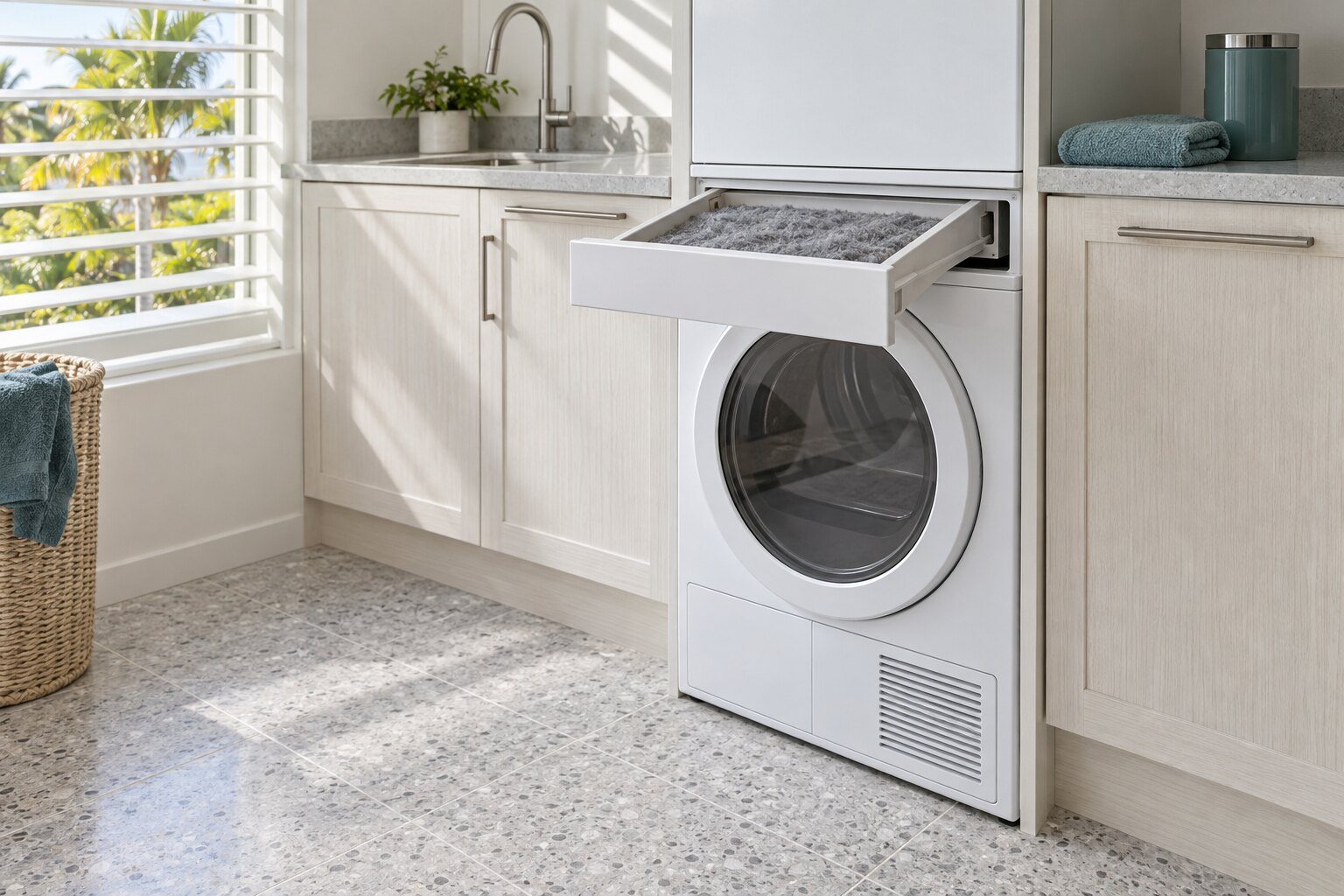
- The condenser filter is behind the plinth and most owners never knew it existed
- Sensor bars filmed with softener tell the machine a wet load is dry
-
It still dries, but the cycle has doubled Dryer takes far longer than it used to
Nothing has failed and everything takes twice as long — the most gradual complaint on this machine and the one people put down to age. It is almost never age. A condenser dryer's cycle length is a direct measure of how well air moves through it, so a program that has quietly grown from ninety minutes to three hours is reporting a blocked path in the only language it has. There is a limit built in at two hundred minutes, and every dryer platform on this badge has a code for hitting it, under a different name on each revision.
- Cycle length is the measurement — write down what a standard load takes now
- Every platform here stops at two hundred minutes and reports it differently
- Lint past the filter collects inside the cabinet, where no owner check reaches
-
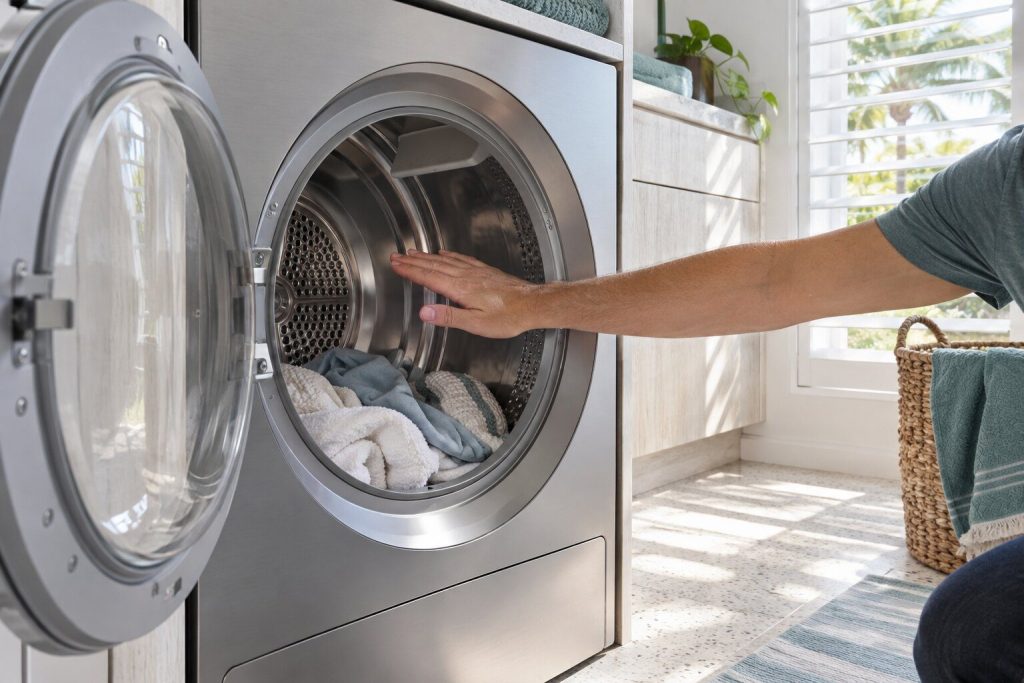
The drum turns, the cycle runs, nothing gets warm Dryer runs but there is no heat
The machine behaves normally in every way except the one that matters. On a condenser machine this splits into a heater and its thermostats; on a heat pump machine it is a sealed refrigeration circuit and the answer is a different order of expense entirely. Which one you have is therefore the first question, and it is answered by the model rather than by the symptom. Before either, though, the same free checks apply: a machine that cannot move air will trip its own thermal protection and then run cold, and that is not a heater problem at all.
- A blocked machine overheats, trips its cut-out and then runs cold
- Heat pump and condenser machines fail differently and cost differently
- Clear the filters first — a tripped cut-out with a clean machine is a real repair
-
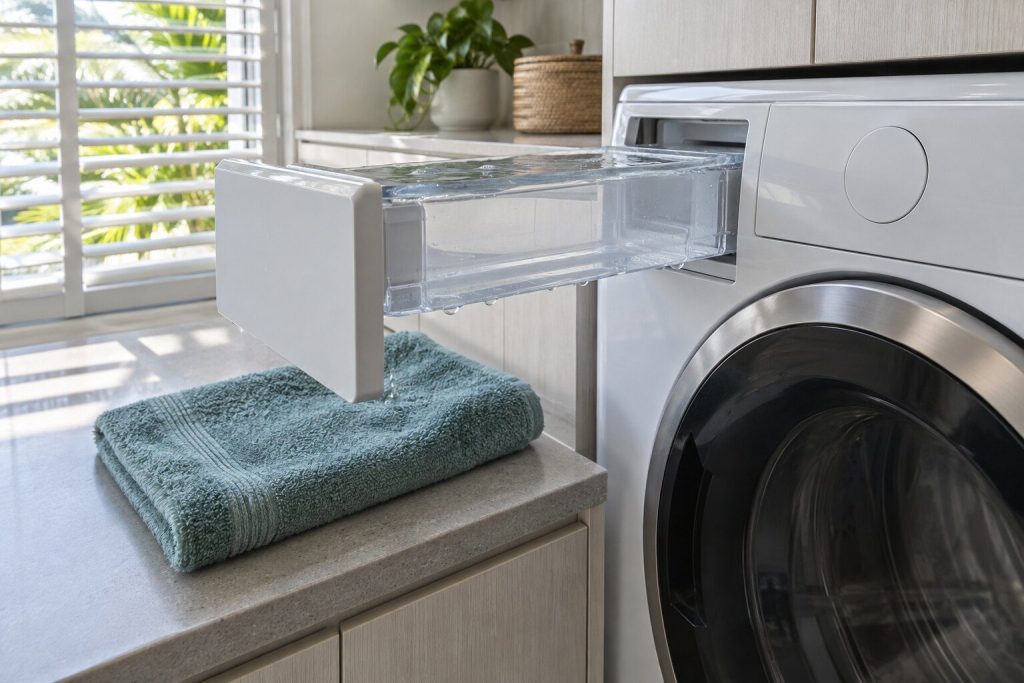
It needs emptying every load, or it overflows The water container fills constantly
A container that needs emptying far more often than it used to, or one that reports itself full when it is not. Both are worth understanding because the first is frequently not a problem at all: a condenser dryer takes every drop out of the washing, so a heavier load, a wetter spin or a more humid room all mean genuinely more water. What is a problem is a machine that reports full with an empty container — that is the microswitch — or one plumbed to a drain that has stopped clearing.
- More water can simply mean wetter loads or a more humid room
- Full reported with an empty container is the switch, not the water
- On a plumbed machine, the same message means the drain is not clearing
-
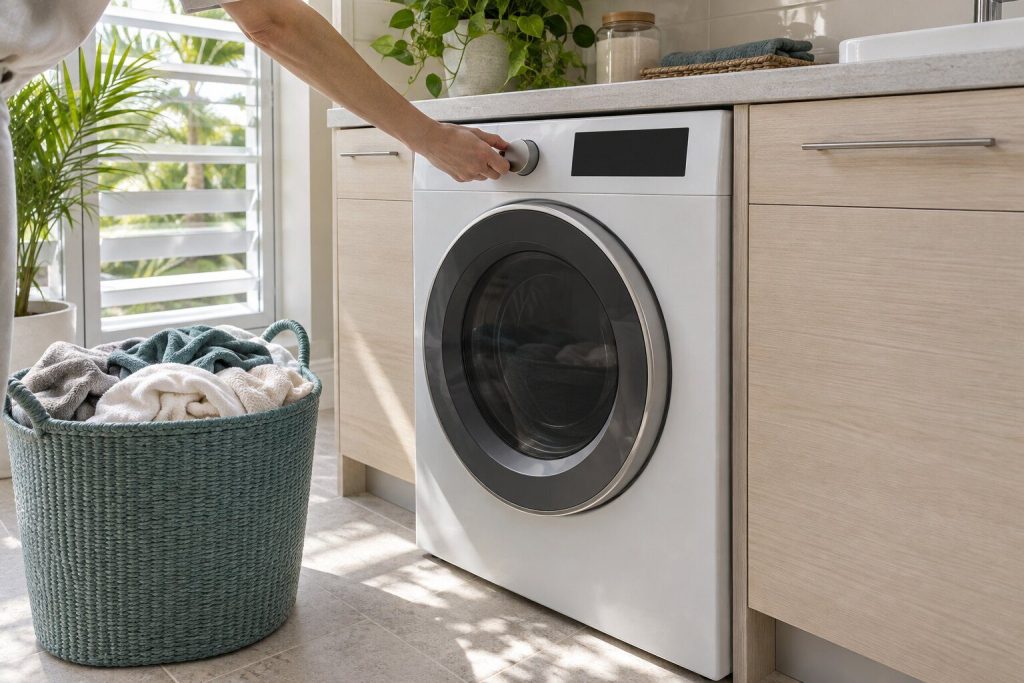
Nothing happens when the program is selected Dryer will not start
A machine that does nothing at all, and as with the dishwasher the first suspect is the door rather than the electronics: a dryer will not run with the door unlatched, and a catch that has worn is the most ordinary explanation there is. After that comes the container, because a machine reporting itself full stops before it starts, and only then the supply and the control. That order matters because it runs from free to expensive, and most of these calls end in the first two.
- Push the door until it latches — a worn catch produces this exactly
- A full or unseated water container stops the machine before it begins
- An unlit panel and a lit one that ignores you are two separate problems
What we do on it
Repairs we carry out on Asko dryers
Starting figures for this equipment in South Florida. The exact cost is confirmed after an on-site diagnostic — and this is not the whole list of what can go wrong, so call if your problem is not here.
-
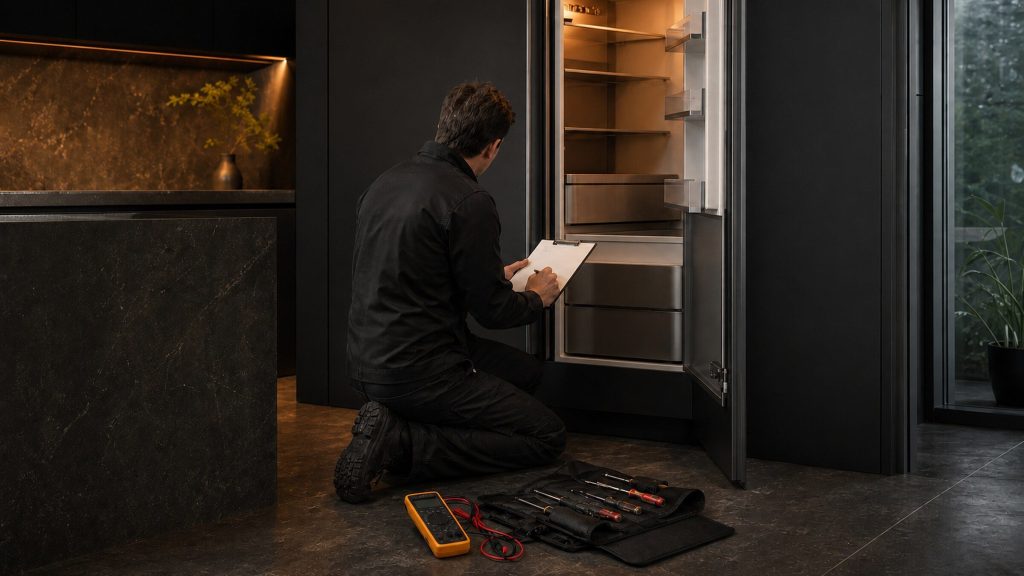
from $95 Diagnostic visit
Establishing what is actually wrong with the machine, ahead of naming or costing a part. Here one thing has to be settled before the complaint can even be read: which generation is standing in the kitchen. Digits on this badge belong to whichever board prints them, so a dishwasher, washer or dryer measured against the wrong table produces a confident answer and an incorrect part. You keep the charge against the repair when the work goes ahead; where our view is that spending money on this machine makes no sense, that view is what you have paid for and the amount stays the same.
- Generation before symptom — it settles which table the digits belong to
- The number is written down before the work, and it comes off the repair
- Where mending makes no sense we say it, instead of finding a part to sell
-
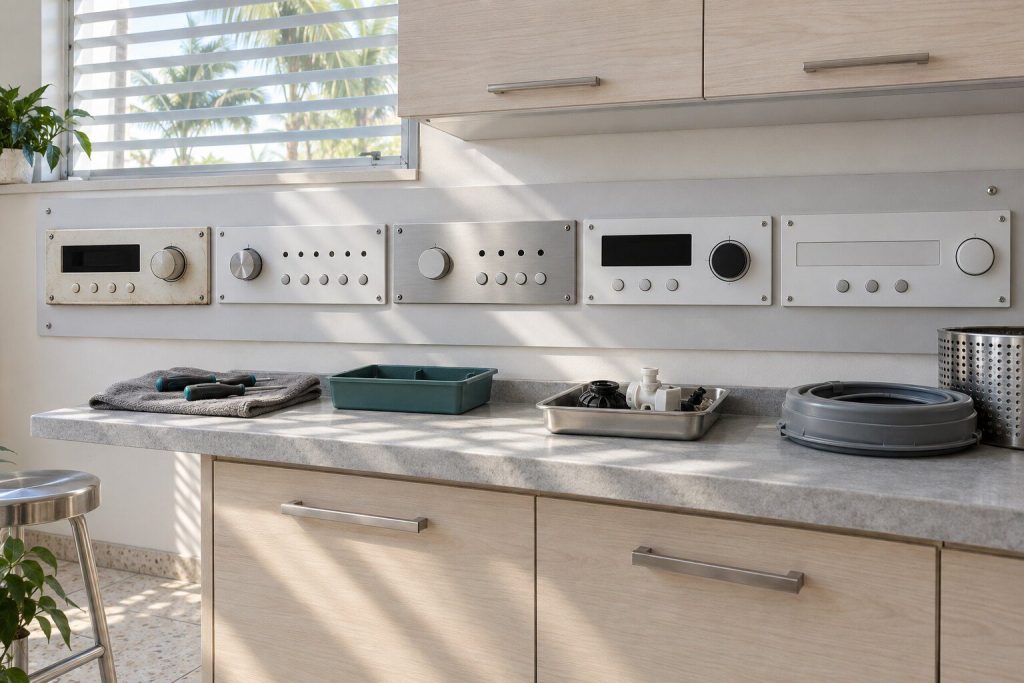
from $115 Platform identification
The job this make needs and no other make on our list does. Three dishwasher generations, five washer code families, dryer schemes that change with the control board and two induction families that share no numbers — and from the front of the kitchen they are indistinguishable. This is the visit that settles which machine is actually in the run, records it, and gives you a code table that applies to your appliance instead of to the badge in general. For anyone who intends to keep the machine another decade it is the cheapest useful thing we sell.
- Which generation, which board, which code table — established and written down
- Turns every future number on the display into something readable
- Credited in full against a repair if it is booked in the same visit
-
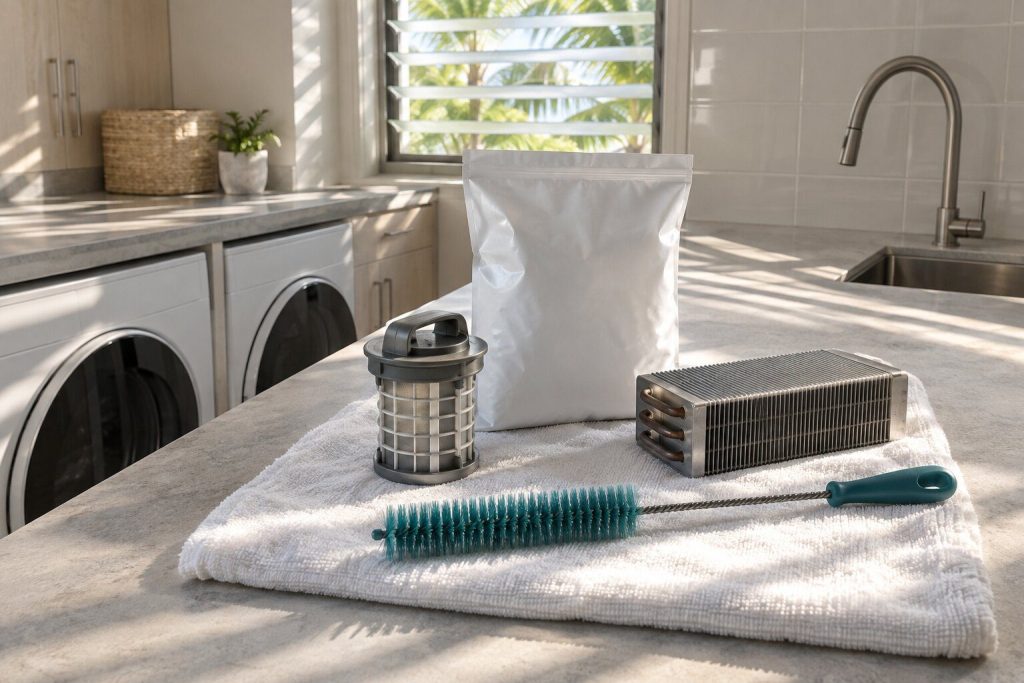
from $155 Appliance maintenance
A planned visit rather than a rescue, and on this make it pays for itself faster than on most. These are machines built to run for twenty years, which means the things that end them early are almost all maintenance items — a condenser filter packed solid in a laundry closet at eighty per cent humidity, a dishwasher filter stack nobody knew lifted out, a door seal cutting itself on grit. Every one of those is minutes of work and none of them announce themselves before they cost a part.
- Filters, seals, drains and airflow — the four that end machines early here
- One visit covers every Asko appliance in the property, not one machine
- Written record of what was found, so the next visit is not a fresh start
-
from $185 Appliance installation
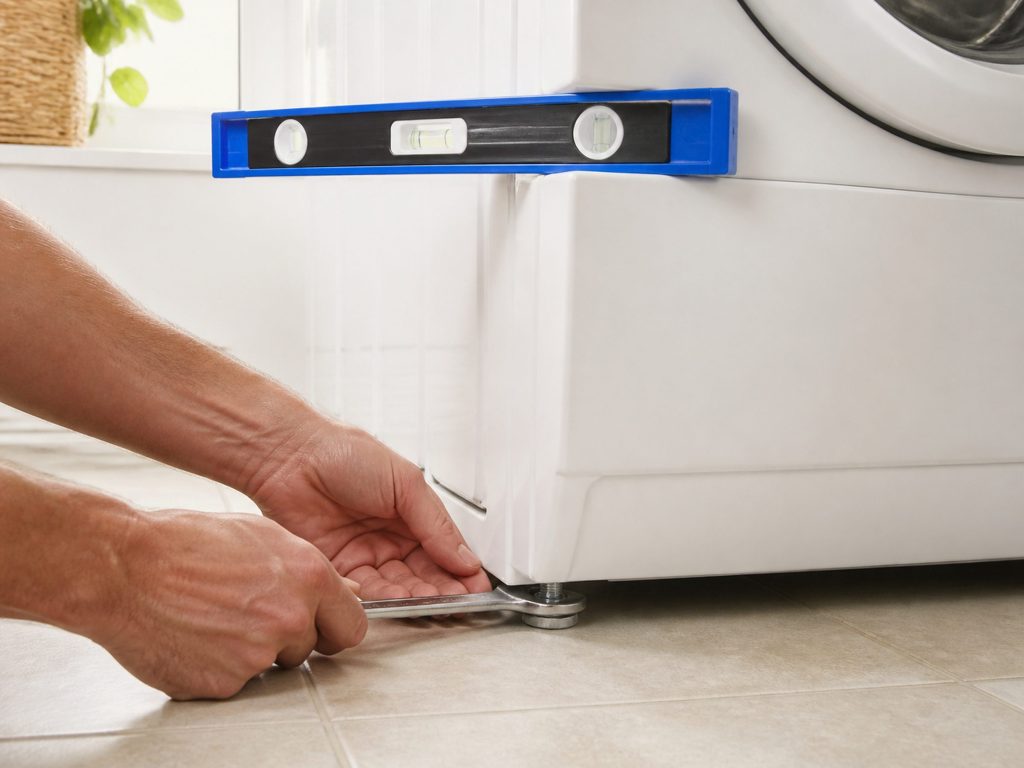
Fitting a machine into a space that was drawn for another one, which in this county is most installations. On integrated equipment the appliance is the easy half: the panel, the scribe, the toe kick, the services behind and the air the machine needs to breathe are the work. We measure the opening before anything is ordered, because an integrated cabinet that does not fit is not a delivery problem, it is a joinery problem, and it is far cheaper to find out on a Tuesday with a tape measure.
- The opening measured before anything is ordered, not after it arrives
- Panel, scribe and toe kick treated as part of the job, not as somebody else's
- Air path checked and recorded — a boxed-in machine fails whatever is fitted
-
from $285 Control board repair
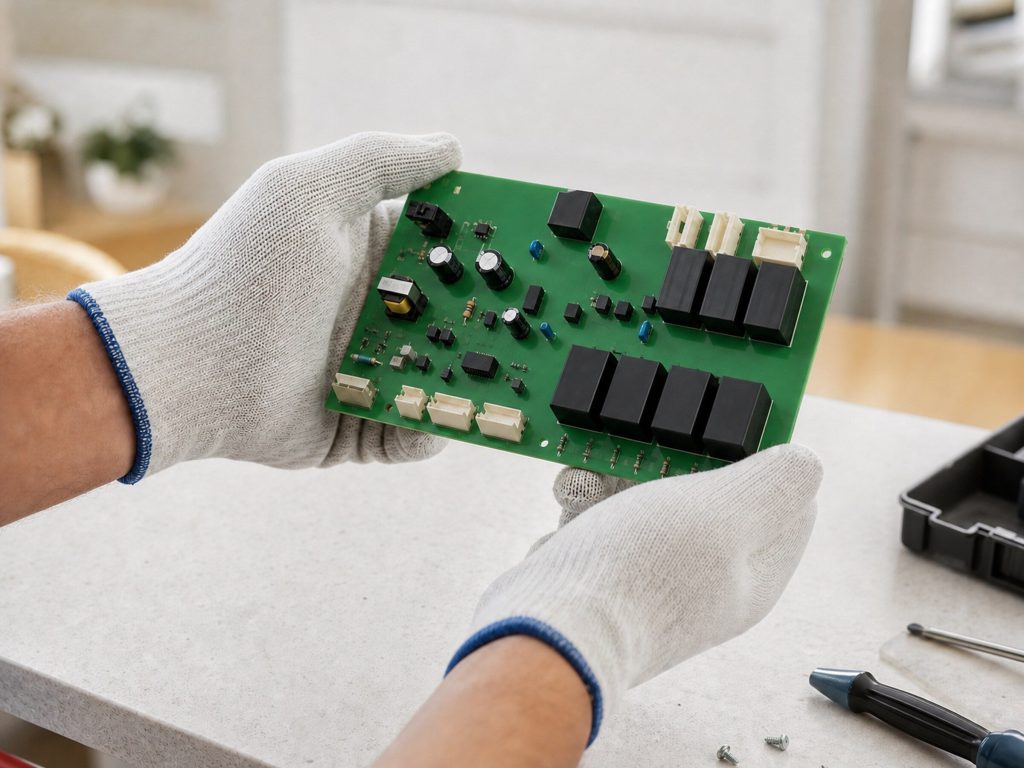
The repair where being honest about the supply chain matters more than being quick. Boards on this make come through a European channel, and on a machine that is no longer in the US catalog that is a real wait rather than a phrase. So the order here is fixed: prove the board is the problem, price the part with its lead time attached, and only then decide. A board fitted to cure a supply problem or a water-ingress problem will fail the same way in a season, and we would rather find the water.
- Proven, not assumed — the board is the last suspect, never the first
- Lead time is quoted with the price, because on this make it is part of the answer
- Water ingress and supply errors found first, or the new board follows the old one
-
from $155 Dryer not drying repair
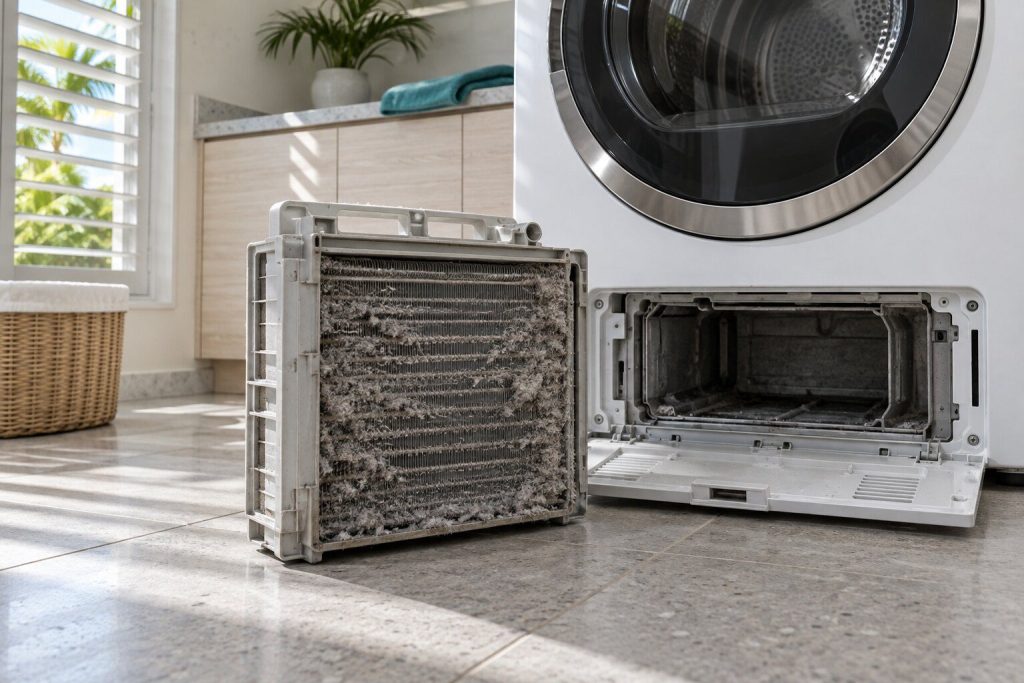
A program that finishes with the load still damp, which on a condenser or heat pump machine is almost never about heat. Nothing is vented outside: moisture is condensed and collected, so the machine depends on three filters and a condenser being clear, and in a South Florida laundry closet those load far faster than the manual assumes. Three of the checks cost nothing and end this call more often than any part does.
- Container, door filter, condenser filter — three free checks, in that order
- This is airflow before heat on every condenser and heat pump machine
- The sensor bars only matter once the air path is proved clear
-
from $145 Condenser dryer service
The maintenance visit these machines need on a schedule and rarely get. A condenser dryer works by pulling moisture out of air and giving the heat back, and it is being asked to do that in a closet that may sit at eighty per cent humidity for half the year. Nothing about that is a failure — it is a shorter interval. The machines that reach fifteen years here are the ones where somebody cleared the condenser twice a year instead of waiting for a cycle that never ended.
- A schedule, not a rescue — and the interval here is shorter than the manual's
- Condenser block washed out properly rather than tapped clear
- Cycle times recorded, so the next visit can see whether it is drifting
-
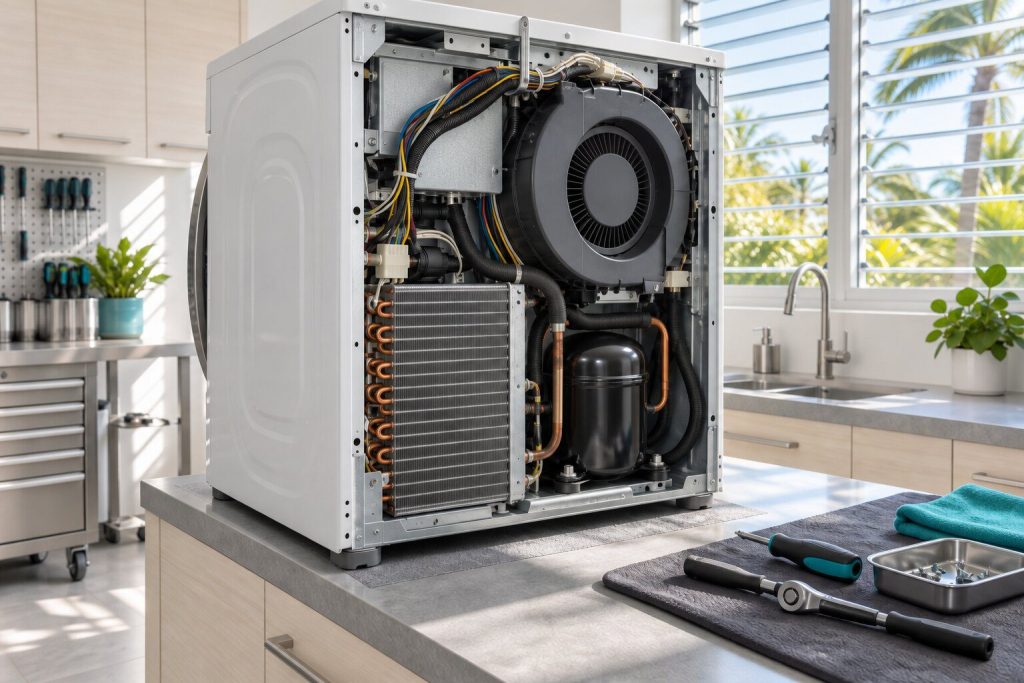
from $215 Heat pump dryer repair
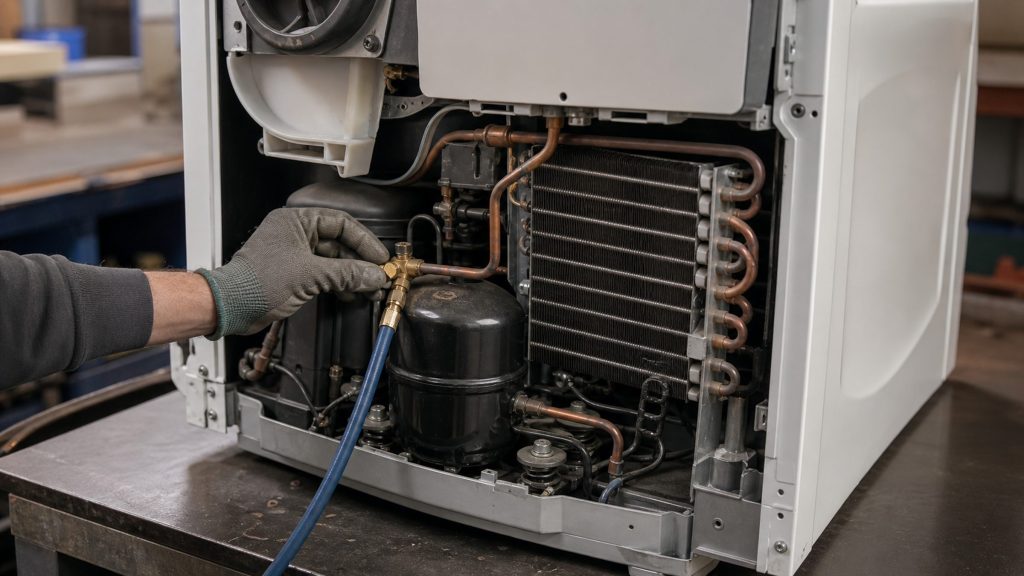
The newest platform here and the one with its own economics. A heat pump dryer is a sealed refrigeration circuit as well as a dryer, which makes it cheaper to run and more expensive to be wrong about: a compressor is not a heating element. So the order of work is strict — everything ordinary is eliminated first, and only then does the sealed side become the answer. These machines report in their own scheme, spelling out ERROR and a digit rather than using the older short codes.
- Sealed circuit last, always — the ordinary causes look identical from outside
- Its own code scheme: ERROR_0 to ERROR_5, not the older L or F numbers
- The evaporator behind the plinth needs clearing, and almost nobody knows it is there
-
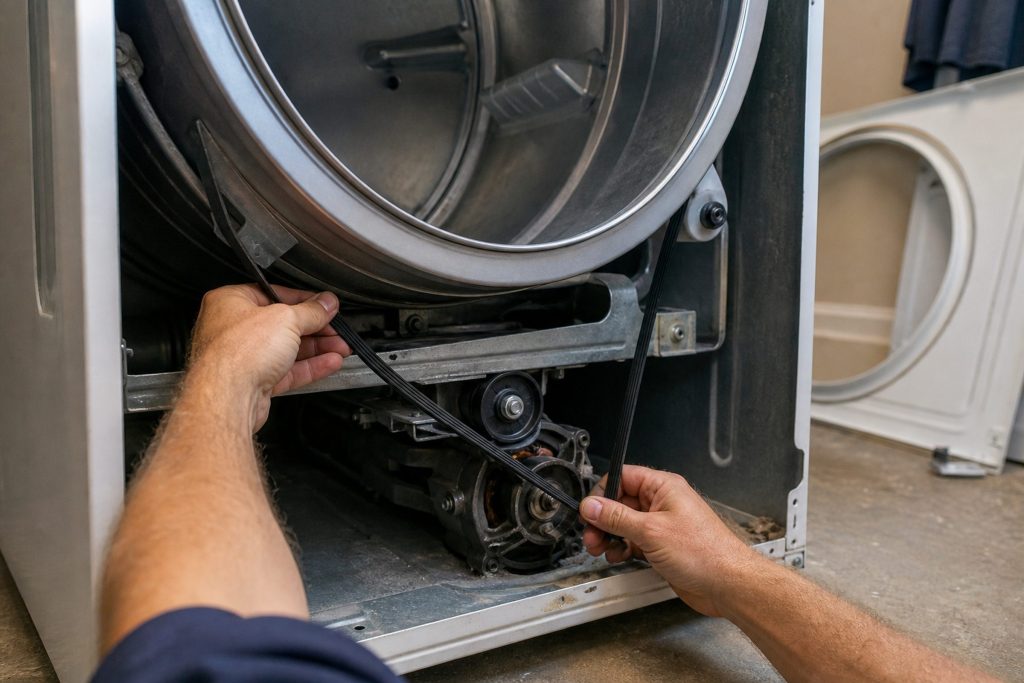
from $165 Dryer drum, belt and roller repair
A drum that has stopped turning, or turns while rumbling or squealing worse each week. Nine times in ten the belt is the answer and it is an easy part; what matters is the reason the belt went is the part worth finding, because a seized roller or a tired idler will eat the next one just as fast. On a machine that has spent a decade in a hot closet the bearings and felts are usually ready too, and doing them together saves the second visit.
- The belt is the symptom — the roller or idler that killed it is the repair
- Rollers, idler and felts checked as a set while the machine is open
- A squeal that has been growing is a bearing, and it will not improve
-
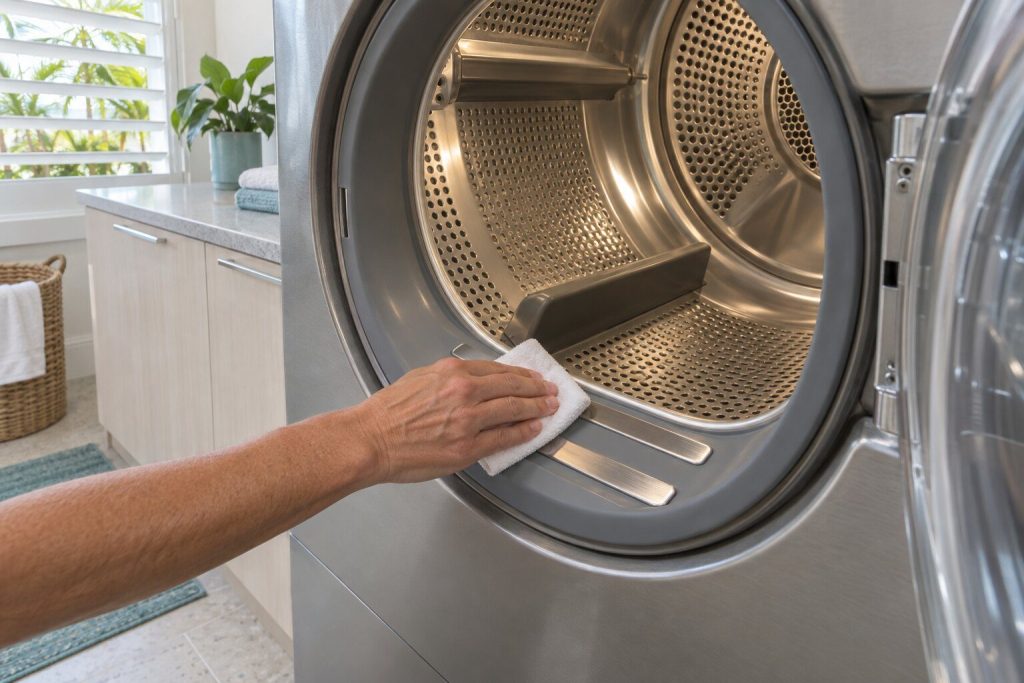
from $149 Dryer sensor and thermostat service
Cycles that stop after ten minutes with a dry load, or cycles that run hot and long with a damp one — both are the machine believing something untrue about the laundry. The moisture sensor bars inside the drum read conductivity, and softener residue films them over until they report a dry load every time. Where a thermostat is to blame the machine usually says so in whichever code family its board belongs to, and reading it against the right family is half of the diagnosis.
- Sensor bars filmed with softener residue are the commonest cause by far
- The code family depends on the control board, and we identify it first
- A cycle that ends too early is the same circuit as one that never ends
-
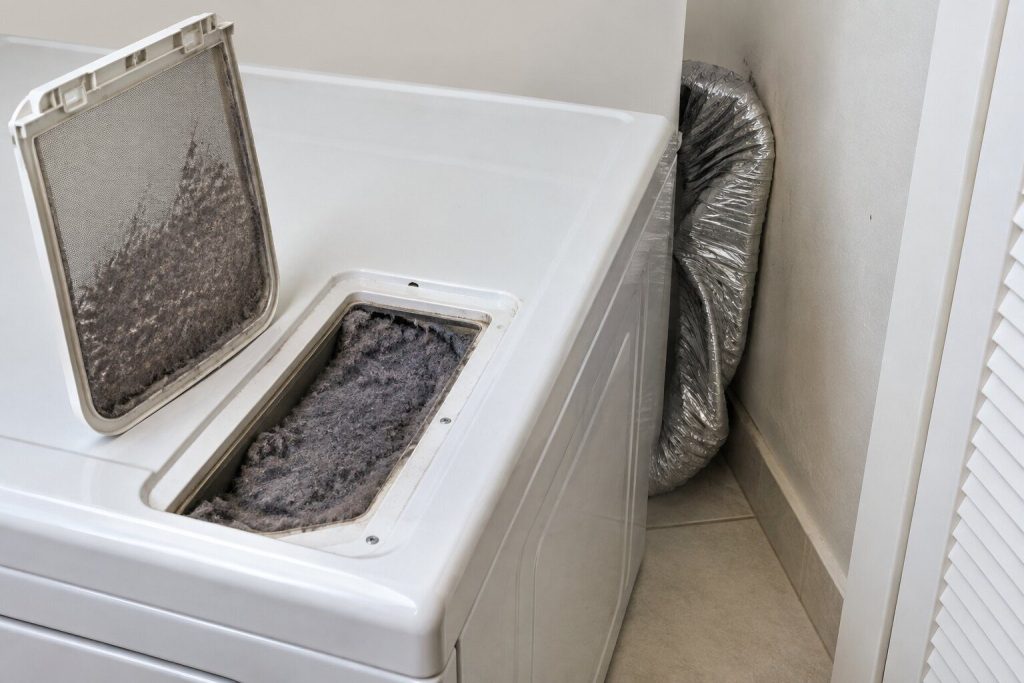
from $119 Dryer lint and airflow service
The cheapest visit on this list and the one we would most like people to book. Lint that gets past a filter collects inside the cabinet, around the fan and against the heat exchanger, where it lengthens every cycle, raises the running temperature and — on any dryer, of any make — is what turns an appliance into a fire. There is no code for it and no warning light. There is only a machine that takes longer than it used to, which everybody puts down to age.
- No code, no light — the only symptom is a cycle that has quietly got longer
- Lint inside the cabinet, not in the filter, is what matters here
- Booked with the washer service, it is one visit for the whole laundry closet
In more detail
About Asko dryers
Nothing is vented outside
Twelve dryers in the current catalog, condenser and heat pump. Moisture is condensed out of the air and collected rather than blown out of the building, which is what lets them live in a closet with no external wall — and what makes every filter matter more than it would on a vented machine. In an interior closet at this humidity the condenser loads within months.
The codes move with the board
One platform, several revisions, and the code form changes across them: L-numbers, then F-numbers, then S-numbers, then J1 and LCD strings. The steam and heat pump machines spell ERROR_0 to ERROR_5 in full. Simple analog condenser dryers publish nothing at all, and that absence was read in the manual rather than assumed.
This article is based on:
- Official manufacturer documentation
- Internal repair procedures
- Technician repair history
- Company quality standards
Before you book
Questions about Asko dryers
The program finishes and the load comes out damp.
On a condenser or heat pump machine that is nearly always airflow or the condenser rather than heat. Three things are free to check before anybody comes: tip out the collection container, rinse the door lint filter, and open the plinth to reach the condenser filter — that one is the one people do not know exists, and in this climate it packs solid faster than the manual expects. If all three are clean and the cycle still ends damp, the sensor bars or the heat pump circuit are next, and those are ours.
It shows ERROR_3.
That spelling places the machine on the steam and heat-pump platform — the ones that print ERROR_0 through ERROR_5 as words rather than a short code. It is a genuinely different scheme from the L-numbers and F-numbers on the older boards, and mapping one onto the other is how wrong parts get ordered. Give us the full string as it appears and the model from the door frame; on this platform the code narrows the visit considerably.
Mine shows nothing when something is wrong.
If it is one of the simple analog condenser machines, that is correct behavior and not a broken display. Those models were built without a code table — the manual has a symptom list and no error numbers, and we confirmed that by reading it rather than by failing to find one. On those the diagnosis is done the old way: what the machine does, when it does it, and what it sounds like while it does it.
How much does the humidity here matter?
A great deal, and more than the manual assumes. A condenser dryer works by taking moisture out of air and giving heat back, and it is being asked to do that in a laundry closet that may sit at eighty per cent for months. It will still work, but the filters load faster, the cycle runs longer, and the condenser wants clearing on a schedule rather than when something goes wrong. The August dryer calls are, in the main, servicing that should have happened in June.
Where we do it
Across Miami-Dade, Broward, and Palm Beach
Same terms everywhere we go: an on-site diagnostic first, the price agreed in writing, and the exact figure confirmed once we have seen the unit.
Neighborhoods people ask for by name