Common Problems
The Asko Dryer Filter Almost Nobody Knows About
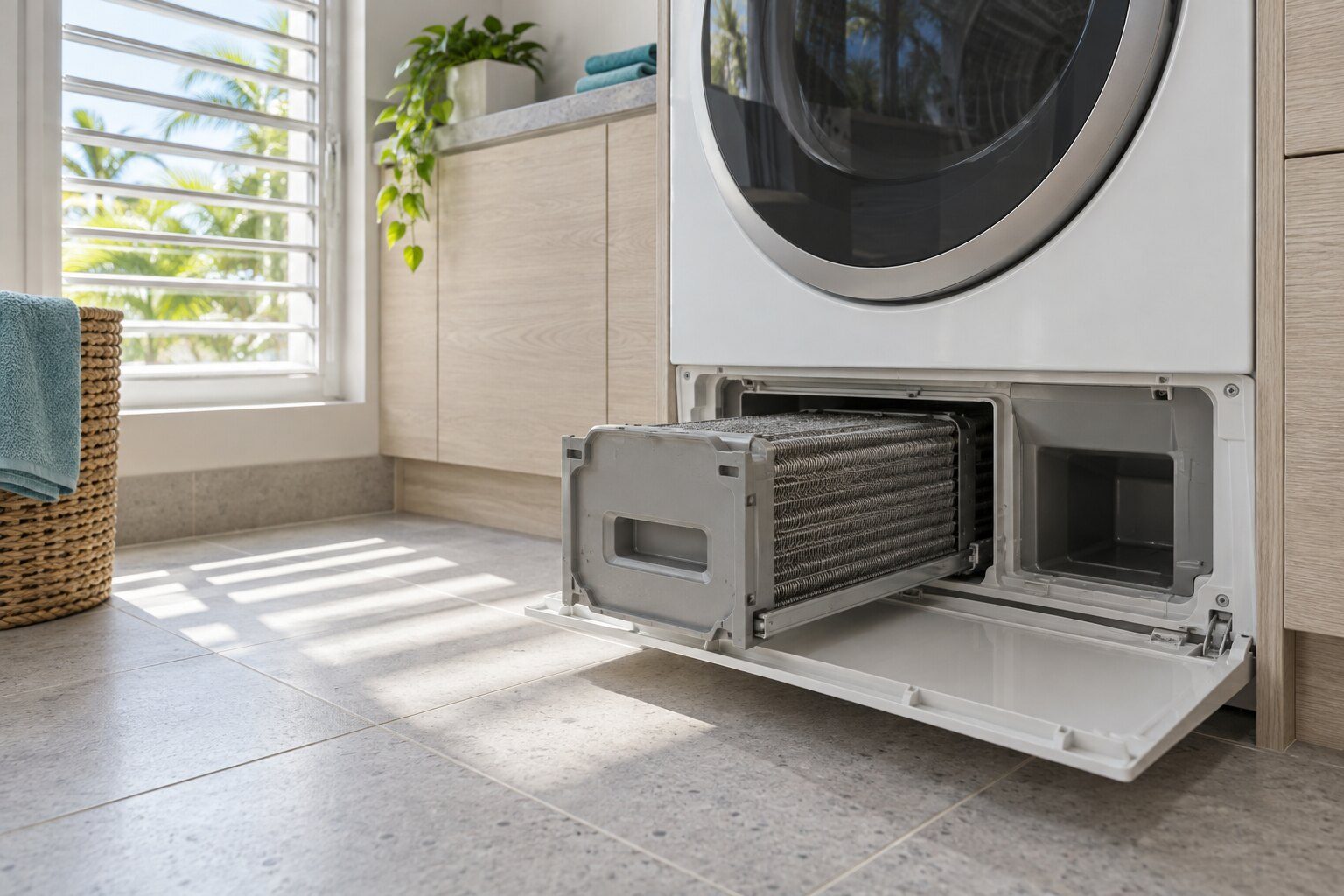
A condenser dryer has three filters and most owners know about one. The lint filter in the door opening is obvious. The water container is obvious. The third is a condenser filter or block behind the plinth low at the front of the cabinet, and it is the one that decides how well the dryer works. It has to be pulled out and washed until the water runs clear, not tapped out over a bin, and in a South Florida laundry closet it packs solid within months rather than years because the machine is moving so much more moisture than the manual assumes. On a machine that has never had it done, cleaning it once is frequently the whole repair — cycle times fall back by a third and the load comes out dry.
The full guide
Ask most owners how many filters their dryer has and the answer is one. There are three, and the one that matters most is the one behind the plinth.
Where it is
There is a panel near floor level at the front — plinth or flap, depending which model — that releases by hand or with a coin. The condenser waits behind it: a block of close-set metal fins, normally retained by a pair of clips or a lever, and it draws straight out.
If you have never opened this, and the machine is more than a year old in this climate, what comes out will surprise you.
Why it matters more than the door filter
The door filter catches the big lint. What gets past it — and plenty does — travels with the air into the condenser, where the air is being cooled and is therefore wet. Wet lint does not blow through. It mats into the fins and stays.
A matted condenser cannot take moisture out of the air. The machine keeps running, keeps heating, and keeps returning air that is barely drier than it started. That is the whole mechanism behind a dryer that runs for three hours and leaves the towels damp.
Washing it properly
Take the block out. Run water through it from the clean side until it comes out clear — a shower head or a tap works. Turn it round and do the other side. Shake it out and leave it to drain before it goes back.
Tapping it out over a bin removes the loose surface and leaves the mat. Vacuuming does a little better and still leaves it.
While the block is out, look into the housing it came from and clear what has collected there too.
How often, here
The manual will give you an interval based on cycles. It was written for a temperate laundry room. An interior closet in Miami sits at high humidity for months, the machine has more moisture to remove on every load, and the condenser loads in proportion.
Twice a year is realistic locally. On a machine doing building duty — an amenity room, a hotel housekeeping closet — it is closer to every six weeks, because those machines run a household year of cycles in that time.
What good looks like afterwards
Time a standard load before and after. On a machine that has never had this done, the cycle typically falls back by a third and the load comes out properly dry. If it does not, the sensor bars inside the drum are the next thing — softener film on those tells the machine a wet load is already dry.
If it turns out to be a repair
What this leads to, and what it costs
Every job on this site is priced the same way: an on-site diagnostic first, the figure agreed in writing before anybody starts.
-
from $145 Condenser dryer service
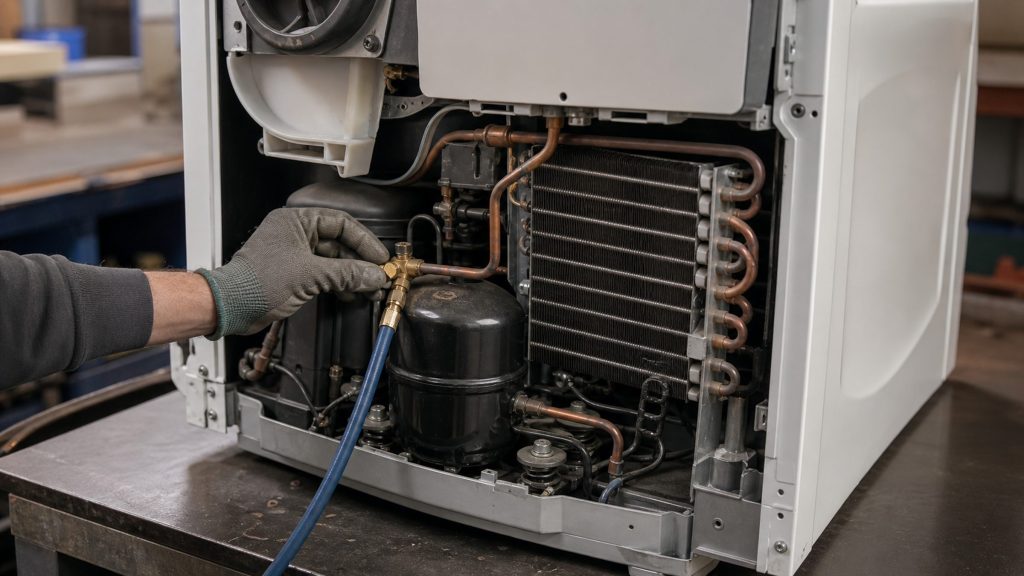
The maintenance visit these machines need on a schedule and rarely get. A condenser dryer works by pulling moisture out of air and giving the heat back, and it is being asked to do that in a closet that may sit at eighty per cent humidity for half the year. Nothing about that is a failure — it is a shorter interval. The machines that reach fifteen years here are the ones where somebody cleared the condenser twice a year instead of waiting for a cycle that never ended.
- A schedule, not a rescue — and the interval here is shorter than the manual's
- Condenser block washed out properly rather than tapped clear
- Cycle times recorded, so the next visit can see whether it is drifting
-

It still dries, but the cycle has doubled Dryer takes far longer than it used to
Nothing has failed and everything takes twice as long — the most gradual complaint on this machine and the one people put down to age. It is almost never age. A condenser dryer's cycle length is a direct measure of how well air moves through it, so a program that has quietly grown from ninety minutes to three hours is reporting a blocked path in the only language it has. There is a limit built in at two hundred minutes, and every dryer platform on this badge has a code for hitting it, under a different name on each revision.
- Cycle length is the measurement — write down what a standard load takes now
- Every platform here stops at two hundred minutes and reports it differently
- Lint past the filter collects inside the cabinet, where no owner check reaches
Questions people ask about this
My machine says it cleans the condenser automatically.
Several of the 5-series and 7-series dryers do, and it genuinely helps. It does not remove the need entirely: the automatic cycle flushes, and what it flushes still collects. On the TD70.3 panels there is even a message that appears every hundred cycles telling you to clean it, which is the machine acknowledging the point.
Can I just vacuum it?
It is better than nothing and it is not enough. Lint packs into the fins wet, and a vacuum lifts the loose surface layer and leaves the mat behind. Take the block out and run water through it until it comes out clean.
How do I know it needs doing?
Time a standard load. A cycle that has quietly grown from ninety minutes to two hours is the earliest warning these machines give, and it only means something if somebody wrote the previous number down.
Common Problems
More guides like this one
-
An Asko Washer That Will Not Spin: The Empty-Drum Test
Run a spin-only program on an empty drum. That one test separates three causes in five minutes, and two of them cost nothing to fix.
Read more -

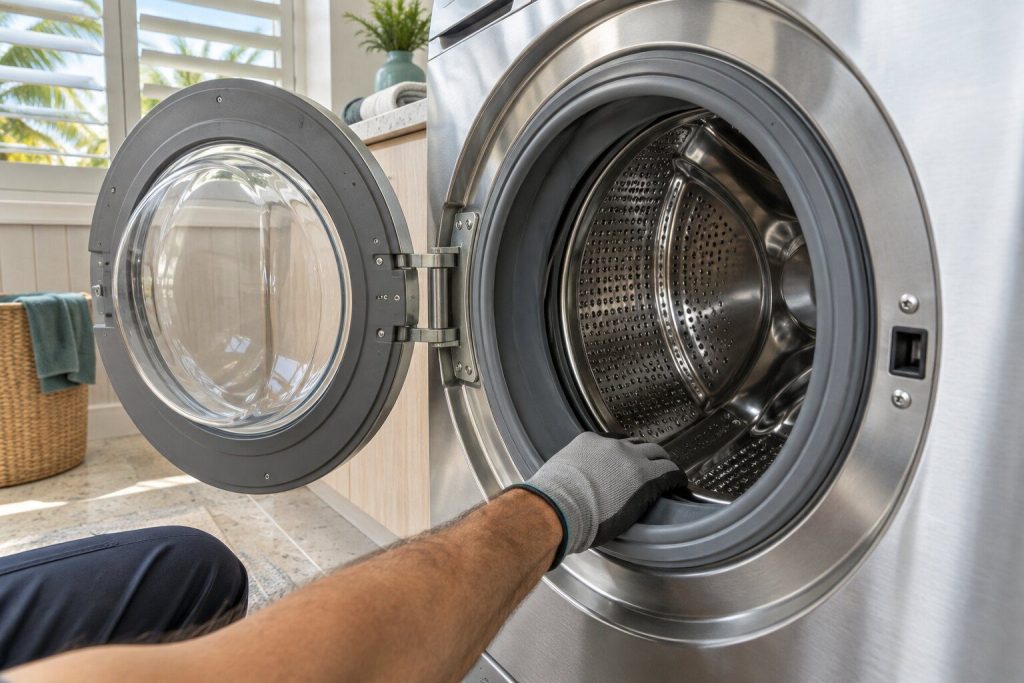
The Part We Replace Most on an Asko Washer, and Why It Fails
Grit collects in the bottom fold of the door bellows and cuts the rubber from the inside. It leaks for months before anything reaches the floor, and in a condominium that is the expensive part.
Read more -

One Asko Induction Zone Dead and the Rest Fine
On induction a single dead zone is better news than it sounds — the problem is usually local to that zone. Two free checks come first, and both mimic a failure exactly.
Read more
Tell us the model number and what it is doing.
This article is based on:
- Official manufacturer documentation
- Internal repair procedures
- Technician repair history
- Company quality standards