Safety & Risks
A Small Leak Under an Asko Washer Is Not a Small Problem in a Condominium
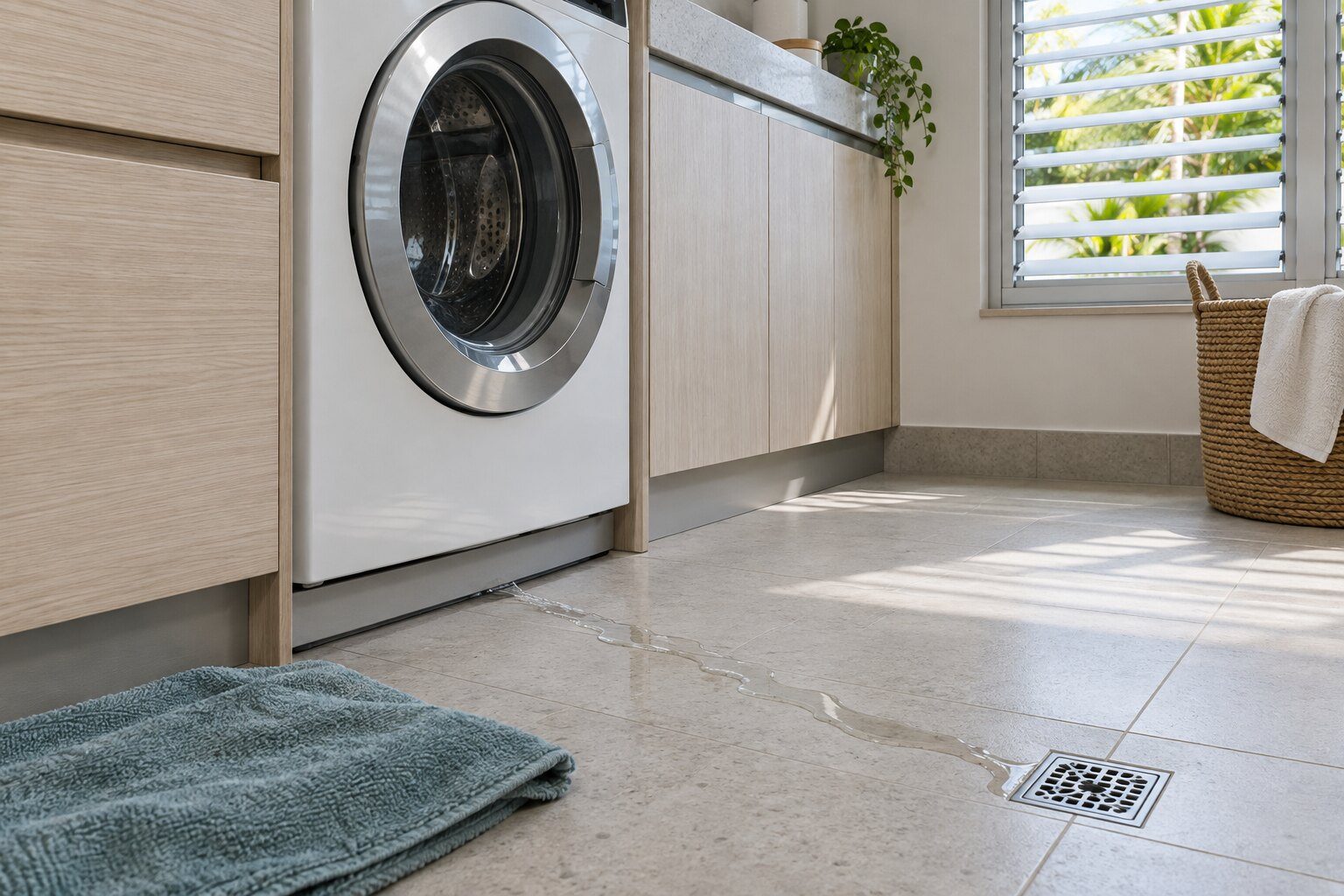
A washing machine moves several gallons in every program, and a leak that shows as a cup of water on the tile during a wash is putting considerably more than that into the structure over a week of ordinary use. In a condominium the floor under the laundry closet is a slab with somebody else's apartment beneath it, which is why the advice here is firmer than it would be in a house: close both taps, switch the machine off, and stop using it until somebody has looked. What helps most before that visit is an observation only you can make — when does the water appear? During fill, during wash, or during the drain. Each phase pressurises a different part of the machine, so a leak that shows in only one of the three is half diagnosed before anybody arrives.
The full guide
In a house, a leaking washing machine is an afternoon with a mop. In an apartment building it is a different category of problem, and the difference is worth understanding before deciding how urgent it is.
What is actually moving through the machine
An Asko washing machine leaking water from bottom is rarely leaking from the bottom at all — that is where it emerges.
A single program takes on, heats, circulates and pumps out several gallons. A leak of a few tablespoons per cycle — barely visible, dries by evening — is several liters a week going somewhere.
That somewhere is the cabinet floor first, then the tile bed, then the slab. Nothing about it is dramatic and none of it is reversible by drying the surface.
Do these three things now
Close both taps at the wall. Not just switch the machine off — the inlet hoses stay pressurised while the taps are open, and if a hose or a valve is involved that is the failure that continues while nobody is home.
Stop using it. This is the part people resist and it is the right advice. Two days unused is cheaper than two days of careful use.
Dry the floor completely and put down paper towel. Where it appears next is information, and it is easier to read on paper than on tile.
The observation only you can make
When does the water appear?
- During fill points at an inlet hose, a union at the wall, or the valve.
- During the wash points at the door seal, which is the most common source on this make by a wide margin.
- Only while pumping out points at the drain path — the pump filter cap first, then the hose and its unions.
- When the machine is off entirely points at a valve that is no longer closing, which is the most urgent of the four.
Write down which one it is. It changes what goes on the van.
Why the door seal is the usual answer here
Grit collects in the fold at the bottom of the bellows and cuts the rubber from the inside over months. It leaks during the wash phase, when water is being thrown about, and the water runs down the frame and appears at the front — nowhere near where it started.
That is also why guessing from the front is unreliable and why the machine comes out before anybody says where the water is from.
What we check beyond the machine
The floor under it and the carcass around it. Swollen chipboard, a dark line at the back, a soft patch in the tile bed. That is a separate conversation from the appliance and it is much better had while the machine is already out.
If it turns out to be a repair
What this leads to, and what it costs
Every job on this site is priced the same way: an on-site diagnostic first, the figure agreed in writing before anybody starts.
-
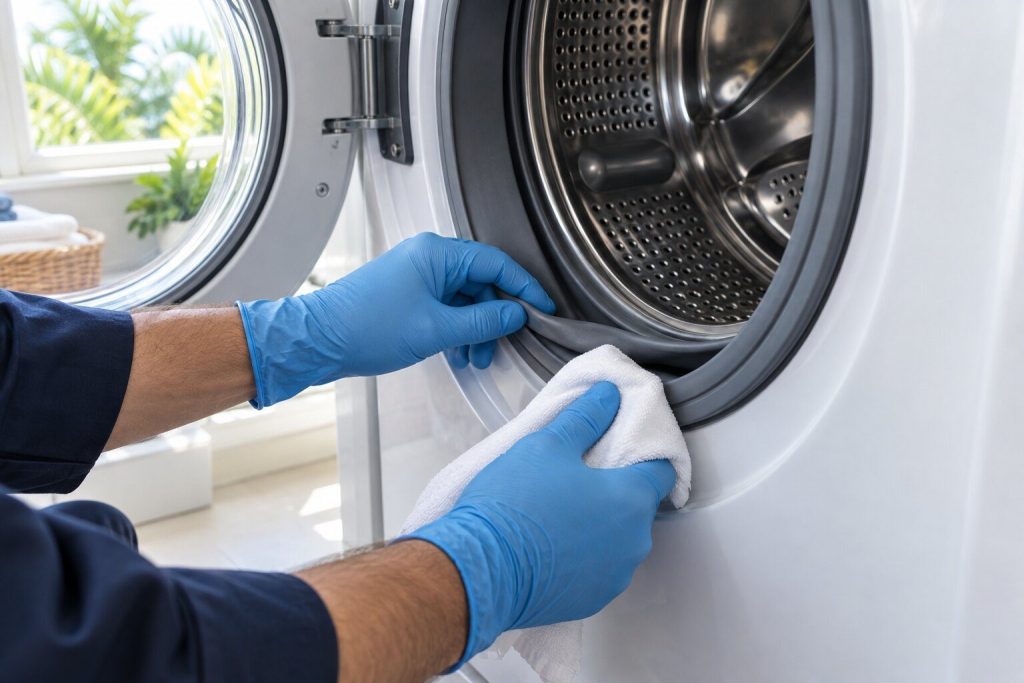
from $175 Washer door seal replacement
The single most common part we replace on this make, and the one where waiting costs the most. Grit collects in the bottom fold of the bellows, works into the rubber and cuts it from the inside, so the seal is usually failing for months before water reaches the floor. In a condominium that matters more than the part does: water from a laundry closet reaches the slab and then somebody else's ceiling, and a seal is a fraction of what that costs to put right.
- Grit in the bottom fold is the cause — the seal is the symptom
- Caught early it is a part; caught late it is a floor slab and a neighbor
- Clamp and drain path renewed with it, or the new seal goes the same way
-
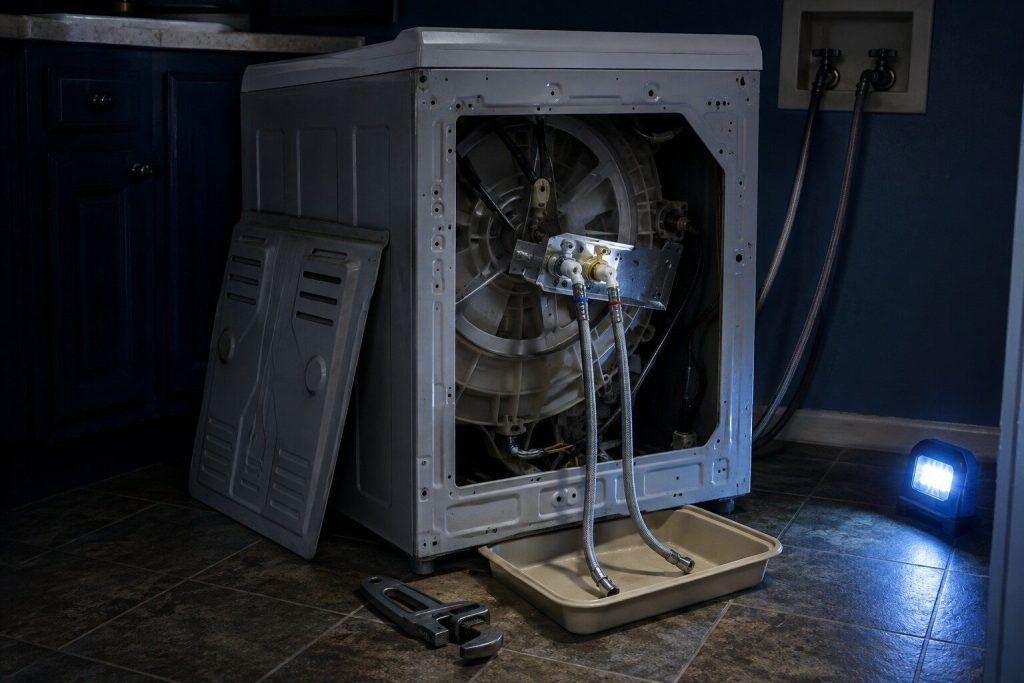
from $135 Washer inlet and hose service
Nothing about this visit is interesting, and it heads off the costliest thing that can happen in a laundry closet. Inlet hoses perish, valves stick part-open, and screens silt up on this supply. A machine that fills slowly is an annoyance; a hose that lets go while nobody is home is a claim on a building. On any machine over five years old in a condominium we recommend the hoses replaced whether or not that is what we were called for, and we say why rather than adding it to an invoice.
- Perished hoses are a building's risk, not just a machine's
- Inlet screens silt up on this water and are a five-minute clean
- A valve that seeps while off is a different failure from one that will not open
-
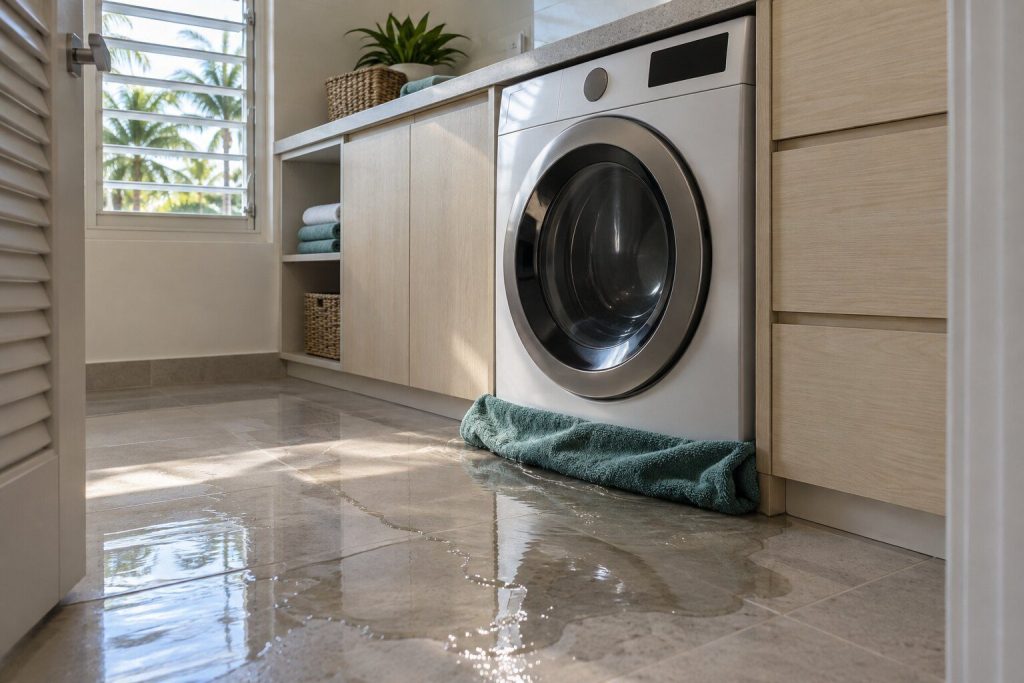
Water on the laundry floor and no obvious source Washer leaking
Water appearing under or beside the machine, and by the time it shows on the tile it has usually traveled along the frame from somewhere else. Three places account for nearly all of it: the door seal, where grit collects in the bottom fold and cuts the rubber from the inside over months; the pump filter cap, very often after somebody cleared a blockage and did not seat it; and the hose unions at the wall. In a condominium this matters further than the machine does, because water in a laundry closet reaches a floor slab and then somebody else's ceiling.
- Turn the taps off and stop using the machine — a program uses several gallons
- Check the filter cap first if anyone has cleared a blockage recently
- In a building this is a shared problem long before it is an expensive one
Questions people ask about this
It is only a small amount. Can I put a towel down?
Only until the taps are off. A towel manages what you can see, and what you can see is a fraction of what is going into the cabinet and the floor. The machine will keep putting the same amount in on every program.
It only leaks on hot washes.
Genuinely useful — rubber and plastic expand with heat, so a marginal seal or a tired union fails hot and holds cold. Say it when you call; it points straight at the part and shortens the visit.
Somebody cleared the pump filter last week.
Then start there. A filter cap left a quarter-turn short or cross-threaded leaks only while the machine is pumping, which makes it intermittent and confusing, and it is behind a good share of the leaks we are called to after somebody did the right thing.
Safety & Risks
More guides like this one
-
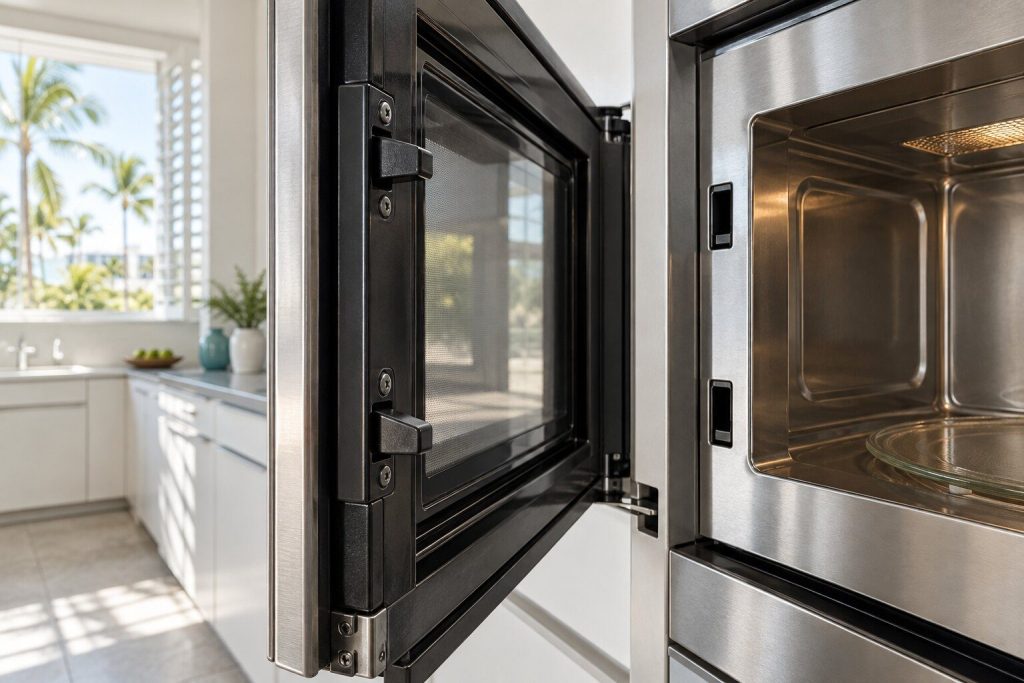
An Asko Microwave Door That Needs a Push: Stop Using It
A microwave door is a shielding component, not a lid. Three interlock switches in series prove to the machine that it is safe to run, and a door that has dropped stops satisfying them.
Read more -
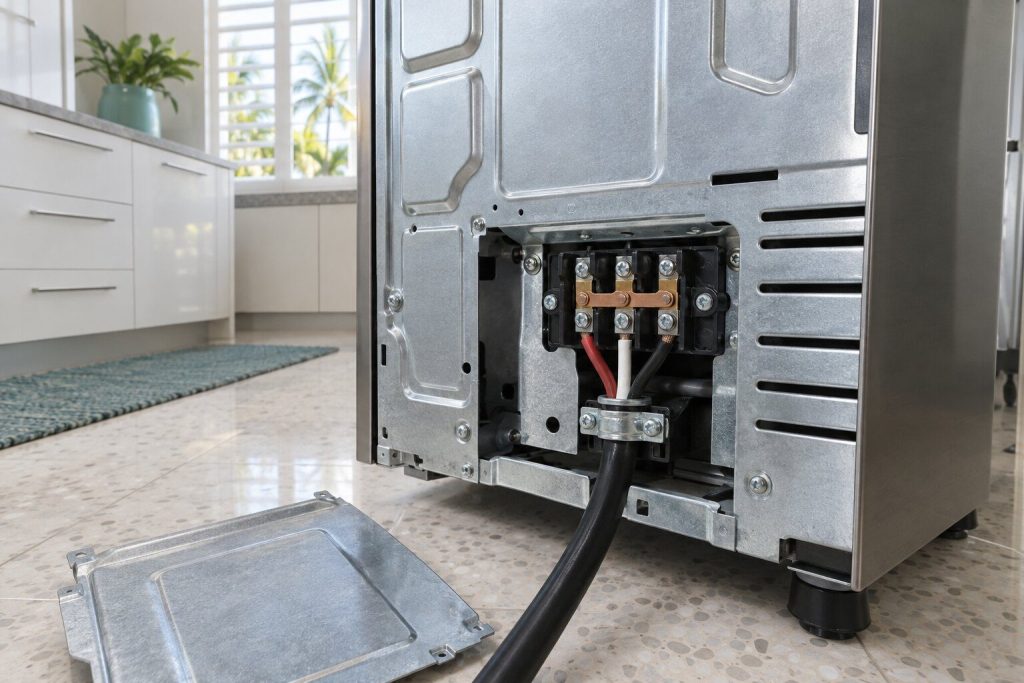
An Imported Asko Cooker and the Supply It Was Built For
Asko has never sold a freestanding cooker in the United States. The ones here arrived by import, and the first question is not what has failed — it is what the machine is plugged into.
Read more -
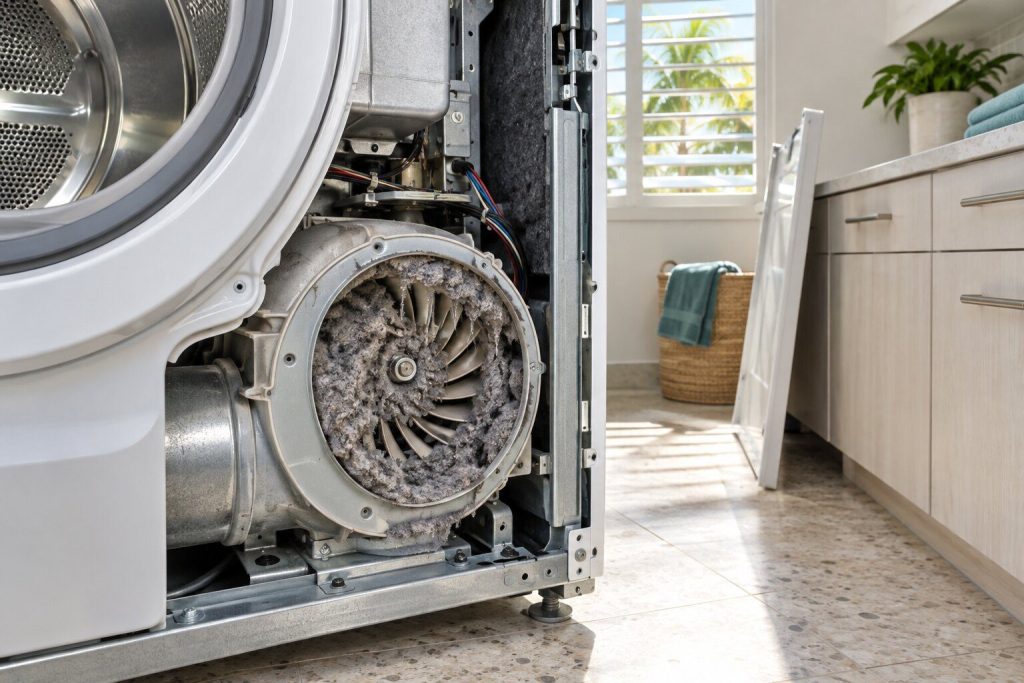
The Lint You Cannot See in an Asko Dryer
The door filter catches the big lint. What gets past it collects inside the cabinet, around the fan and against the heat exchanger — where no owner check reaches and no code exists.
Read more
Tell us the model number and what it is doing.
This article is based on:
- Official manufacturer documentation
- Internal repair procedures
- Technician repair history
- Company quality standards