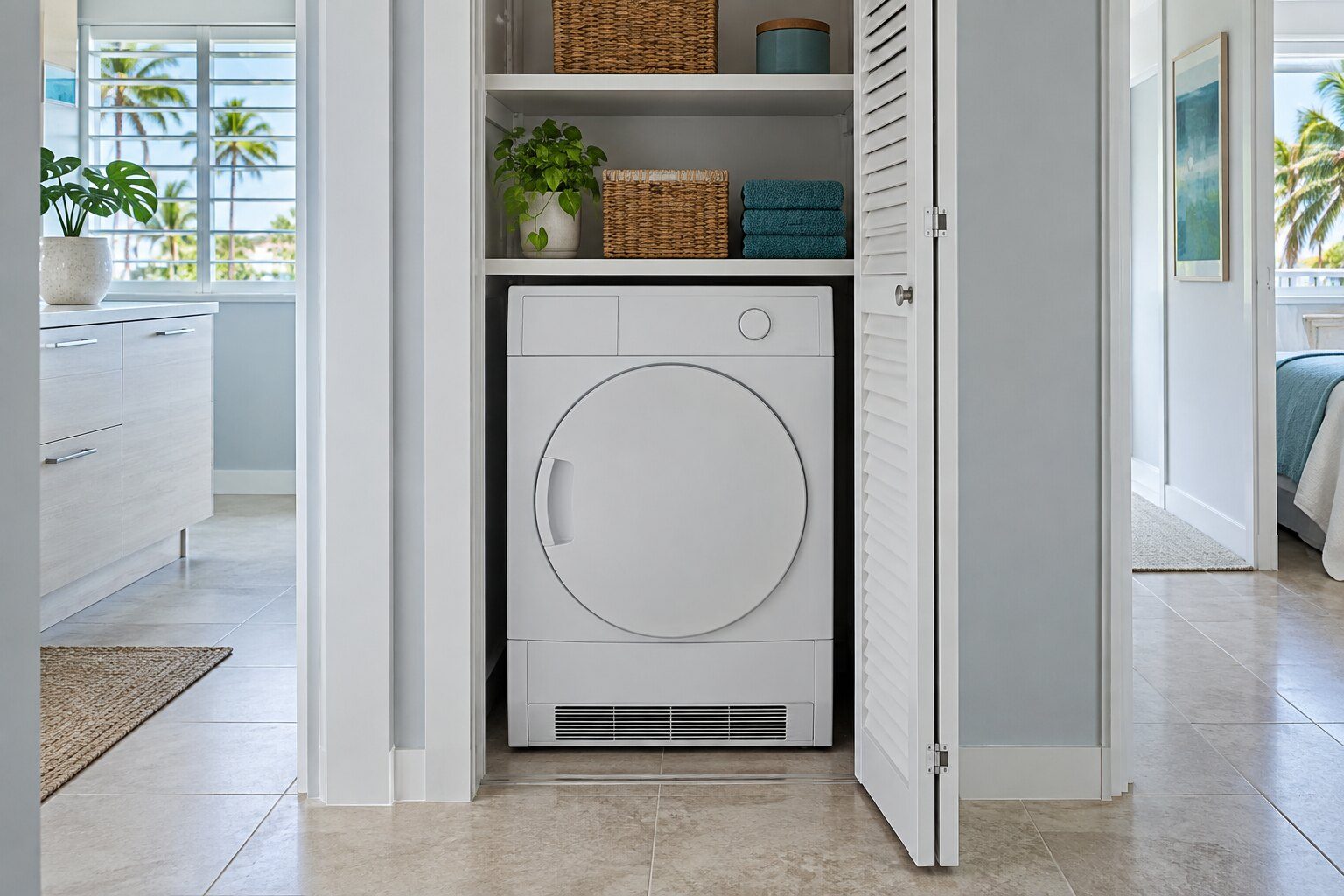
Model
T611VU.W repair
Asko T611VU.W repair in Miami: what owners of this Style unit search for, what those symptoms usually point at, and what the work involves. Diagnostic from $95, credited toward the repair.
- From $95 diagnostic, credited to the repair
- 59 cities and neighborhoods covered
- OEM parts available on order
- In writing the price, before anything is opened
The short version
What the number tells us
The full model number decides which parts exist, how quickly they arrive and what a repair on this unit is worth. It is the first thing we ask for.
Model
T611VU.W
Give us this number when you book and the technician arrives knowing what the unit is and which parts it takes.
or call (305) 363-1406
Parts
OEM on order; legacy parts take longer
Diagnostic
From $95, credited to the repair
What we can tell you
What this number means for a repair
Not a specification table. Capacity, dimensions and production years are not something we can verify, and a plausible-looking table of them would be invention rather than information.
-
The full number is the first thing we ask for
It decides what the display can tell you and how easily parts are found, and the data plate settles it in one line. Letters after the digits are not decoration — they identify the configuration, and two units sharing the digits can take different components.
-
What we ask you to read off the unit
The data plate, not the box or the invoice. On this equipment it sits inside the cabinet — along a side wall, behind the lowest drawer, or under the lid of a wine cabinet — and it carries the full number and the service index together. A photograph of it is worth more than any table we could publish.
What owners of this model ask about
The symptoms searched most often with the T611VU.W
Taken from real search suggestions rather than from a list we made up. Each page says what the symptom usually points at and what to check first.
-
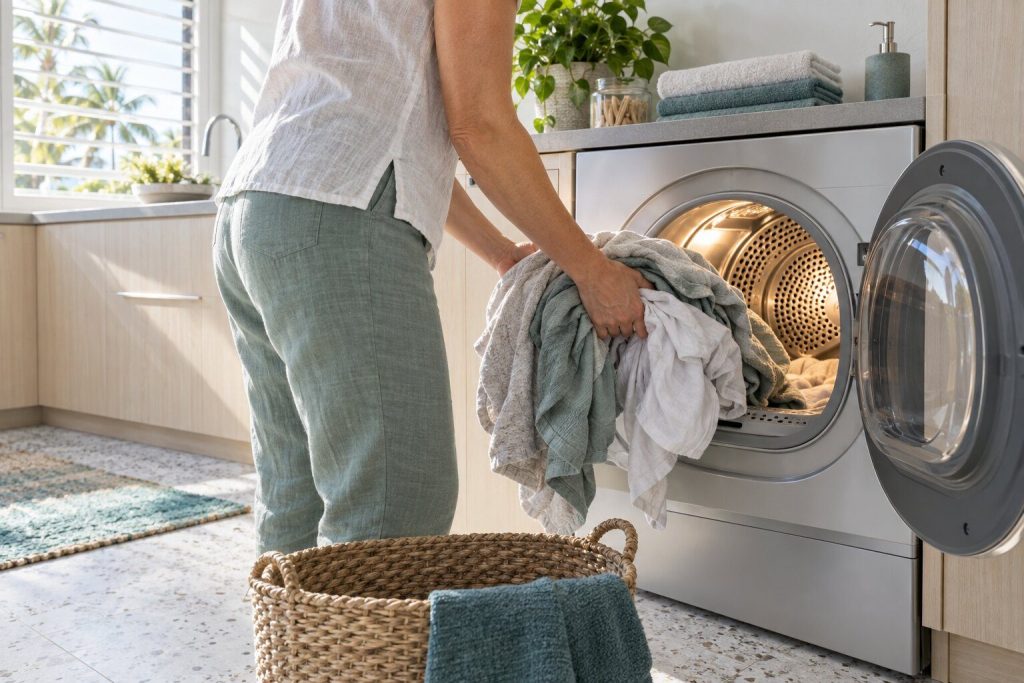
The program finishes and the load is still damp Dryer not drying
A cycle that runs its full length and leaves the washing wet. On a condenser or heat pump machine — which is what this badge sells — this is almost never about heat, and that is the thing worth understanding before anybody is called. Nothing is being blown outside: moisture is condensed out of the air and collected, so the machine depends on three separate filters and a condenser staying clear. In a South Florida laundry closet those load far faster than any manual assumes, and clearing them ends this complaint more often than any part.
- Three filters, not one — door lint, condenser, and the water container
- The condenser filter is behind the plinth and most owners never knew it existed
- Sensor bars filmed with softener tell the machine a wet load is dry
-
It still dries, but the cycle has doubled Dryer takes far longer than it used to
Nothing has failed and everything takes twice as long — the most gradual complaint on this machine and the one people put down to age. It is almost never age. A condenser dryer's cycle length is a direct measure of how well air moves through it, so a program that has quietly grown from ninety minutes to three hours is reporting a blocked path in the only language it has. There is a limit built in at two hundred minutes, and every dryer platform on this badge has a code for hitting it, under a different name on each revision.
- Cycle length is the measurement — write down what a standard load takes now
- Every platform here stops at two hundred minutes and reports it differently
- Lint past the filter collects inside the cabinet, where no owner check reaches
-
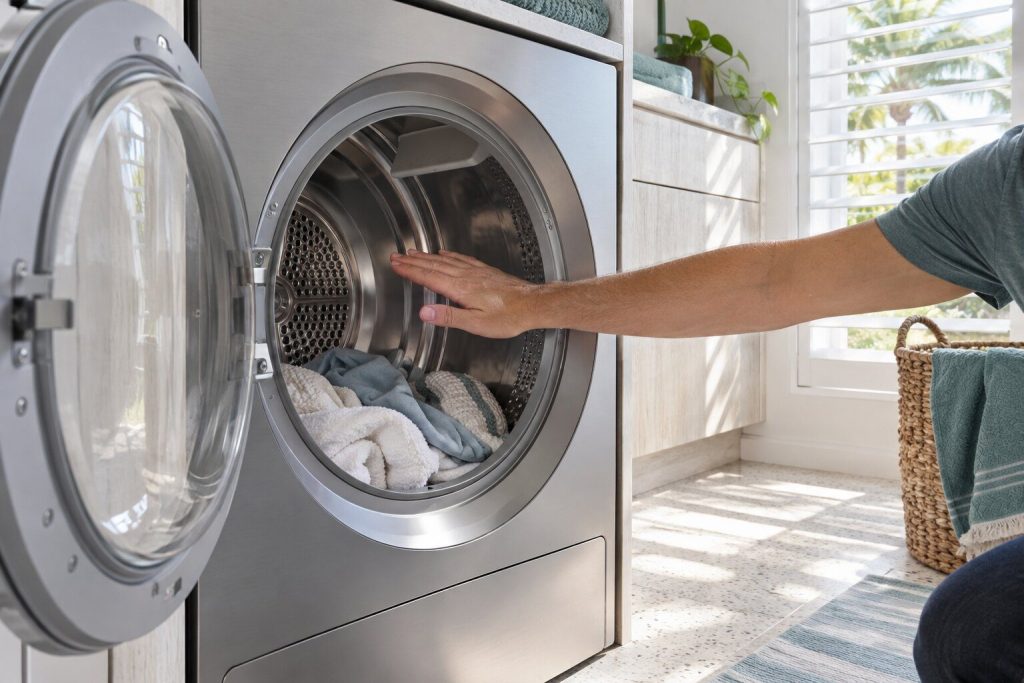
The drum turns, the cycle runs, nothing gets warm Dryer runs but there is no heat
The machine behaves normally in every way except the one that matters. On a condenser machine this splits into a heater and its thermostats; on a heat pump machine it is a sealed refrigeration circuit and the answer is a different order of expense entirely. Which one you have is therefore the first question, and it is answered by the model rather than by the symptom. Before either, though, the same free checks apply: a machine that cannot move air will trip its own thermal protection and then run cold, and that is not a heater problem at all.
- A blocked machine overheats, trips its cut-out and then runs cold
- Heat pump and condenser machines fail differently and cost differently
- Clear the filters first — a tripped cut-out with a clean machine is a real repair
-
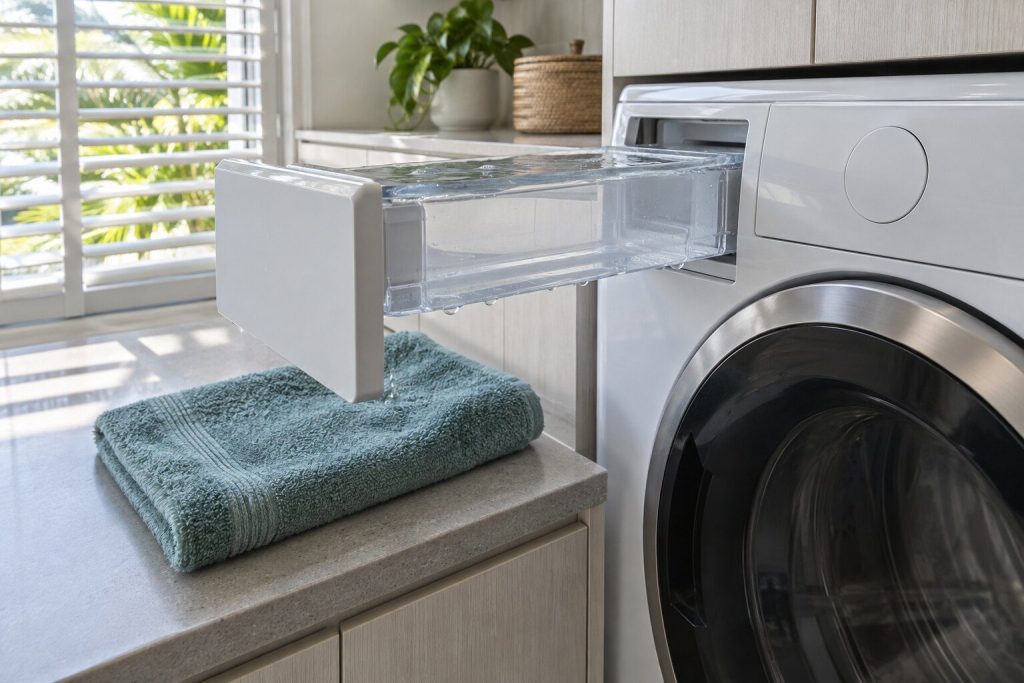
It needs emptying every load, or it overflows The water container fills constantly
A container that needs emptying far more often than it used to, or one that reports itself full when it is not. Both are worth understanding because the first is frequently not a problem at all: a condenser dryer takes every drop out of the washing, so a heavier load, a wetter spin or a more humid room all mean genuinely more water. What is a problem is a machine that reports full with an empty container — that is the microswitch — or one plumbed to a drain that has stopped clearing.
- More water can simply mean wetter loads or a more humid room
- Full reported with an empty container is the switch, not the water
- On a plumbed machine, the same message means the drain is not clearing
-
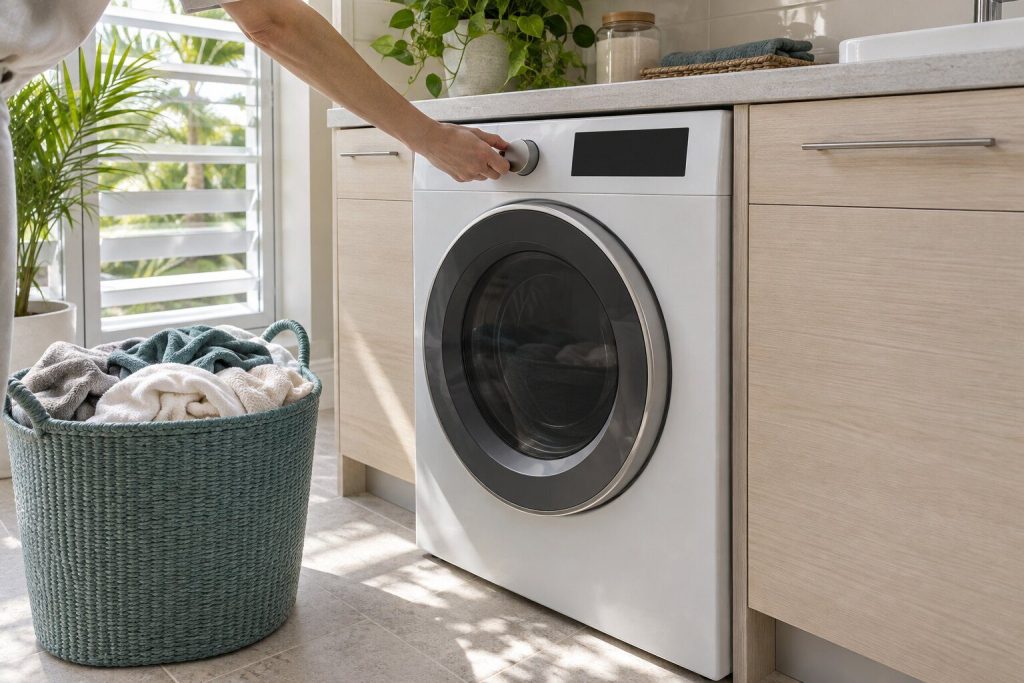
Nothing happens when the program is selected Dryer will not start
A machine that does nothing at all, and as with the dishwasher the first suspect is the door rather than the electronics: a dryer will not run with the door unlatched, and a catch that has worn is the most ordinary explanation there is. After that comes the container, because a machine reporting itself full stops before it starts, and only then the supply and the control. That order matters because it runs from free to expensive, and most of these calls end in the first two.
- Push the door until it latches — a worn catch produces this exactly
- A full or unseated water container stops the machine before it begins
- An unlit panel and a lit one that ignores you are two separate problems
Also called out to on this equipment
- Dishwasher not draining
- Dishes come out dirty
- Dishwasher leaking
- Dishes come out wet
- Dishwasher will not start
- Washer not draining
- Washer not spinning
- Washer leaking
- Washer door will not open
- Washer loud or moving on spin
- Oven not heating
- Oven bakes unevenly
- One induction zone dead
- Refrigerator not cooling
- Water or ice under the drawers
- Freezer not freezing
- Range hood not clearing the kitchen
- Hood lamps work but the fan does not
- Combination microwave hums but does not heat
In more detail
About T611VU.W repair
What owners of the T611VU.W search for
These are the phrases people pair with this model number, taken from real search suggestions rather than from a list we made up. They are a fair map of what tends to go wrong on it — and each one has a page of its own explaining the likely causes.
- asko t611vu.w
- asko t611vu.w repair
What the display can tell you
The Style reports very little through its display, which is why more of the diagnosis on this generation is measured rather than read. If something is showing on yours, photograph it before it clears and look it up in the full error code list — codes do not wait, and the number is often gone by the time a technician arrives.
What we do not publish about it
No specification table: capacity, dimensions, configuration and production years are not something we can verify, and a plausible-looking table of them would be invention rather than information. What we can tell you is what the number means for a repair — which generation it is, what its display can report, and how easily parts are found.
Before you call
- Check the full model number on the data plate — the three digits are the family, and the letters after them matter for parts
- Photograph the display if anything is showing on it
- Look at the condenser through the grille
- Note whether this started after a power cut
This article is based on:
- Official manufacturer documentation
- Internal repair procedures
- Technician repair history
- Company quality standards
Before you book
Questions about T611VU.W repair
Is the T611VU.W still worth repairing?
Usually. The Style was built to be repaired, and a cabinet in good condition with sound cabinetry is worth keeping well past twenty years. Where the work approaches what the unit is worth, or a second major failure is already visible, we say so on the visit rather than after.
Can you still get parts for the T611VU.W?
For most of what fails, yes — OEM parts are ordered against your model. Legacy parts can take a few days to source, which is why we confirm a part is the problem before ordering it rather than after.
Where do I find the full model number on a T611VU.W?
Inside the door opening, on the frame. Photograph the whole plate rather than writing it down — the letters after the digits decide which parts fit, and they are the part people misread most often.
What tends to go wrong on the T611VU.W?
Judging by what its owners search for: dryer not drying, dryer takes too long, dryer no heat, dryer water container fills fast, and dryer will not start. Each of those has a page explaining the likely causes and what to check before booking anything.
Do you publish specifications for the T611VU.W?
No. Capacity, dimensions, configuration and production years are not something we can verify, and a plausible-looking table of them would be invention rather than information. What we can tell you is what the number means for a repair.